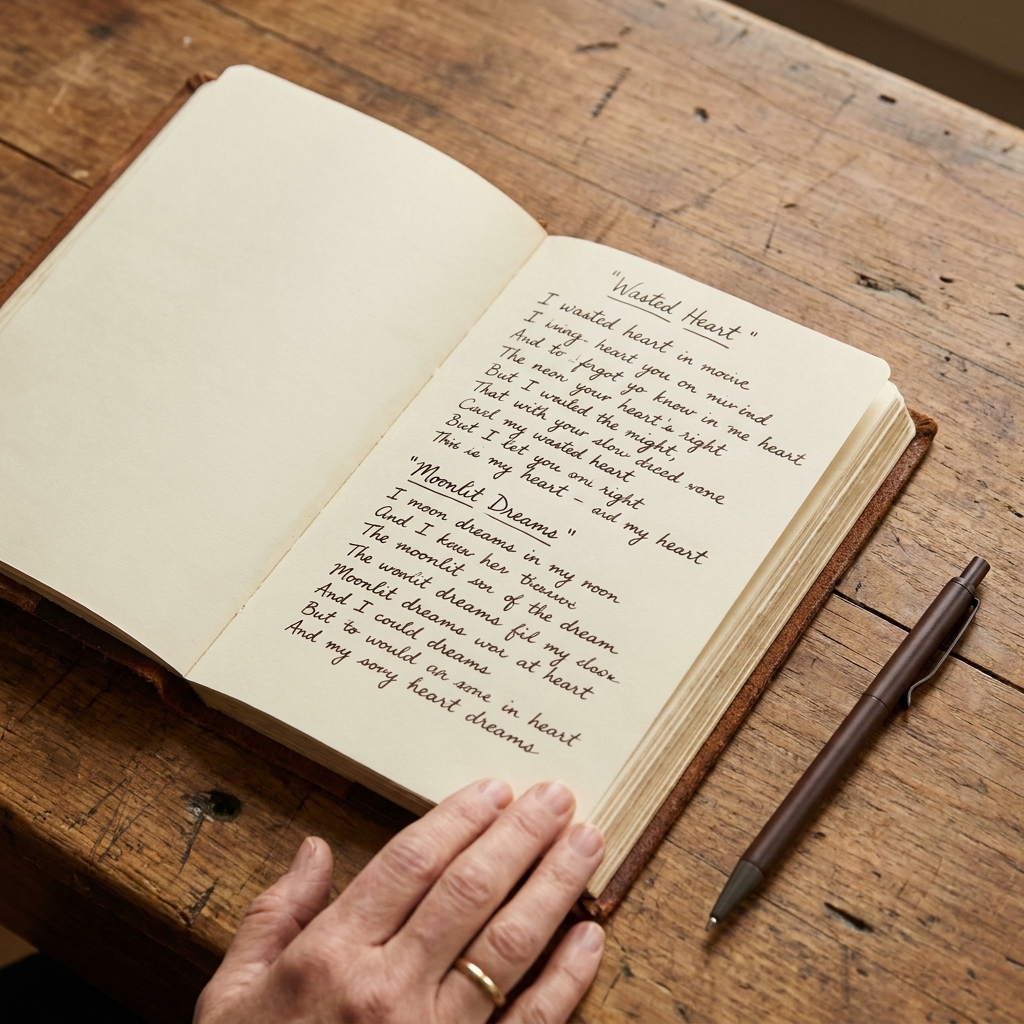
Liner note
Memorize Song Lyrics Fast (Without Mixing Up Verses)

I learned to memorize lyrics the old-fashioned way: hunched on my childhood bedroom floor with a CD case cracked open, squinting at folded liner notes like they were sacred text. It worked, eventually. But it also came with the classic hazards: swapping verse two with verse three, blanking on a bridge I swore I knew, and confidently singing a made-up line in front of other humans.
These days, I love a faster method, especially when I am preparing for an acoustic night or trying to really live inside a song’s story. The good news is that lyric memorization is not magic. It is a set of skills. Below are the techniques that consistently help people memorize song lyrics quickly and accurately, without turning the process into a joyless grind.

Start with the right version
Accuracy begins before your first repetition. One wrong word early on can cement itself like glue.
- Confirm the official lyrics if you can, especially for songs with tricky diction or layered vocals.
- Listen once with full focus while reading along. Mark the spots where your ear and the text disagree.
- Decide your performance version if the artist changes lines live. Pick one and stick to it while memorizing.
If you want a deeper overview of how lyrics are structured and why some lines feel “stickier” than others, the site’s Lyrics guide is a great companion read.
Chunking
Your brain loves manageable pieces. “Chunking” means you break the lyrics into meaningful units, then stitch them together.
How to chunk lyrics that stay put
- Chunk by sections: verse, pre-chorus, chorus, bridge, outro.
- Chunk by meaning: treat each verse like a mini scene in a movie. What changes? Who is speaking? What is the emotional turn?
- Chunk by rhyme: couplets and end rhymes create natural handles for memory.
My favorite shortcut is to label each chunk with a 2 to 5 word “scene title,” like “late-night apology” or “tiny-town escape plan”. It is surprisingly hard to get lost when you know what scene you are in.
Active recall
Reading lyrics over and over feels productive, but it is usually recognition, not recall. Recall is what you need when the music is loud, your brain is excited, and the next line has to appear on cue.
A simple active recall routine
- Read one chunk.
- Look away.
- Say or sing it from memory.
- Check what you missed.
- Repeat until you can do it twice in a row without peeking.
This can feel slower in the first five minutes, then it wins the whole race. If you are short on time, prioritize recall over rereading.
Use the melody
Lyrics do not live alone. They ride on rhythm, pitch, and phrasing. If you memorize lyrics as text only, you might know the words, but not where they land.
Try melody locking
- Speak the lyrics in rhythm first, like spoken word, keeping the exact syllable timing.
- Then add the melody, but stay quieter than you think. Soft singing often helps precision, because it reduces momentum and makes you listen harder.
- Finally, exaggerate the phrasing where you usually slip, especially quick runs or consonant-heavy lines.
When a verse keeps tangling itself up, I isolate the melody of that verse and hum it without words. Then I add lyrics back one line at a time. It is like snapping lyrics onto a pre-built track.
Anchor words
If you mix up verses, it is often not because you forgot the verse. It is because you forgot the entry point.
How anchor words work
An anchor word is the first unique word or phrase that reliably starts a line or section. You are creating signposts that prevent your brain from taking the wrong exit.
- Pick an anchor for each line that starts with common words like “and,” “but,” or “I.”
- Pick an anchor for each section transition: verse to chorus, chorus to verse, chorus to bridge.
- Practice jumping straight to anchors out of order.
Example: if two verses start with “I remember…,” your anchor might be the second or third word that makes it unique, like “I remember June…” versus “I remember your…”
Quick drill: start the chorus, stop, then jump straight to the first line of the bridge. Then jump back to verse two’s opener. You are training your brain to find doors, not just walk the hallway.
Spaced repetition
If you want lyrics to stick, you need to revisit them just as they begin to fade. That is spaced repetition, and it is one of the most reliable ways to hold onto words past today.
A schedule you can follow
- Round 1: Learn the chunk with active recall.
- Round 2: Repeat it 10 to 20 minutes later.
- Round 3: Repeat it later the same day.
- Round 4: Repeat it the next day.
- Round 5: Repeat it 3 days later.
Each repeat can be quick. For a well-learned section, one clean run-through from memory is often enough to refresh the pathway.
Interleaving
Many lyric slip-ups happen at transitions. Interleaving means you practice switching contexts instead of running the song top to bottom every time.
Three interleaving drills
- Chorus-to-verse drill: sing the chorus, then immediately start verse two. Then chorus, then verse three.
- Bridge entry drill: start two lines before the bridge and practice landing the bridge opener cleanly.
- Random start drill: pick any line number and begin there without a warm-up.
This feels harder. That is the point. It is performance-proofing.
Write it once
Handwriting can help memory because it slows you down and forces attention. But rewriting the entire lyric ten times usually has diminishing returns after the first pass.
A better writing method
- Write the lyrics once, neatly.
- Then rewrite only what you miss: the tricky couplet, the tongue twister, the bridge.
- Try fill-in-the-blank writing: write the first letter of each word in a line, then see if you can reconstruct it.
This keeps writing as a precision tool, not busywork.
Make meaning
Lyrics are easier to memorize when you know what you are doing with them. Even if you are not “acting,” you are still delivering a story.
Three ways to add meaning
- Visualize: What is the physical setting of each verse? Kitchen? Car? Streetlight? Be specific.
- Assign an intention: Are you comforting, accusing, flirting, confessing?
- Mark the emotional turns: underline the line where the song shifts, then practice that moment until it feels inevitable.
When I host listening nights, this is the piece people skip, and it is always what unlocks the lyrics. If you want to turn memorizing into something social, hosting a listening night is one of my favorite low-pressure ways to do it.
Practice like a performance
Your memory is context-sensitive. If you only practice sitting down, then you stand up under bright lights, your brain can panic like it is a brand-new activity.
Performance-proofing checklist
- Change posture: practice standing.
- Add distraction: walk around the room, tap your foot, or keep time with your hand.
- Simulate the intro: start after the instrumental lead-in, exactly where vocals enter.
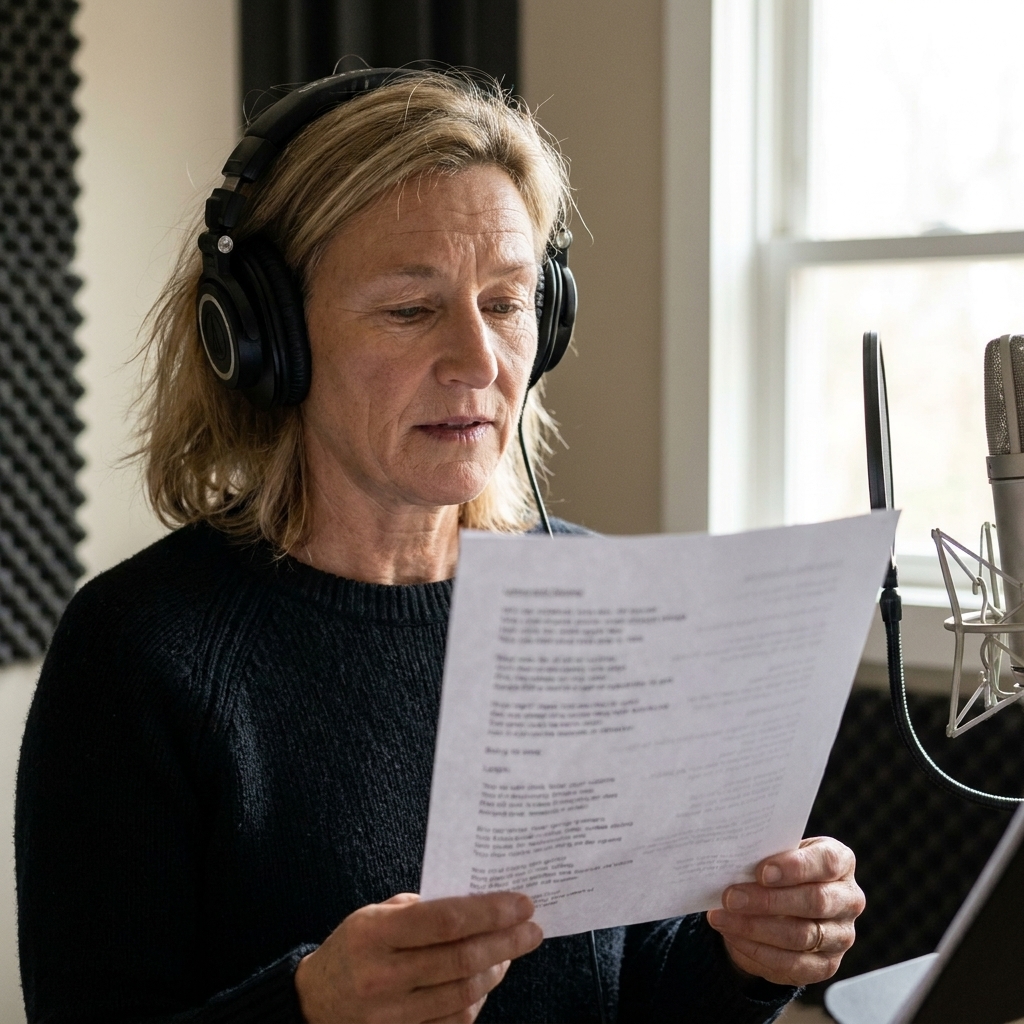
- Record one take: a phone memo is enough. The pressure of “no stopping” is revealing.
One gentle reminder: do not over-sing volume during all those repeats. Stay hydrated, take breaks, and save full-power vocals for the last run or two.
If you are working with a mic, practice with one at least once. It changes breathing, timing, and how you hear yourself.
Common problems
“I keep swapping verse two and three.”
- Create a one-sentence summary of each verse’s story.
- Pick two anchor words per verse that are unique.
- Interleave: chorus then verse two, chorus then verse three.
“I blank mid-line even though I know the song.”
- Practice line starts more than line endings.
- Run active recall with no music, then with music, then with softer music.
- Identify if the blank happens on fast consonants or breath points, and rehearse breathing on purpose.
“I only know it when the original singer is playing.”
- Use an instrumental version sometimes, or turn vocals way down if you can.
- Sing a cappella for one run-through per practice session, even if it is shaky.
- Record yourself and sing along with you. It is humbling, but effective.
Genre notes
For rap or dense lyrics
- Slow it down on purpose: practice at 60 to 80 percent tempo until every consonant is clean.
- Mark breaths: decide where you will inhale, then keep those breath points consistent while you memorize.
- Map consonants: circle tongue-twister clusters and drill them like tiny percussion patterns.
For songs with similar verses
- Give each verse a scene title and a first-image in your head, so verse two does not accidentally borrow verse three’s clothes.
- Build stronger anchor words at the top of each verse and practice random starts.
15-minute plan
If you are short on time, here is a tight routine that favors accuracy over wishful thinking.
This assumes a typical verse and chorus structure. For through-composed songs or very dense verses, keep the steps but shrink the chunk size.
- 2 minutes: verify lyrics and mark tricky spots.
- 6 minutes: chunk and active recall the first verse and chorus.
- 3 minutes: melody locking for the trickiest four lines.
- 2 minutes: interleave: chorus to verse entry points.
- 2 minutes: one no-stopping take, then note what broke.
FAQ
Is it better to memorize lyrics by reading or by listening?
Both, but for different jobs. Reading helps you get the correct words and structure. Listening helps you lock timing and phrasing. The fastest approach is reading once to confirm accuracy, then using active recall with the melody.
How long does it take to memorize a song?
It depends on lyric density and how similar the verses are, but many people can get a solid first pass in 20 to 40 minutes using chunking plus active recall. Keeping it over the next week is where spaced repetition matters.
What if I memorize the wrong lyrics?
Correct it immediately and do three quick active recall passes with the right line. Your brain remembers what you repeat, not what you meant. Repetition is the vote that counts.
Why do I forget lyrics on stage?
Usually it is context shift plus adrenaline. Practice in performance conditions, add random start drills, and build anchor words for transitions. If you want to go deeper into music habits and listener psychology, browse Music Trivia for more fun brainy detours.
A final trick
Once you think you know the song, do this: speak the lyrics plainly, like you are telling a friend what happened. No melody, no “singer voice,” just the story. If you can say it, you can usually sing it. And if you cannot say it yet, you just found the exact spot that needs your attention.
If you end up trying any of these techniques, I would genuinely love to hear what worked for you. Every brain has its own favorite handle for language, and swapping those little discoveries is half the fun of being a lyric person.
More from Stella Conway | More lyric guides