
Liner note
Hits That Never Say Their Own Title

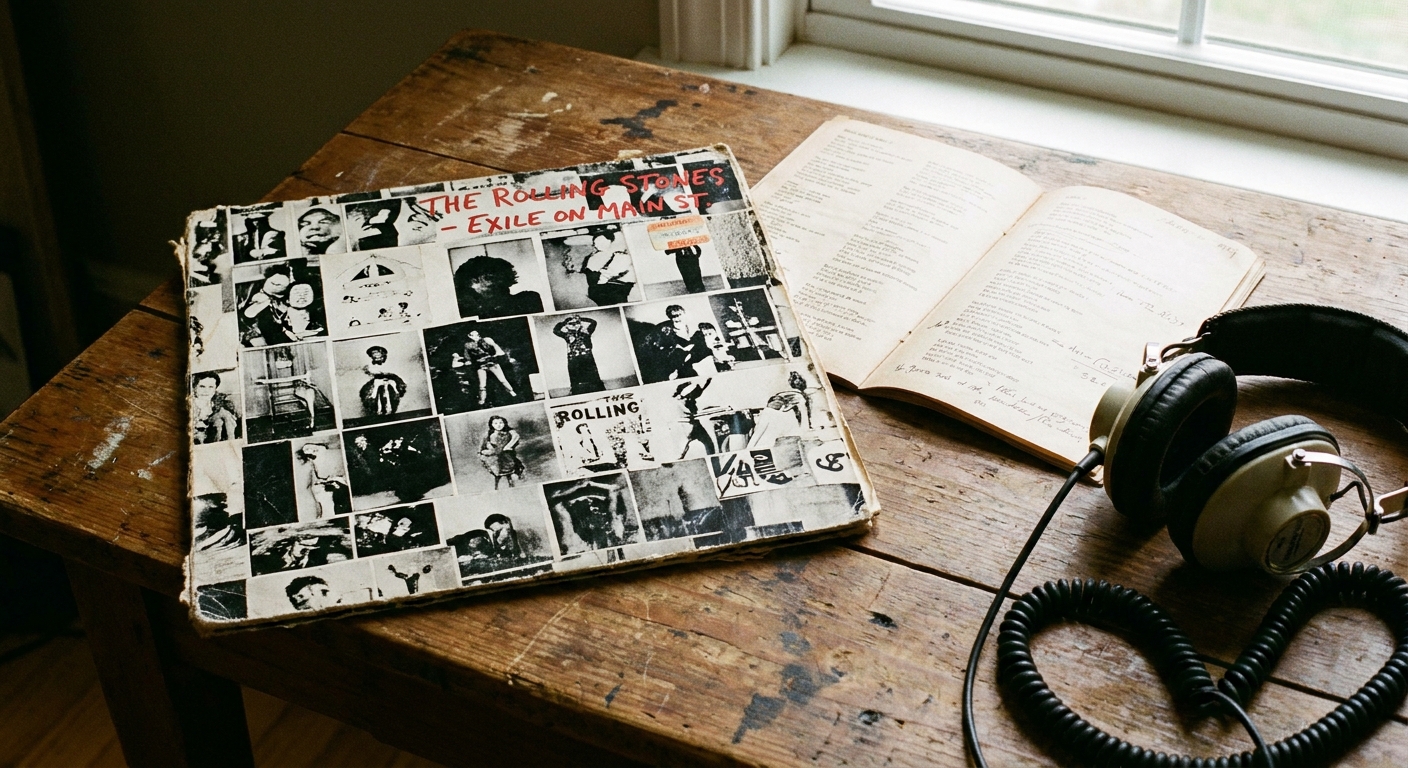
I still remember the first time I noticed it. I was in my childhood bedroom, kneeling on the carpet with a CD booklet spread open like a treasure map, and I could not find the song title anywhere in the lyrics. Not in the chorus. Not in a sneaky ad-lib. Nowhere. I felt mildly betrayed, then instantly fascinated.
That little trick has a name in my head: zero-title songs. It happens when a song’s official title is never sung in the song’s lyrics. Plenty of massive hits do it on purpose, and once you know what to listen for, you start spotting the craft choices behind it.
What it means
In the most literal sense, it is simple: the exact song title phrase never appears in the sung lyrics.
Two quick clarifiers make this less slippery in real life:
- Partial matches do not count (in my definition). If the title is “Golden Hour” and the lyric only says “hour” or “golden,” I still treat it as a zero-title song. I am listening for an exact phrase match.
- My rule of thumb: if you can hear the title as part of the performed vocal (lead or clear backing vocal), it is not a zero-title song. If the title only shows up as a track label, a metadata line, or a fan annotation, it still counts as a zero-title song to me.
A few common near-misses also confuse people:
- Close paraphrases: The lyric might orbit the idea of the title without quoting it.
- Background chatter and samples: Sometimes a title shows up in an intro, a producer tag, or a sampled voice. If it is clearly part of the performed vocal, many listeners count it. If it feels like studio debris or an outside clip, I treat it as a gray area.
- Live versions: An artist might add the title onstage as a crowd-pleaser even if it is absent on the studio recording.
If you want the cleanest definition, use this: the official studio-release lyrics do not contain the title phrase, as verified by the first-release album booklet when available, or the most authoritative artist, label, or publisher lyric source you can find for that original release.
One more wrinkle I have learned to watch for: track titles can change across releases. Soundtrack retitles, remaster tags, or parenthetical additions can make it look like a lyric is “missing” a title that did not exist on the first album or single version. For zero-title listening, I always judge the title as released for the primary studio track.
Why writers leave it out
Most of the time, it is not an accident. It is a storytelling decision. Here are the big artistic reasons I hear when I talk to everyday songwriters at local acoustic nights, plus what I notice when I deep-listen.
1) The title is a lens
Some titles are like the name of a painting. They frame the whole piece from outside the canvas.
- They can signal a theme or mood you are meant to hold while the scenes unfold.
- They can point you toward subtext the narrator never directly admits.
2) The hook is melodic
Pop trains us to expect a title drop in the chorus, but a hook can be rhythm, harmony, rhyme, or even a repeated vowel sound. If the melodic hook is already doing the work, the lyric does not also have to carry the branding.
3) The title would sound unnatural
Some titles are too formal, too poetic, too specific, or too written. A believable narrator might never say that exact phrase out loud, even if they live inside the emotion of it.
4) Ambiguity is the point
Leaving the title out can keep the song slightly unresolved. The listener has to meet the writer halfway, which creates a surprisingly strong bond.
5) The title is for the tracklist
Sometimes the title gets chosen for practical reasons: memorability, differentiation, or because it looks good on a tracklist. The lyric stays true to the character’s voice, and the title stays true to the album’s architecture.
If you enjoy seeing how structure carries meaning, you will probably like Verse, Chorus, Bridge: Where the Story Hides.
Famous examples
There are countless cases across genres, but here are a few widely known ones that show different flavors of the technique.
One small note before we start: I am counting the standard studio recording and checking the first-release title. Artists can sneak the title into a live shout-out, an intro, a crowd chant, or a later reissue credit line. That does not change the original zero-title move.
“Space Oddity” (David Bowie)
Major Tom is all over the song, and so is the atmosphere of distance and drift, but the exact phrase “Space Oddity” never arrives like dialogue. The title works more like a file name than a line the narrator would actually say.
“Baba O’Riley” (The Who)
This one is famous because so many people think the title is “Teenage Wasteland.” That repeated line becomes the listener’s handle, while the real title stays outside the lyric world.
“Bohemian Rhapsody” (Queen)
This title is practically a neon sign in your mind, but not in the vocal. The lyrics move through confession, opera, and head-spinning scene changes without ever saying “Bohemian Rhapsody.” The title feels like a category the band invented, not a phrase any character would speak.
A quick note on two debated picks
Two songs get cited constantly in “never says the title” conversations: “Iris” and “Sympathy for the Devil.” They may still qualify under an exact-phrase check, but because my whole point here is precision, I only count a song as zero-title if the studio lyric is confirmed against a first-release booklet or an authoritative publisher, label, or artist lyric source. If you are using this article for trivia or a playlist challenge, treat those two as “verify first” entries, not slam-dunks.
Want more lyric-detective fun? Our Music Trivia guide collects the kinds of details that make re-listens addictive.

How to spot it
You do not need a lyric sheet to catch zero-title songs, although it helps. Here is my favorite way to confirm it with your own ears.
Step 1: Find the hook zone
Most title drops happen in one of three places:
- The chorus
- The last line of the chorus
- The post-chorus chant or repeated tag
So if you keep waiting for the title and the hook zone passes two or three times without it, your odds go way up.
Step 2: Listen for orbit phrases
Zero-title songs often use a tight cluster of phrases that almost summarize the title. It can sound like the writer is circling the idea on purpose. If you hear repeated concepts but no clean banner line, that is a clue.
Step 3: Check the bridge
Bridges love clarity. If the title is missing, the bridge often compensates with:
- a new image that explains the emotional stakes
- a key line that the whole song leans on
- a perspective shift (you, me, we, they)
That is one reason I keep coming back to bridges when I analyze lyrics.
Step 4: Verify with an authoritative lyric source
Fan lyric sites are great for vibe checks, but to truly confirm a zero-title song, I look for the first-release album booklet when available. If that is not accessible, I use the most authoritative artist, label, or publisher lyric source available for that same studio version. My inner kid with the liner notes approves.
If you want a more methodical approach to close reading, you can hop into Analyze Song Lyrics Like a Literary Critic.
What it does to you
When a title never appears, something interesting happens in your brain: you start treating the title like a secret caption.
- It increases replay value. You keep listening to figure out where the title belongs.
- It makes the song feel bigger than its words. The title becomes an extra layer floating above the narrative.
- It invites personal interpretation. Without a title drop telling you what to feel, you get more space to decide.
This is also why debates flare up around these songs. People want the title to function as a key. The writer hands you a keychain with no labels and says, follow the feeling.
Common misconceptions
“If they do not sing the title, the label renamed it.”
Sometimes, yes. But plenty of artists choose title phrases for the tracklist that are not meant to appear in-character. Album sequencing and naming is its own art form.
“A song has to say its title to be catchy.”
Nope. Catchiness lives in repetition, rhythm, and expectation. Some of the stickiest choruses on earth never speak the official title.
“If a backing vocal whispers the title, it counts.”
My take: if it is clearly part of the performed vocal, I count it as a title mention, even if it is tucked low in the mix. If it is a producer tag, a studio aside, or a sampled fragment that is not really functioning as lyric, I file it under gray area.
If you love those half-hidden moments, you might enjoy Decoding Studio Chatter: 10 Classic Left-In Moments.
Try it
Pick three songs you know by heart and do this:
- Write the titles down without looking up lyrics.
- Sing the choruses from memory and listen for an exact title match.
- If you cannot find it, check a first-release booklet or other authoritative lyric source for that studio version and confirm.
- Ask: if the title is not spoken, what line is doing the title’s job instead?
The last question is the real unlock. It trains you to hear songwriting choices, not just memorize words.

FAQ
Is there an industry term for this?
You will hear people say “non-title track” or “no title drop,” but it is not a strict technical term like verse or chorus. It is more of a listener’s category, which makes it perfect for trivia nights and lyric nerd conversations.
Do instrumentals count?
Instrumentals are a different game because there are no lyrics to contain the title. When people talk about zero-title songs, they usually mean songs with vocals where you would expect a title drop.
Can a song title be a spoiler?
Absolutely. Sometimes the title gives away the answer to the story, so the lyric stays more cinematic and the title sits above it like a final reveal.