
A practical method to find recurring lyrical motifs—images, objects, metaphors, and emotional patterns—across an artist’s catalog, plus a 20-minute worksheet.
Liner note
Decoding Music Video Easter Eggs

Published
I learned to watch music videos the same way I learned to read liner notes: like there is always one more secret tucked into the fold. The best videos are not just “visuals for a single.” They are little museums of an artist’s private symbolism, full of props, colors, locations, and blink-and-you-miss-it gestures that point back to lyrics you already know by heart.
This guide is for anyone who wants to watch more actively and start catching visual callbacks to lyrical continuity: the recurring motifs, hidden narrative tie-ins, and cinematic references that make a video feel like part of a bigger story.
What counts as a music video easter egg?
An easter egg is a deliberate detail placed to reward close attention. In music videos, that can mean:
- A callback to a lyric (a line about “keys” paired with a key-shaped locket, a lyric about “cold hands” paired with frost on a window).
- A thread across an artist’s catalog (the same car, the same color, the same room layout reappearing years later).
- A clue about the narrator (a name tag, a newspaper headline, a prescription bottle, a calendar date).
- A reference to another work (a film homage, album art recreation, famous photograph framing).
- A story expansion (the video answers a question the lyrics asked, or contradicts them on purpose).
The important part is intention, or at least purposeful-seeming placement. A good easter egg is not just random set dressing. It changes how you hear the song, or how you connect it to others.
Before you hit play
Watch once for vibe, once for receipts
First pass: let the video do what it is meant to do. Second pass: go detective mode. I like to pause only on the second watch so I do not break the emotional spell too early.
And yes, by “receipts” I mean evidence: the little proof points that explain why a moment hits as hard as it does.
Pull the lyric sheet up beside you
If you are trying to spot lyrical callbacks, you need the text. Even when you know every word, seeing it written helps you notice repeated nouns and verbs. If you want a refresher on close reading, my approach in Analyze Song Lyrics Like a Literary Critic pairs perfectly with video hunting.
Prime your brain with motif words
Scan the lyrics and circle concrete items: rooms, weather, clothing, vehicles, food, brands, numbers, colors, animals. These are the easiest to turn into visuals, and artists know that.
Turn on captions (even for music)
Some platforms caption non-lyrical sounds like “door creaks” or “phone buzzes.” Those moments can be plot points, not ambience. If you love this kind of micro-listening, you will also enjoy Decoding Studio Chatter: 10 Classic Left-In Moments, which is the audio cousin of video easter eggs.
Give yourself the best view
If your mission is to read background text, do yourself a favor: watch on the biggest screen you have, bump the resolution if the platform allows it, and avoid tiny picture-in-picture windows. Compression can swallow the very details you are trying to catch.
Where easter eggs hide
1) Props that act like keywords
Directors and stylists use props the way lyricists use repeated phrases: to anchor meaning. When a prop gets an extra beat of camera time, it is usually worth asking what job it is doing.
- Handheld objects: rings, lighters, cameras, books, keys, letters, phones.
- Paper goods: postcards, receipts, ticket stubs, report cards, police reports.
- Containers: suitcases, jewelry boxes, pill bottles, matchbooks.
My rule: if the camera frames it like a character, treat it like a character. A letter is never just a letter when it is shot like a confession.
2) Wardrobe as emotional subtext
Clothing can echo lyrics literally (a “red dress” moment) or thematically (armor-like leather for a defensive narrator, soft knits for vulnerability). Watch for:
- Color consistency: a character always in one shade, then suddenly switching.
- Repeating silhouettes: the same coat across different eras, implying continuity.
- Accessories as symbols: locks, chains, religious imagery, nameplates.
3) Background text you can read
When I was a kid I would pause VHS tapes to read the “tiny stuff.” That habit pays off now. Look for text on:
- License plates
- Street signs
- Posters on walls
- Phone screens and notifications
- Newspapers and magazines
- Calendars and dates on paperwork
Sometimes it is pure continuity. Sometimes it is an inside joke. Sometimes it is a timeline clue (dates, addresses, room numbers) that pins the story to a specific moment.
4) Camera choices that whisper “remember this”
Not every hint is an object. Filmmaking language itself can carry meaning:
- Lingering close-ups often signal symbolic weight.
- Rack focus (shifting focus from foreground to background) can be a gentle nudge toward what matters, even if it is sometimes just an aesthetic choice.
- Mirrors and reflections often mean identity games, doubles, alter egos, or self-deception. If you love that angle, Decoding Artist Alter Egos digs into how performers build characters you can track across songs and visuals.
- Repeated framing (the same doorway shot, the same angle on a bed, the same hallway) can imply a loop, a memory, or a stuck emotional state.
5) Sets as worldbuilding
Concept albums and “eras” live in architecture. When an artist returns to a specific kind of space, it is rarely meaningless: diners, motels, gyms, churches, school hallways, empty pools. Think of sets as recurring locations in a TV show.
If you enjoy connecting track-to-track storytelling, you will probably like How to Follow a Concept Album Story From Track One to the Finale.
Spotting lyric callbacks
Start with nouns, then track the transformations
Lyrics give you the object. The video shows what the object becomes.
- A lyric about a house might become a set that changes from warm and lived-in to sterile and staged.
- A lyric about water might show rain at first (cleansing), then flooding (overwhelm), then still water (acceptance).
- A lyric about gold might show jewelry (status), then a trophy (validation), then a cage (the cost).
Look for chorus moments repeated visually
Pop choruses repeat for a reason, and videos often mirror that with a repeated visual ritual: a dance move, a doorway, a specific prop lifted into frame. If the chorus lyric changes slightly, check whether the visual changes too. That is often where the meaning sharpens.
If you want to get more precise about where meaning hides, Verse, Chorus, Bridge: Where the Story Hides can help you map what you are seeing to the song’s structure.
Track motifs across multiple videos
When fans talk about “lore,” they usually mean an interconnected set of recurring symbols. An artist’s signature motifs can be:
- A specific color palette that returns during heartbreak songs
- A recurring object (phone booth, suitcase, mask)
- A repeated animal image (birds, snakes, wolves)
- A particular number (apartment number, jersey number, date)
Once you spot a repeat, you can start building your own little motif list. For lyric-first motif tracking, How to Spot an Artist’s Signature Lyrical Motifs is a great companion read.
Pay attention to who sees what
One of my favorite tricks is when the viewer is allowed to see an easter egg that the on-screen character never notices. That creates dramatic irony: the video is telling you the narrator is lying, unaware, or about to be surprised.
Ask:
- Who is looking at the object?
- Who is being framed with the object?
- Does anyone hide it, drop it, or pass it to someone else?
Cinematic references
Music videos borrow the visual grammar of movies constantly. You do not need to recognize every reference to appreciate what it is doing, but it helps to know what to look for.
Three common types
- Direct recreation: a famous shot composition, costume, or set piece.
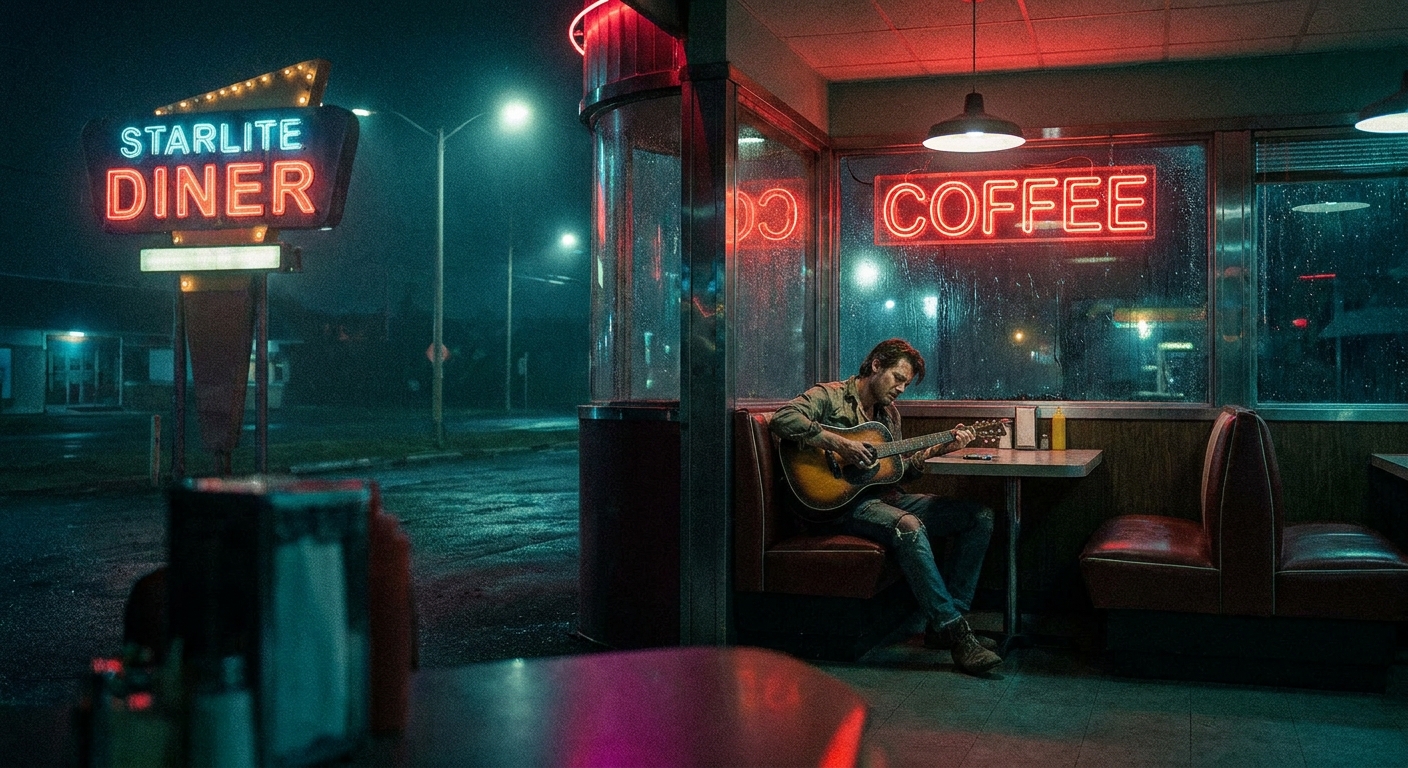
- Genre coding: neon and rain for noir, wide desert roads for western, sterile white rooms for sci-fi.
- Creator fingerprints: a particular style of camera movement, color, or editing rhythm.
When you suspect a reference, the fastest check is often the director’s filmography and interviews. A good starting place is the public credit listing for the video. For that, IMDb can be a starting point (especially for directors and cinematographers), and Art of the Title is great if the video has unusually stylized typography or opening-credit vibes that echo cinema.
Easter egg languages
Color as a timeline
Some artists assign colors to emotional states, eras, or relationships. If a video returns to a color from an older era, it can be a clue that the narrator is back in that headspace. Watch for:
- One accent color that appears only when a specific person is mentioned in lyrics
- A sudden color drain when the song hits a truth-telling bridge
- Opposing colors (warm vs cool) separating two versions of the narrator
Numbers and dates
Numbers show up in room doors, clocks, receipts, and sports jerseys. Sometimes they are release dates or birthdays. Sometimes they are pure fiction inside the story. A repeated number across videos is often intentional, but it can also be branding, set reuse, or coincidence. The trick is to look for reinforcement: does the number show up next to the same object, color, or lyric idea?
Mirrors, doubles, masks
This is the visual shorthand for identity tension: public self vs private self, narrator vs character, truth vs performance. If you want to go deeper into how artists build these personas, Decoding Artist Alter Egos is made for that rabbit hole.
Fake media inside the video
Watch for newspapers, talk show clips, voicemail recordings, tabloid covers, and in-universe social posts. These are basically bonus verses. They can clarify the plot or intentionally distort it, which is a very lyricist move.
The 10-minute rewatch
If you do not want to spend an hour pausing and squinting, here is my go-to quick routine:
- First rewatch: focus only on recurring objects. If it appears twice, it is often worth asking why.
- Second rewatch: scan the background for readable text in three places: walls, screens, paper.
- Third rewatch: note any repeated camera framing at the chorus and bridge.
- After: pick one lyric line that feels like the thesis and ask, “Which visual is answering this line?”
This works because you are narrowing your attention without turning the experience into homework.
If you like taking notes, keep it gentle: jot three bullets max. One object, one line of text, one moment that repeats. Then go back to just watching.
When the “egg” is misdirection
Sometimes the point is not to confirm the lyric, but to complicate it. A video might:
- Contradict the narrator to suggest denial or self-mythology
- Show a different ending than the lyrics imply
- Recast a villain as a mirror of the protagonist
If you find yourself thinking, “Wait, that is not what the song says,” that is not failure. That is the conversation between mediums. Lyrics can be one person’s diary entry. Video can be the director’s interpretation, or the artist’s later revision of the memory.
Who plants the eggs?
One more reality check I have learned to love: not every meaningful detail is planted by the singer themselves. A lot of “continuity” comes from collaborators, like directors, stylists, editors, and production designers who know the catalog and enjoy building a through-line.
And sometimes fans (me included) over-read. That is not a sin. I just try to hold my interpretations lightly until I see patterns repeat, or until the lyric and the visual start finishing each other’s sentences.
FAQ
Do all music video details mean something?
No, and that is the fun tension. Some details are practical. But when something is repeated, centered in frame, or paired with a lyric keyword, it is usually intentional enough to interpret.
How do I tell the difference between an easter egg and a coincidence?
Look for clusters. One suspicious detail might be coincidence. Three details pointing the same direction usually means design. Repetition across videos is the strongest evidence.
What if I do not know the artist’s continuity?
You can still read the video as its own short film. Then, if you love it, work backward through earlier singles and see what repeats. That is where the bigger story starts to feel real.
Is pausing the video cheating the experience?
I do not think so, but I keep it to the second watch. Let the first viewing be emotional. Let the second be forensic.
Keep it fun
My favorite part of easter egg watching is that it makes you appreciate how many people are telling the story: lyricists, directors, stylists, production designers, editors. When you start noticing those layers, you do not just understand the video better. You hear the song differently too.
If you want to keep building your “active watching” muscles, wander through our Pop Culture guide, and when you are ready to bring the focus back to the page, try Reading Lyrics as Poetry.