
Liner note
Reality TV Song Strategy

I have a very specific memory of being in my childhood bedroom with a CD booklet open on the carpet, rewinding one line over and over because I could not figure out why it hit me so hard. Years later, I watch a singing competition show and feel that same tug, except now I also hear the gears turning.
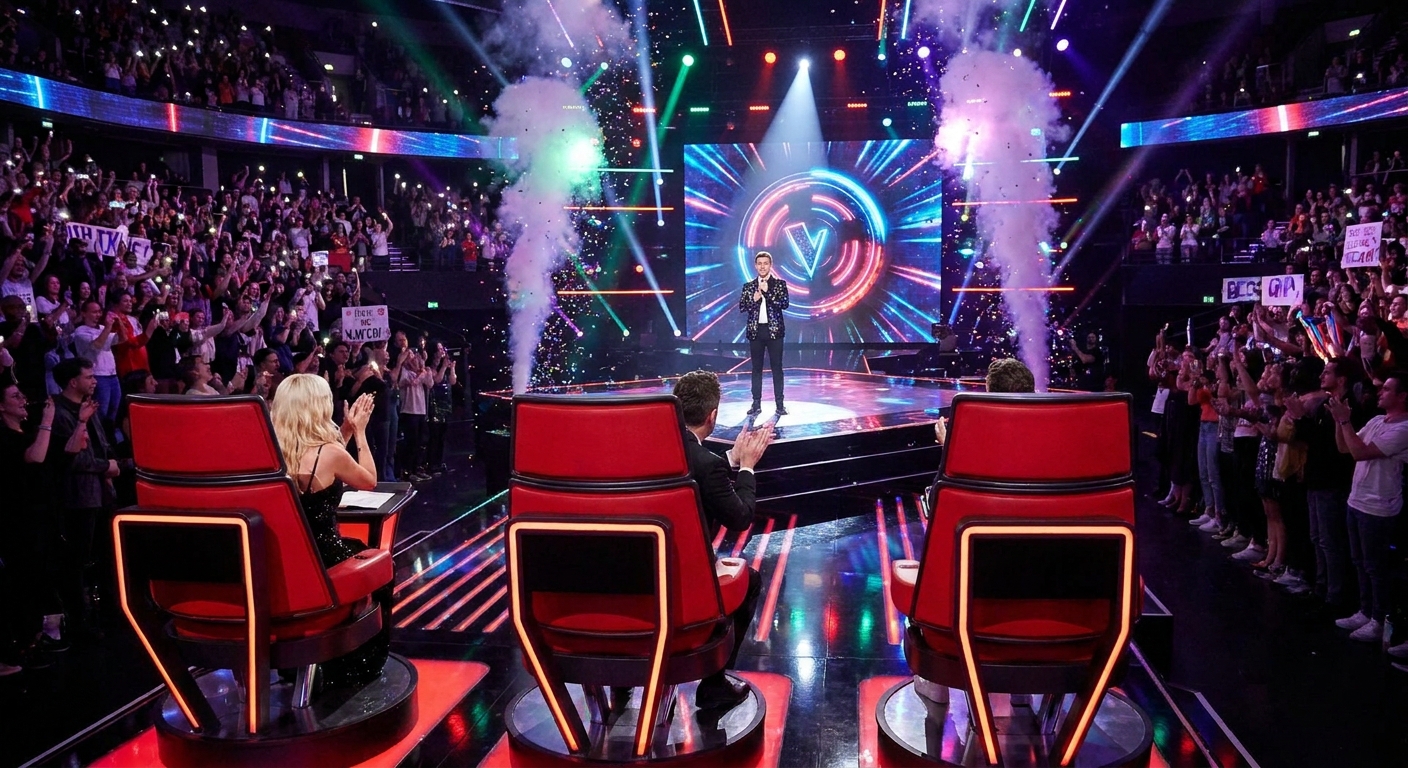
That is not an insult to the singers. It is the format. These shows are part music, part storytelling system, and lyrics are one of the easiest levers to pull. In many formats, contestants, mentors, and producers are all involved in shaping song choice and arrangement, within a tangle of constraints like song clearance, pre-approved lists, time limits, and what the band can realistically rehearse in a week. Still, the end result can feel the same: a performance that guides how you feel about a person in about 90 seconds. If you have ever thought, “Why am I crying at a song I have heard a hundred times?” this is for you.
The real game
On paper, the premise is simple: sing well, get votes, survive. In practice, the performance is doing two jobs at once.
- Musical job: show range, tone, control, taste.
- Story job: tell us who you are, what you have been through, and why we should root for you.
Lyrics are the shortcut between those two jobs. A big note impresses me. A specific line, sung at exactly the right moment, convinces me I know you.
If you want to listen like the show is built, keep one idea in mind: a competition performance is not a cover, it is an argument. It argues for your identity.
For a general toolkit on reading words like they are doing real literary work, I lean on analyzing song lyrics like a literary critic.
Song choice is character
People talk about “song choice” like it is taste. It is also narrative casting.
Here are the most common story roles a song can assign:
- The survivor: songs that frame pain as endurance. These lean on lines about making it through, standing back up, being built by fire.
- The romantic: lyrics that let you sing directly at the camera. Second person pronouns do a lot of work here.
- The old soul: classics that telegraph seriousness and “real music” credibility.
- The risk taker: a left field genre switch that creates suspense, even before the first note.
- The underdog with a point to prove: a song with a famous vocal peak that functions like a dare.
There is also a more practical layer that shapes the story. A contestant might love a deep cut, but the show may need a track that can be cleared quickly, arranged for the house band, and recognized within the first chorus. Those limits can steer “identity” as much as taste does.
When you feel like a contestant “finally found their lane,” it is often because the lyrics finally match the story the show has been quietly writing around them.
Which lines survive
On many televised rounds, performances are not full songs. They are highlight reels. That means the most powerful tool is not what you sing, it is what you do not sing.
Watch for these moves:
- Skipping the first verse: many songs begin with scene setting. Shows cut that for emotional speed. You jump straight to the wound.
- Choosing the “confession” verse: the verse where the lyric gets plain, personal, and direct often becomes the opening. It makes the performance feel like a diary entry.
- Keeping the title line: if the hook is the thesis, it stays. Even when verses are cut, the song’s slogan survives.
- Ending on a different line: a song’s last line can change what we think it was about. A strategic cut can turn a messy story into a clean moral.
A common pattern you can spot even without knowing the original track well: an upbeat pop hit gets trimmed down to its most regretful verse and its most anthemic hook, then everything that sounds petty, funny, or messy quietly disappears. Same song. Cleaner protagonist.
If you want to see how structure hides meaning, it helps to know what is being removed. I break that down in verse, chorus, bridge: where the story hides.
Pronouns do work
Sometimes the most effective “edit” is tiny. One word can aim a song like a spotlight.
- “You” songs: second person lyrics feel like direct address, even when they are not. Perfect for camera close-ups and judge reaction shots.
- “I” songs: first person lyrics feel like autobiography. Even if you did not write the song, the grammar recruits the audience into believing you did.
- “We” songs: instant communal uplift. The chorus becomes a pep talk, and suddenly you are not competing, you are leading.
One little mini-tell: in rehearsal packages, you will sometimes hear contestants explain a song as “what I would say to my dad” or “what I wish I could tell her.” Then on stage, the lyric is already built to say you. That is not an accident. It is television alignment.
Key changes
A key change is not just a vocal flex. It is a plot twist. It says, “Something has shifted,” even if nothing in the lyric changes.
On competition shows, key changes often do one of three things:
- Turn longing into triumph: the lyric stays sad, but the lift feels like resolution.
- Create the “moment” for judges: the timing is frequently late, so it reads as escalation and bravery.
- Buy emotional certainty: a higher key can make a familiar line feel newly urgent, like you mean it more this time.
If you have ever wondered why you get chills right as you realize the chorus is back again, this is part of it. The format tends to build toward a reliable peak.
Arrangement changes meaning
This is where the mechanics become easiest to hear. Change the arrangement and you change the moral of the song.
Strip it down
Take a song that is originally glossy or dance-driven and play it on piano with space between chords. Suddenly the lyric looks “deeper,” because your brain can hear every syllable.
It also removes irony. A sarcastic line can become sincere when you slow it down and take away the beat that winked.
You have probably seen this exact flip: a cheeky breakup banger becomes a slow confession, and the audience reacts like they are hearing the words for the first time. They are, in a way. They are hearing them without the original shield.
Change the groove
A groove can reframe agency. A lyric that sounds pleading over one rhythm can sound confident over another. This is why “make it acoustic” is not neutral. It is a narrative choice.
Move the spotlight word
Sometimes a contestant will hold or bend a word that the original song tosses away. If that word is the emotional keyword, like hurt, home, forgive, goodbye, it becomes the thesis.
That is not cheating. It is interpretation. But it is interpretation aimed directly at your tear ducts.
Genre and intelligibility
Genre matters here, too. Country and folk arrangements tend to keep the lyric front and center, which helps a storyline land fast. R&B runs and big pop belts can be stunning, but they sometimes blur consonants, especially in a live mix. On a competition show, where you may only get a verse and a chorus, intelligibility becomes part of strategy: if the words are the story, you have to be able to hear them.
Clean swaps
Sometimes a lyric is changed because of broadcast standards. That can accidentally, or conveniently, change the story.
A softened word can blunt anger. A removed detail can make a narrator seem less responsible. A censored line can erase the reason the speaker was furious in the first place.
If you like tracking how edits reshape meaning, radio edits vs explicit versions gets into the mechanics of what disappears and what that does to the plot.
Staging assigns lyrics
This part is the most delicate, because it is where television turns interpretation into identity.
Reality shows love a performance that can be captioned without captions: a bereavement song after a loss package, a forgiveness song after a conflict montage, a self worth anthem after an insecurity storyline.
The lyric becomes a statement the contestant never had to say outright. The show says it for them, in the safest language possible: borrowed poetry.
Even the on-screen choices can steer you. Subtitles that highlight one repeated phrase, a lower-third that frames the song as a dedication, a recap that replays the same line twice, those are not just accessibility or time-filling. They are story emphasis.
If you have ever felt like a song “answered” something that was happening in the episode, it probably did. That is how the episode was built.
Judge notes
Listen to feedback closely. A lot of it is musical, but some of it is narrative direction in disguise.
- “Make it your own” often means: give us clearer identity, not just accuracy.
- “I want to see more of you” often means: pick lyrics that reveal, not lyrics that show off.
- “That was a moment” often means: the peak landed where television wanted it.
Once you hear it, you cannot unhear it. They are coaching character as much as vocal.
Watch without cynicism
I still get pulled in. I still get misty at the right line. Not because I am naive, but because the craft works.
Here is the trick I use to stay emotionally open while keeping my eyes open:
- Notice the lyric that got repeated. The show will circle back to a phrase in recaps, in judge quotes, in subtitles, in social clips. That is the “tagline” of the contestant’s week.
- Ask what the cut removed. Was there a verse that complicated the narrator? A line that made the story less clean?
- Clock the biggest shift. Key change, tempo drop, sudden silence, a cappella line. Whatever the big move is, it is there to make the lyric feel inevitable.
And if you want to go one step deeper, try identifying what kind of writing is doing the heavy lifting. Metaphor, repetition, contrast, understatement. I keep a quick field guide in 8 literary devices in pop music and how to spot them.
What I hear now
Back in my childhood bedroom, I thought the line that wrecked me did it by magic. Now I know it did it by design. That does not make the feeling fake. It makes it understandable.
So when a contestant steps into the spotlight and sings a lyric you have heard forever, listen for the reroute. Which word did they make the center? Which verse did they skip? What did the arrangement decide the song “means” tonight?
Once you start hearing those choices, the show gets better. Not because it stops being manipulative, but because you can finally see the craftsmanship that is trying, very hard, to move you.