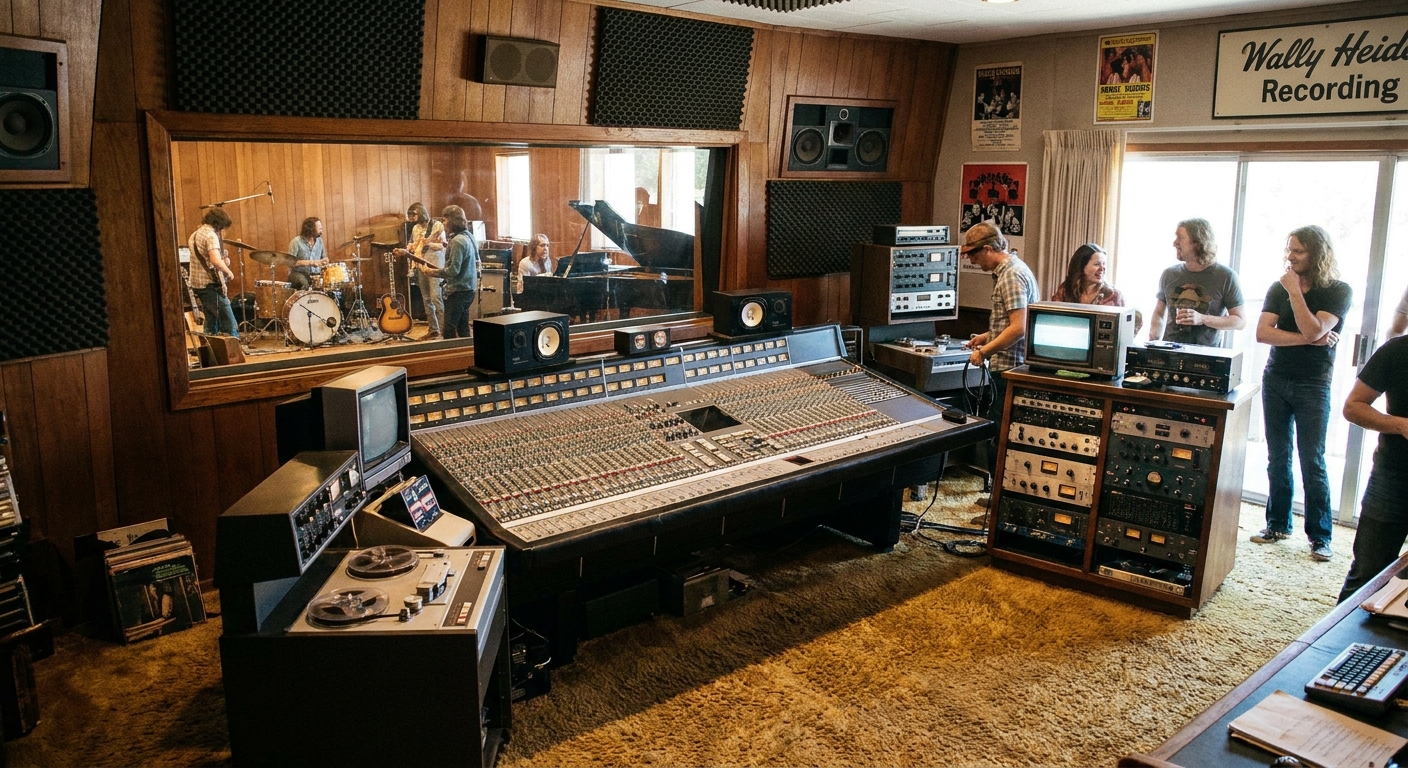

A practical listening method for catching onstage lyric changes—consonants, rhyme patterns, breath spots, POV shifts, band cues, and repeat tests to confirm ...
Liner note
Award Show Audio: Spotting Live Vocals vs. Lip-Syncing

Published · Last updated
I grew up rewinding televised performances the way other kids rewound movie scenes, trying to figure out what was real. Not because I wanted to catch anyone out, but because it felt like learning a magic trick: once you notice how the sound is built, you start hearing the craft.
Awards shows are a special kind of sonic tightrope. You have huge choreography, quick set changes, broadcast time pressure, and a mix that has to work on everything from studio monitors to a phone speaker. So yes, live vocals happen. So do backing tracks. And sometimes the “live” part is more complicated than a simple yes or no.

This guide is for training your ear, not policing anyone. Think of it like lyric analysis: we are listening for clues, context, and intention.
The three setups you are hearing
Most award show performances land somewhere on a spectrum, not in a single “live” box. Here are the big three, plus a couple of hybrids you will run into.
1) Truly live lead vocal (with live band or stems)
The lead vocal is coming from the singer’s microphone in real time. There may still be pre-recorded elements (synths, percussion loops, extra background vocals) because modern pop arrangements are dense, but the main vocal line is being sung right now.
You will also hear the word stems. Think of stems as pre-mixed instrument groups (like drums, keys, and effects) that can be played back and balanced on the fly, rather than one single stereo “karaoke” file.
2) Live lead vocal on top of a backing track
This is a very common compromise for high-movement pop numbers and fast-change TV production. The singer is live, but a backing track supports key moments: doubled choruses, group chants, or the “wall of sound” that would otherwise require six extra singers.
3) Full lip-sync (or effectively full lip-sync)
The vocal you hear is pre-recorded, and the microphone is mostly a prop. Sometimes the mic is technically on, but mixed so low that it does not meaningfully affect what you hear.
Two hybrids worth knowing
- “Sweetened live”: the vocal is live, but processed heavily in real time (including pitch correction, compression, and reverb) to match the polished studio aesthetic. This can be done by front-of-house and broadcast engineers, and it can still be live.
- “Live verses, tracked chorus”: verses are sung live, but the chorus leans hard on pre-recorded doubles or even switches to a fully tracked hook to protect the big moment.
If you like spotting production fingerprints in songs, you might also enjoy The Producer’s Touch on Lyrical Flow, because a lot of these choices are essentially production choices made for TV.
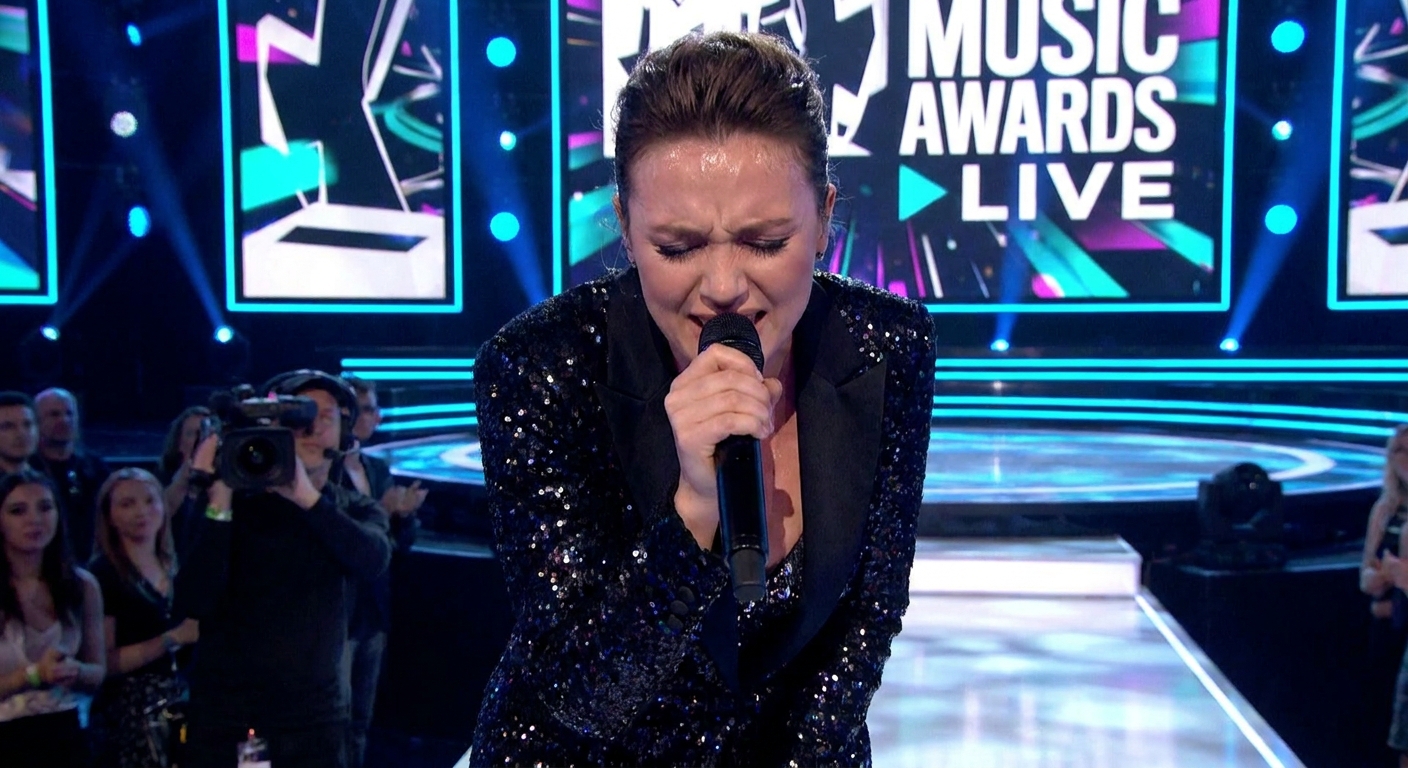
10 clues a vocal is live
These are clues, not proof. Modern broadcast chains can compress, gate, and sweeten vocals so aggressively that even a genuinely live mic can feel unreal. Still, when the lead is truly live, you often hear small, human edges. Not mistakes, just reality.
- Breaths that match the movement. If someone just sprinted across the stage and you hear a breath that sounds like they are standing still, it is worth noticing.
- Mic distance changes. Live singing changes tone when the singer turns their head, pulls the mic away, or sings off-axis. A tracked vocal stays oddly consistent.
- Consonants are less perfect. Live “t,” “k,” and “s” sounds can smear slightly in motion. Studio vocals are surgically crisp.
- Pitch is stable, but not identical. Live pitch can be excellent and still not match the record’s exact contour on every held note.
- Dynamics breathe. Live vocals swell and shrink in a way that does not always follow the studio automation.
- Timing flexes. A singer might push a word ahead of the beat for attitude, or drag a syllable for emotion. Tracks tend to sit locked.
- Little ad-libs you did not expect. A tossed-off “c’mon,” a laugh, a changed melody, a re-phrased line. If it is not in the record and it is clearly audible, that is a strong live clue. (And if you love spontaneous lyric tweaks, peek at Studio vs Live: Catching Spontaneous Lyric Changes.)
- Room sound and bleed. You may hear crowd spill, stage noise, or the band leaking into the vocal mic.
- Emotion changes the tone. A live singer’s voice can brighten on a grin or roughen under strain, and those shifts can happen mid-line.
- Vocal fatigue is real. Late-show performances can sound slightly different than early-show ones. Tracks do not get tired.
8 clues you are hearing a track
Again: clues, not proof. A singer can be live and still sound “too steady” if the broadcast mix is tightly controlled. Backing tracks are not automatically shady. They are often a creative decision, and sometimes a safety decision, especially with complicated staging.
- Choruses suddenly get twice as thick. If the vocal stacks bloom like a studio session the moment the hook hits, that is often pre-recorded doubles.
- Perfect unison “crowd” vocals. If it sounds like 20 people chanting in flawless sync but you see one singer, that is usually a track.
- Harmony appears with no visible singers. Harmonies can be offstage, but award shows often sound unusually clean when they are pre-recorded.
- The lead vocal never fully disappears. The singer pulls the mic away or points it to the audience, yet the main vocal line continues at nearly the same volume.
- Identical vocal run as the record. Some runs are signature and repeated live, sure, but exact matching down to tiny bends often indicates a layered track doing the heavy lifting.
- Reverb does not match the room. If the vocal sits in a glossy studio space while the stage clearly sounds bigger or drier, you may be hearing a printed effect or a very controlled live chain.
- Vocal is too steady during intense dancing. It is possible to sing while moving, but the body is still a body. If everything stays laser-still while the choreography peaks, expect support.
- Clean endings on notes during motion. Live note releases can wobble a little, especially when the singer is turning or stepping. Tracks end neatly.
If you want a fun adjacent rabbit hole, Decoding Studio Chatter is basically the opposite experience: audio that was never meant to be “perfect,” left in on purpose.
7 clues it is lip-sync
Lip-syncing is easiest to spot when you stop staring at lips and start listening for physics. If the mic is a foot from their mouth, or pointed at the crowd, but you still hear intimate close-mic detail with no change in tone, that is the kind of “physics problem” your ears can catch.
And yes, these are still clues, not proof. There are edge cases where the mic is live but the track is doing almost everything.
- Zero change in tone with mic movement. The microphone can be at waist level and you still hear intimate, close-mic detail.
- No breath before big phrases. Studio breaths can be edited down or moved. Live breaths are inconveniently placed.
- The vocal is “album identical” for the whole performance. Not just the notes, but the tiny accents, the exact vibrato speed, the same length of every held syllable.
- Mouth shapes do not match consonants. “P” and “B” sounds usually require a visible lip closure. If you hear a hard “p” with no closure, that is a classic tell.
- Mic is effectively off. You can see the artist pull the mic away and keep “singing,” yet nothing changes in the audio.
- The mix is suspiciously pristine. No crowd bleed, no stage noise, no sense that this is happening in a room full of screaming people.
- “Mute” moments do not behave like a mic. If the performer drops the mic and the vocal cuts out like a button, that can be theatrical staging. If it never cuts out when it logically should, that can be tracking.

Why shows lean on tracks
As someone who loves the messy humanity of a live vocal, I get the disappointment when a performance is mostly pre-recorded. But there are real constraints here.
- Broadcast mixing is brutal. Award shows are mixed largely in real time, under extreme time pressure, with rehearsals and mix snapshots helping the crew hit marks fast. Even then, it is still a high-wire act.
- Choreography is cardio. Even trained singers have limits when the staging is essentially an athletic routine.
- Set changes are tight. Sometimes the technical team has very limited time to reset the stage, swap props, and get mics and in-ears behaving again.
- In-ear monitor issues happen. If a singer cannot hear themselves, the track becomes the safety net that prevents a trainwreck.
- Brand expectations are high. Awards shows are performance and presentation. Some artists aim for spectacle first, vocal risk second.
It is also worth remembering that “live” does not always mean “raw.” A modern pop vocal can be processed live to feel record-like, and it can still be truly live.
Parts that are often tracked
If you want one shortcut that saves a lot of false alarms, it is this: many performances are a mix of live and tracked, and the tracked bits tend to cluster in specific moments.
- Talk-singing and shout lines. Spoken hooks, hype lines, and rhythmic “hey” parts are frequently doubled or fully tracked so they hit like percussion.
- Call-and-response cues. When an artist points the mic to the crowd, you might be hearing a blend of crowd mics, a backing vocal stem, and a live mic that is turned down to avoid feedback.
- Big group hooks. Anything that is supposed to sound like a choir, a gang chant, or a stadium singalong is hard to build from one handheld mic in a noisy room.
Knowing that helps you listen more accurately. You stop treating one tracked moment like a full-performance verdict.
My three-pass listening routine
If you want to get good at this quickly, pick one performance and do three passes.
- Pass 1 (eyes closed if you can): listen for breaths, mic proximity changes, and crowd bleed.
- Pass 2 (watching): notice when the mic leaves the mouth, when the head turns, and when dancing peaks.
- Pass 3 (focus on choruses): compare verse vocal texture to chorus texture. Most “support” reveals itself at the hook.
When you do this a few times, your ear starts to catch patterns fast.
Edits and re-uploads matter
One more wrinkle: the clip you hear might not be the exact mix that aired live. Performances are sometimes re-mixed for re-broadcasts, official uploads, social clips, or highlight reels. Crowd levels can get tucked, vocal balance can get cleaned up, and some of the messiest “live” cues can disappear. If something feels strangely polished compared to the moment you remember, the version you are watching may have been refined after the fact.
Common myths
Myth: “If it sounds perfect, it cannot be live.”
Plenty of singers are frighteningly consistent live, especially with strong in-ears and a mix engineered for them.
Myth: “If there is a backing track, it is lip-syncing.”
Nope. A backing track might just be doubles and harmonies, while the lead is absolutely live.
Myth: “Auto-Tune equals fake.”
Pitch correction can be used live as an effect or a subtle polish. Either way, it is not the same question as “is the mic live?”
Myth: “Handheld mic means live. Headset mic means tracked.”
Headsets often get blamed because they look like pop-star gear, but many headset vocals are live. And handheld mics can be completely decorative.
What the broadcast mix can hide
Award show audio is not just the singer. It is also the broadcast chain, and that chain can erase or exaggerate the clues.
- Compression: TV mixes often compress vocals hard so every word stays audible. That can make a live vocal feel unnaturally steady.
- Gates and noise control: If the vocal mic is tightly gated, you might lose room sound, crowd bleed, and stage noise, even if the mic is live.
- Reverb choices: A mixer might add consistent reverb so the vocal feels glued to the track, even if the room is huge.
- Crowd mics: Sometimes crowd is intentionally tucked down to protect clarity, which removes a major “live” cue.
- Stems vs full mix: Some performances are built from stems (separate instrument and vocal layers) rather than one stereo track, which can make things sound live-ish even when parts are pre-recorded.
This is why I try not to make a verdict from one clue. A too-clean crowd might be a mix decision, not a lip-sync confession.
Mini FAQ
Is it “bad” if an artist uses backing tracks?
Not automatically. Some songs are arranged like layered sculptures. If the performance is dance-heavy or the chorus relies on a choir of doubles, a track can be a reasonable choice. I care most about whether the performance still has a human center.
Can you tell for sure just from TV audio?
Sometimes, yes. Often, not 100 percent. Broadcast mixes can hide or exaggerate cues. The best you can do is stack evidence: mic behavior, vocal texture changes, breaths, and how choruses behave.
Why do some performances sound live but still feel “too perfect”?
Because modern live vocals can be processed in real time, and because the show may be mixing the vocal very loudly and very cleanly on purpose.
Where can I go next if I love decoding performance details?
Two fun rabbit holes on A-Z Music Lyrics: Listening for Legends: Uncredited Celebrity Background Vocals and The Art of the Feature. Both train the same listening muscle: noticing who is actually doing what in a busy mix.
The point is to hear more
Once you start noticing the difference between live mic texture and pre-recorded smoothness, award shows become even more interesting. You are not just watching staging and outfits. You are watching decisions: what gets risked live, what gets protected by a track, and what kind of performance an artist wants to deliver in three and a half minutes on the loudest stage imaginable.
If you try this the next time a big show rolls around, listen like you read lyrics: closely, kindly, and with curiosity. The truth is usually in the tiny details.