
Liner note
Singer-Songwriter vs. Vocalist: Listening for Authenticity in Borrowed Lyrics

I grew up believing the “real” artists were the ones who wrote everything themselves. In my childhood bedroom, I would unfold CD liner notes like they were sacred texts, scanning for proof that my favorite singer had also been the mastermind behind every line.
Then I started hanging around local acoustic nights and listening closely to how songs move from one mouth to another. A songwriter would hand a tune to someone else, and suddenly a lyric I thought I understood would land differently. Not better, not worse. Just inhabited by a new nervous system.
So here is the thing I wish someone had told teen me: authenticity is not a paperwork issue. It is a listening issue. You can hear when a performer believes what they are saying, even if they did not write it, and you can also hear when a self-writing artist is skimming their own lines like a to-do list.
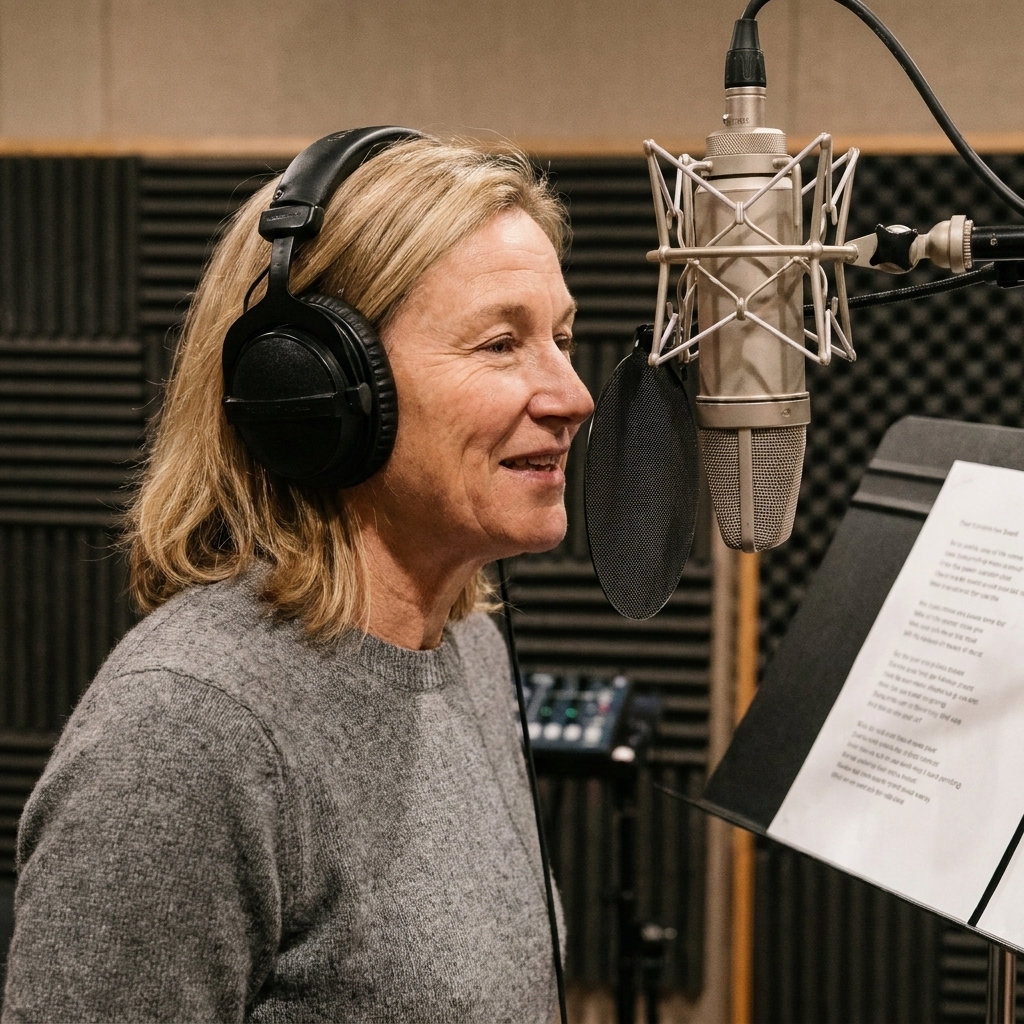
Singer-songwriter vs. vocalist
These labels get used like opposites, but they are really job descriptions that can overlap.
- Singer-songwriter usually means the performer is also a primary lyricist and composer. The “authenticity” we expect often comes from autobiography or authorial intent.
- Vocalist in this context means the performer is interpreting words written by someone else. Think pop acts singing songs from a writing camp, a Broadway lead, a jazz singer interpreting standards, or any artist cutting a cover.
And in real life, it gets blurrier: plenty of vocalists co-write sometimes, or take a small credit on a topline, and plenty of singer-songwriters collaborate heavily. Authorship is not always all or nothing.
When people argue about authenticity, they are often arguing about ownership. But listening for authenticity is more practical than philosophical: does the performance convince you the singer has found a truthful way into these words?
If you like digging into how words behave on the page before you even hit play, my companion piece on how to analyze song lyrics like a literary critic pairs nicely with this kind of listening.
A quick note on studio vs. live
One thing that changes the “authenticity tells” is the setting. Live vocals give you real-time breath, stamina, nerves, and risk. Studio vocals are often comped from multiple takes, tuned, and edited for clarity. None of that automatically makes a performance less honest, but it can smooth out the exact cues people love to point to, like audible breaths, tiny cracks, and messy edges.
So as you use the listening tests below, keep one question in the back of your mind: am I hearing a person in the moment, or a carefully built final version of the moment?
The authenticity test
Here is my favorite way to listen when you do not know who wrote the lyrics, or you are trying to forget that fact for a minute.
1) Listen for pronoun comfort
Borrowed lyrics often have lots of “I” language. An authentic performance makes those pronouns feel lived in rather than quoted.
- Authentic sign: the singer’s tone subtly shifts on identity words like “I,” “me,” “my,” “you,” “we,” like those words have weight.
- Disconnect sign: pronouns come out generic, the same color as filler words, like they are reading aloud rather than confessing.
Try replaying just the first time they sing “I.” If that moment does not land, the rest of the performance can struggle to.
2) Follow the breath, not the belt
Big notes are impressive, but breath is often where you can hear decision-making and intention.
- Authentic sign: breaths arrive in emotionally sensible places. They may even be slightly messy, like the singer is catching themselves mid-feeling.
- Disconnect sign: breath feels purely athletic, placed only for vocal efficiency, even when the lyric calls for urgency or hesitation.
This is one reason quiet performances can feel devastating. You can hear the human machinery choosing what to say next. In the studio, though, remember that breaths can be edited out, moved, or softened. If the track feels emotionally real but you do not hear much breath, that might be production, not disconnection.
3) Notice if consonants tell the story
Consonants are micro-acting. A singer can change the whole meaning of a line by how they shape T, K, S, and D sounds.
- Authentic sign: sharper consonants on anger, softer consonants on tenderness, swallowed consonants on shame or exhaustion.
- Disconnect sign: every word is enunciated the same way regardless of emotional content, like a diction exercise.
If you want to train this skill, pull up the lyrics and follow along once. Then listen again with your eyes closed and see if you can still “read” the punctuation in the way they spit or soften certain syllables.
4) Check lyric-to-groove alignment
When a vocalist truly connects with borrowed words, they will find a way to make the rhythm agree with the meaning, meaning how the timing supports the emotional point.
- Authentic sign: they lean behind the beat on regret, push ahead on panic, sit dead center on certainty.
- Disconnect sign: perfect time, but emotionally flat. The groove is correct, yet the lyric feels pasted on top.
This is also where great producers help. Arrangement choices can create space where interpretation can breathe.
5) Listen for specificity moments
Most songs have a few concrete nouns or images that act like emotional anchors: a street name, a season, a piece of clothing, a small detail.
An authentic interpreter tends to light those words up.
- Authentic sign: a tiny lift, a change in vowel shape, a hush, a smirk. Something that says, “I see the picture.”
- Disconnect sign: the specific details glide by with no extra attention, as if the singer is not visualizing them.
For more on how images carry narrative weight across sections, you will probably enjoy verse, chorus, bridge: where the story hides.
What a great vocalist adds
When borrowed lyrics work, it is not because the singer is pretending to be the songwriter. It is because they are doing translation, converting text into lived emotion.
They choose a point of view
A lyric can be sung as confession, accusation, prayer, diary entry, or performance. Great vocalists commit to one, even if it is subtle.
They build a subtext
Subtext is the quiet “real” sentence under the lyric. Two singers can deliver the same line, but one sounds like they are trying to convince you, and the other sounds like they are trying to convince themselves.
They make the timeline believable
Pay attention to whether the emotion evolves. Even in a pop song with repeated choruses, a great interpreter will change something each time: intensity, fatigue, tenderness, restraint. Repetition becomes escalation, not copy and paste.

Red flags to watch for
I do not say this to dunk on anyone. Plenty of brilliant singers have off days, and plenty of “inauthentic” moments are really just production choices. Still, a few patterns show up again and again.
- Emotional overacting: too many dramatic swells on lines that do not earn them, as if intensity can substitute for connection.
- Uniform tone: the same emotional color across the whole track, even when the lyric shifts from memory to realization to consequence.
- Vowel showcase syndrome: a performance built around “pretty sounds” that smooths out the lyric’s edges and contradictions.
- Suspicious clarity: every word perfectly clean, but nothing feels risky. Sometimes real feelings come with small imperfections, but sometimes the honesty is in control and restraint. The flag here is not polish. It is the absence of stakes.
When borrowed lyrics are the point
If you come from a singer-songwriter mindset, it can be helpful to remember entire traditions are built on interpretation.
Jazz and standards
In standards, authenticity often lives in phrasing, timing, and tone color, not biographical believability. The question becomes: do they make the old lyric sound newly discovered?
Musical theater
Broadway performers rarely write their own lyrics, yet the best ones make you forget the machinery. They connect each line to an objective, a scene partner, a moment. If you want to borrow that skill for pop listening, imagine the scene behind the lyric: Who are they talking to? What just happened? What do they want?
Pop songwriting camps
Modern pop often has multiple writers. That does not automatically mean the performer is disconnected. In fact, a team-written lyric can give a vocalist a clean emotional lane to inhabit, especially if the track is built around their specific voice.
A 3-listen method
Listen 1: no lyrics
Do I believe them? Not as a celebrity, but as a human voice telling me something.
Listen 2: lyrics in front of me
Where are the emotional verbs, the images, the turns of thought? Are those spots highlighted by the performance or ignored?
Listen 3: focus on transitions
Verse to chorus. Chorus to verse. Pre-chorus to hook. Bridges are especially revealing. If the bridge is emotionally different on the page but identical in delivery, that is often where authenticity leaks out.
If you love “misheard lyrics” moments, it can also be useful to read up on mondegreens. Sometimes what we call inauthenticity is actually our brain guessing the wrong emotional sentence because we misheard a key word.
Authenticity is not always sincerity
One of the biggest listening upgrades is realizing authenticity does not have to mean earnest. A borrowed lyric can be performed authentically as:
- character (playing a role on purpose)
- irony (meaning the opposite of the literal line)
- deflection (joking because the truth hurts)
- restraint (withholding emotion as the emotional statement)
If a singer delivers a devastating lyric with a smile in their voice, that can be the realest choice in the world, because it mirrors how people actually survive uncomfortable feelings.
FAQ
Is a singer-songwriter always more authentic than a vocalist?
No. Writing and performing are different skills. Some writers are brilliant on the page but emotionally generalized in delivery. Some vocalists are world-class interpreters who can turn a decent lyric into something that feels personally true.
Can you tell who wrote a song just by listening?
Sometimes you can guess, but it is not reliable. What you can hear is whether the performer has built a believable inner life for the lyric.
Why do some covers feel more emotional than the original?
A cover can work like a new camera lens: different vocal texture, different tempo, different production, different life experience. Also, distance helps. A songwriter might protect themselves with understatement, while a later singer steps into the open space and says the quiet part out loud.
How I frame it
When you are listening to a vocalist sing borrowed lyrics, try swapping the question “Did they write this?” for “Where did they decide to tell the truth?”
Because even in someone else’s words, there are always little choice points: a breath held, a syllable bitten off, a note that cracks, a line delivered like a secret instead of a headline. Those are the fingerprints of authenticity.
If you want more on this kind of close listening across different kinds of artists, you can wander through our Artists guide. I keep it stocked with the stuff I wish I had when I was still unfolding liner notes and trying to figure out why certain voices made me feel seen.