
Stop asking “did it happen?” and start listening like a critic. Learn how confessional pop fictionalizes life through compression, composites, ambiguity, and...
Liner note
How to Track Down the Original Meanings Behind Debated Lyrics

Published
I have a very specific memory from my childhood bedroom: me on the carpet, CD case cracked open, liner notes unfolded like a road map, trying to figure out what a singer “really meant” by a line my friends and I kept arguing about. Years later, I still love a good lyric debate. But I also love the moment when the fog clears and you can point to something solid: an interview quote, a handwritten note, a studio track sheet, a headline from the week it was written.
This is the art of tracking down a song’s original meaning. Not to kill anyone’s personal interpretation, but to separate what the artist said from what the internet assumed.
Start by defining what you are actually trying to prove
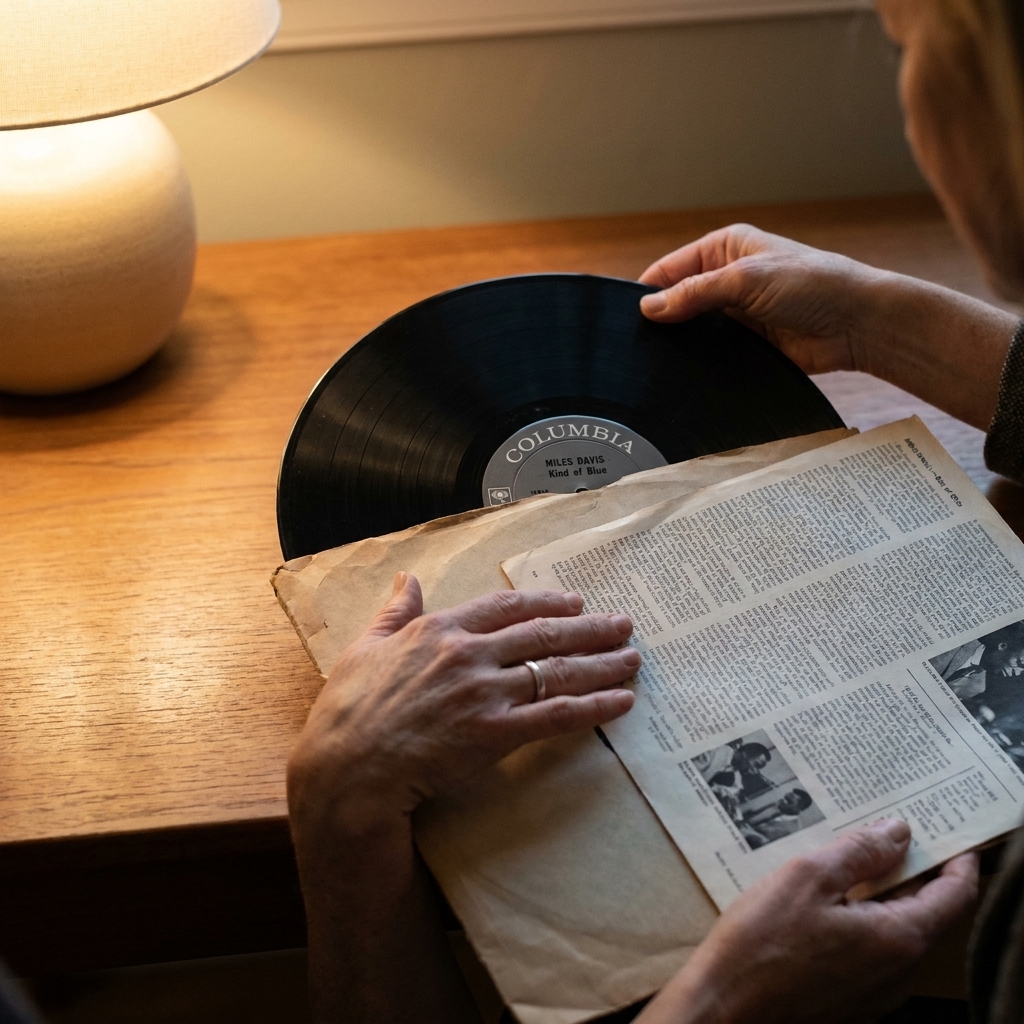
Before you go hunting, get clear about what kind of “meaning” you want. Most lyric arguments mix multiple questions together.
- What does the line literally refer to? A real person, a place, a news event, a book, a private in-joke?
- What was the songwriter’s intention? What they say they were writing about at the time.
- What does it mean in the song? How the lyric functions inside the story, even if it started from a real-life detail.
- What does it mean to listeners? The emotional truth people take from it, which can be valid even when it is not “original meaning.”
If you are trying to settle a factual dispute, you will focus on intention and reference. If you are trying to deepen appreciation, you will also study how the lyric works as poetry. If that’s what you’re after today, you will like our guide to reading lyrics as poetry.
Build a timeline first
When people argue about meaning, they often forget timing. A lyric usually cannot reference something that happened after it was written. Still, songs can be revised late in the process, and live versions can lock in a different wording than what ends up on the album.
The quick timeline checklist
- Songwriting window: Any interviews where the artist mentions when it was written (tour bus, pandemic lockdown, after a breakup, during a specific album session).
- Recording dates: Studio credits, producer interviews, album documentaries.
- First public performance: Live debuts can pin down an earlier lyric version than release day.
- Release timeline: Single release, album release, deluxe editions with later additions, and re-recordings that may update lines.
Once you have even a rough timeline, you can rule out a surprising number of theories that are popular simply because they are dramatic.
Prioritize primary sources
Primary sources are materials closest to the artist and the moment of creation. They are not always perfectly reliable, and artists may also simplify, protect privacy, or lean into a good story for marketing. Still, primary sources are your strongest starting point.
Best primary sources for lyric meaning
- Direct interviews with the songwriter, not just the performer (sometimes they are not the same person).
- Album liner notes and booklet essays, especially when the artist writes or curates them.
- Official band or label statements and press releases (limited, but helpful for confirming intent in concept albums).
- Songwriter annotations in official releases, box sets, or sanctioned reissues.
- Documentaries and studio footage where you see decisions being made in real time.
Red flags that a “quote” is not real
- The quote is everywhere, but nobody links to where it was originally said.
- The wording feels too perfect, too meme-ready, or too modern for an older interview.
- It conflicts with multiple other on-the-record statements from the artist.
- It appears only on screenshot graphics or aggregator pages with no sourcing.
My rule: if you cannot trace a quote back to a reputable publication, a video clip, a book, or an official channel, treat it as a rumor until proven otherwise.
Know where meaning shows up
Artists rarely announce “this is what my song means” in one neat sentence. You often have to gather clues across a few places.
1) Long-form interviews
Look for conversations tied to an album release where the artist is relaxed enough to tell stories. The most useful moments are usually casual: “That line came from…” or “I was reading…” or “My friend said…”
2) Track-by-track features
Some publications run track-by-track breakdowns where artists explain each song. These are gold because the questions are specific. When you find one, compare it against the final lyric and ask: does it match the released version, or are there earlier demo or live lines floating around that change the context?
3) Liner notes and reissue essays
Reissues often include retrospectives where artists are more willing to explain context. That can clarify references that felt mysterious at release time.
4) Live intros and banter
Sometimes the simplest answer is hidden in plain sight: “This next one is about…” said on stage before the song. Fans share these clips all the time. Just confirm the date and venue when possible so you can place it in the timeline.
5) Songwriting credits and collaborators
If a song has multiple writers, meanings can be layered. A producer or co-writer interview can reveal what the original seed was, even if the singer frames it differently later.
Use context as a magnifying glass
Even when an artist never explains a line directly, context can make an “impossible-to-prove” theory suddenly make sense.
What context research looks like
- News headlines from the months the song was written.
- Local context if the artist is tied to a specific scene or city.
- Books, films, and art the artist publicly loved around that era.
- Slang and idioms from the time and place, especially for older songs.
A lyric can sound like a private code until you realize it is a phrase from a regional saying, a Bible verse, a 1970s TV reference, or a newspaper story everyone was talking about that summer.
If you want a structured approach to this kind of digging, I walk through similar close reading tactics in analyze song lyrics like a literary critic.
Be careful with “official lyrics”
Lyric databases are convenient, but not all lyrics online are accurate, especially for older releases, underground mixtapes, and songs with intentionally muddy vocal mixes.
How to verify the actual words
- Check the liner notes if they include printed lyrics. That is often the cleanest source for that specific edition.
- Compare multiple sources and listen closely to the recording at normal speed and slower speed.
- Watch live performances where diction is clearer, but note that artists sometimes change lines on stage.
- Account for mondegreens, which are misheard lyrics that become their own “truth” online.
When “official” sources disagree
- Streaming platform lyrics can be pulled from third-party providers and updated quietly, so treat them as editable, not absolute.
- CD booklets vs. later digital metadata sometimes differ because the artist revised a line, a label corrected a misprint, or a reissue used a different source file.
- Explicit vs. clean versions may swap words in ways that ripple into interpretation.
If you have ever argued over a lyric and later discovered you were both singing the wrong words, welcome to the club. Our deep dive into mondegreens explained can save you a lot of circular debating.
Separate inspiration from “about”
One of the most common debate traps is assuming inspiration equals subject. Artists pick up images the way we pick up souvenirs.
- A song can be inspired by a real person, but about a fictional character.
- A lyric can reference a true event, but function as a metaphor for something else entirely.
- An artist can tell the truth emotionally while scrambling details for privacy.
When you find a quote like “I wrote this after my dad passed,” do not rush to map every line onto literal biography. Grief is a lens, not always a plot summary.
Weigh evidence like a critic
Lyric debates get heated because people want a verdict. But songwriting evidence is rarely courtroom clean. I like to sort what I find into tiers.
A simple evidence ladder
- Tier 1: The artist explains the line or song in a direct, attributable source.
- Tier 2: The artist confirms the song’s subject broadly (who, when, why), but not each lyric detail.
- Tier 3: Strong contextual support (dates, known influences, recurring themes), but no direct confirmation.
- Tier 4: Pure speculation (fun sometimes, but do not present it as fact).
You can still enjoy Tier 4 theories. Just label them honestly, especially if you are sharing them with other fans.
Messy disputes
Case 1: “The artist refuses to explain it”
If an artist says they want listeners to decide, take them at their word. In that situation, the “original meaning” you can reliably report is the artist’s stance: that the song is intentionally open. Your job becomes documenting the openness, not forcing a single answer.
Case 2: “Conflicting interviews exist”
This happens more than people admit. Artists forget, revise their own mythology, or answer differently depending on mood.
- Prefer the interview closest to the release for intent at the time.
- Note whether the artist is speaking seriously or playfully. Humor gets misquoted into canon.
- Check if the artist is describing the seed idea versus the final meaning that emerged after rewriting.
Case 3: “Fans insist it is about a celebrity or conspiracy”
Ask the timeline questions. Then ask the boring questions: did the artist have proximity, motive, and a pattern of writing that explicitly? If the theory requires ten unlikely coincidences, it is probably a story we want to be true, not one we can prove.
Keep your receipts
One reason lyric myths spread is simple: the telephone game. If you want to argue in good faith and keep your future self sane, build a tiny paper trail.
- Save the source (URL, publication name, or video title) and the date you accessed it.
- Quote exact wording, not your paraphrase, especially when a single adjective changes the meaning.
- Capture context: what question was asked, what song version they were discussing, and whether they were joking.
It is not about winning. It is about not accidentally becoming the person who repeats the fake quote.
Original meaning is not the only meaning
I host little listening nights in my community now and then, and my favorite part is hearing five people interpret the same verse five different ways, all of them sincere. Even when we do uncover the artist’s intent, the listener meaning does not evaporate. It just sits beside it, like harmony.
If you want to make lyric discussion feel less like a debate club and more like a shared curiosity practice, try my approach in host a listening night without a quiz.
Quick checklist
- Confirm the exact lyric first, then argue about meaning.
- Build a timeline (written, recorded, released, first performed).
- Collect primary sources and save direct quotes with attribution.
- Use context to test what is plausible.
- Sort conclusions into tiers of certainty.
- Leave room for listener meaning, even when you find the official story.

FAQ
What if the singer did not write the song?
Then the most original meaning, for lyrical intent, usually belongs to the songwriter, not the performer. Start with songwriting credits, then look for interviews with the credited writers and producers. At the same time, do not ignore the performer’s role. Arrangement, delivery, and repeated public framing can shape how the song is understood in the world.
Are lyrics websites reliable for meaning?
They can be useful for collecting versions, but they are not proof of intent. Use them as a starting point, then verify with primary sources and careful listening.
Can a song have multiple official meanings?
Yes. Co-writers can bring different stories into the same lyric, and artists can write deliberately ambiguous lines. Sometimes the most accurate answer is: it is a blend.
How do I keep a debate friendly?
Lead with curiosity, not correction. Try: “What makes you hear it that way?” Then bring your evidence in gently, as one more layer rather than a mic drop.