
Liner note
B-Sides and Demos: Watching Lyrics Get Edited

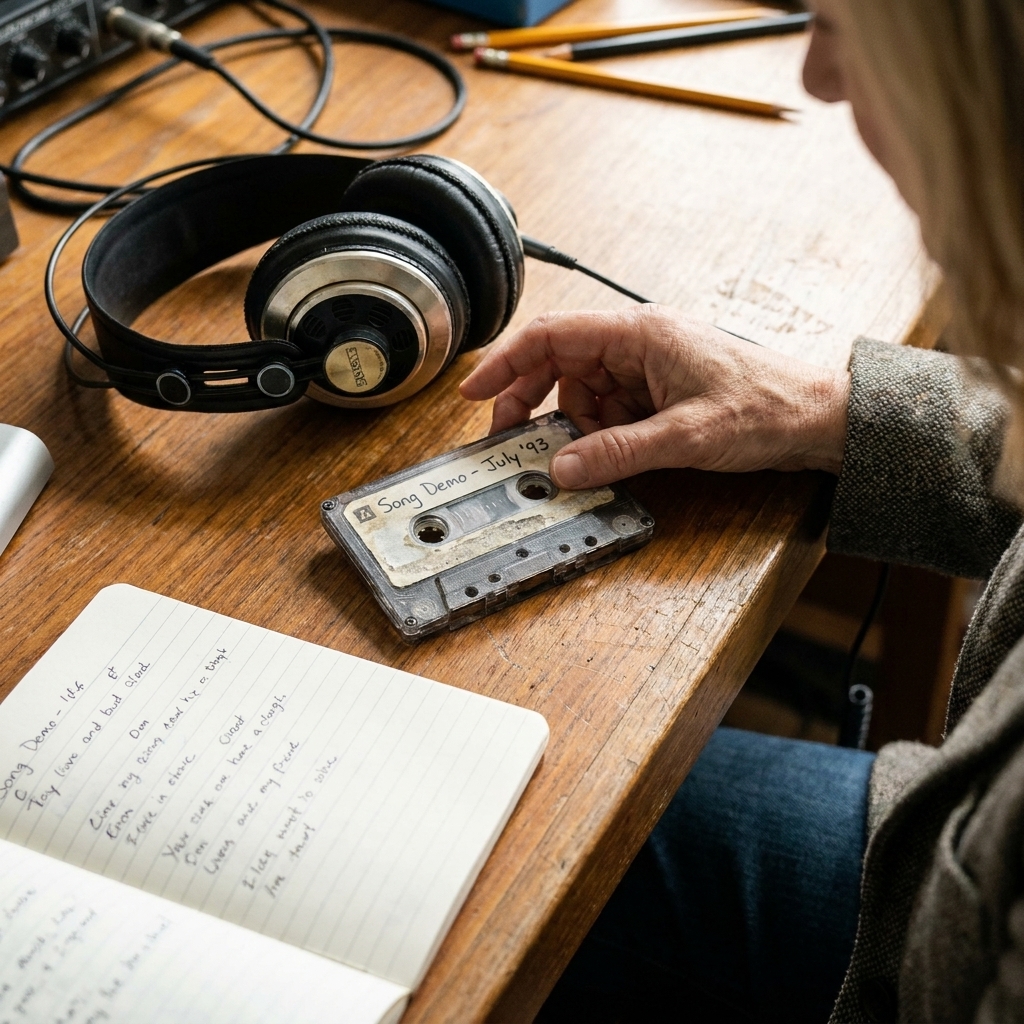
I fell in love with lyrics in the least glamorous way possible: cross-legged on my childhood bedroom floor, wrestling folded CD liner notes back into their tiny case like they were a puzzle that judged you. Years later, I still get the same little thrill when I hear an early demo and realize a line I adore was once totally different.
B-sides and demos can act like the songwriter’s rough drafts. They let you hear the “before” picture: the extra verse that made the story too busy, the sharper metaphor that got softened for radio, the pronoun swap that changed who the song feels like it is about. If you want to understand an artist’s lyrical editing process, this is where the fingerprints are.
What counts as a lyrical rough draft
Not all versions are equal. Some are truly early writing documents, and some are “alternate” in name only. Here are the versions most likely to reveal real editing decisions:
- Home demos: scratch vocals, simpler chords, and lyrics that sometimes feel more diary-like or less filtered.
- Studio demos: closer to the final arrangement, but still flexible lyrically. You might hear placeholder words or half-formed hooks.
- B-sides: sometimes songs cut from an album for pacing, mood, or theme. Other times they are fully finished tracks released for a specific single, region, or era. Either way, they show what the artist decided not to center.
- Alternate takes: similar structure, but with swapped lines, different ad-libs, or a changed bridge that shifts the meaning.
- Acoustic or early live performances: artists sometimes workshop lines in front of audiences. A lyric can evolve quietly across shows.
Think of these as different drafts of the same short story. And yes, collecting versions can be fun in its own right. I just find the real payoff is hearing the writerly decisions, not only the novelty.
Version names can be messy
One quick reality check before you go hunting: “demo” can mean a voice memo, a near-finished studio run, or an alternate arrangement recorded months later. “Outtake,” “work tape,” “alternate version,” and “acoustic” can be just as slippery. When release notes, liner notes, or official track descriptions exist, treat them like your glossary. They will usually tell you whether you are hearing a true early draft, a later re-cut, or simply a different performance.
How to listen like an editor
When you first discover a demo, it is tempting to treat it like a scavenger hunt for “new” words. But the more useful question is: what problem is the final version solving?
If you want a quick refresher on close reading tools, pair this with our walkthrough on how to analyze song lyrics like a literary critic. You will use the same skills, just applied to versions instead of single texts.
A simple listening routine
- Listen once without pausing. Notice mood and storyline. Do not take notes yet.
- Listen again and mark turning points: where the narrator changes their mind, where the relationship shifts, where the song reveals the real hurt.
- Then compare line-by-line with the official release. Focus on the verse and bridge first, because that is where narrative clarity is won or lost.
Most edits fall into patterns. Once you know the patterns, you start hearing the artist’s internal editor at work.
The 7 edits you will hear again and again
1) Pronoun swaps that change the story
The tiniest word can move a song from confession to accusation. “I” to “you” turns inward shame into outward blame. “We” can soften loneliness by creating a shared world, even if it is imagined.
- What to ask: Does the final version make the narrator more accountable, or more protected?
- What it often signals: a choice about intimacy. Demos can be rawer. Finals can be crafted to be performed night after night and still feel clear in a room full of strangers.
2) Cut verses that tighten the plot
In demos, you will often hear a verse that explains too much. The final might remove it to preserve mystery, pacing, or emotional punch.
If you want to map what each section is doing, our breakdown of verse, chorus, and bridge storytelling helps you spot when a verse is repeating the same job twice.
- What to ask: Did the removed verse offer new information, or just more information?
- What it often signals: the artist learned to trust subtext.
3) Specific details replaced by universal ones
This one is painful for lyric nerds because specificity is delicious. But artists sometimes sand down the details so more listeners can step into the song. “That street” becomes “this town.” A brand name disappears. A date becomes “that summer.”
- What to ask: Did the song lose vividness, or did it gain space for the listener?
- What it often signals: an edit for sing-along relatability, or privacy and legal caution.
4) Metaphors simplified for rhythm
Sometimes the best line on paper is not the best line in the mouth. Demos can be wordier, with metaphors that feel like the writer proving they are clever. The final version often chooses the image that lands fastest.
To name what is happening, it helps to recognize devices like internal rhyme, assonance, and metonymy. If you want a friendly tour, see 8 literary devices in pop music and how to spot them.
5) Moral edits that reshape the narrator
A demo narrator might sound petty, cruel, or messy. The final version sometimes polishes that away. Other times the final chooses the harsher line because the song needs truth more than charm.
- What to ask: Which version feels more self-aware? Which one feels like it is trying to win the listener?
- What it often signals: a decision about persona. Who is the singer allowed to be in public?
6) Hook rewrites that shift the theme
When a chorus lyric changes, treat it like the thesis statement changing. If the hook goes from “I miss you” to “I miss who I was,” the entire song tilts.
- What to ask: What is the song really about in each version: a person, a time, a self, a mistake?
- What it often signals: the artist found the true center of gravity.
7) Shifts that might reflect collaboration
If you can access versions from different sessions, you may notice certain turns of phrase or structures appear around the time new collaborators enter the picture. That can be a fun clue when you are listening closely, but it is not proof of authorship. Producer input, label notes, and the artist’s own changing taste can create the same effect.
If you want to dig in carefully, we go deeper in spotting co-writer influence in songs. The reliable anchor, when it is available, is still credits and dated session context, not vibes.
Make a version map
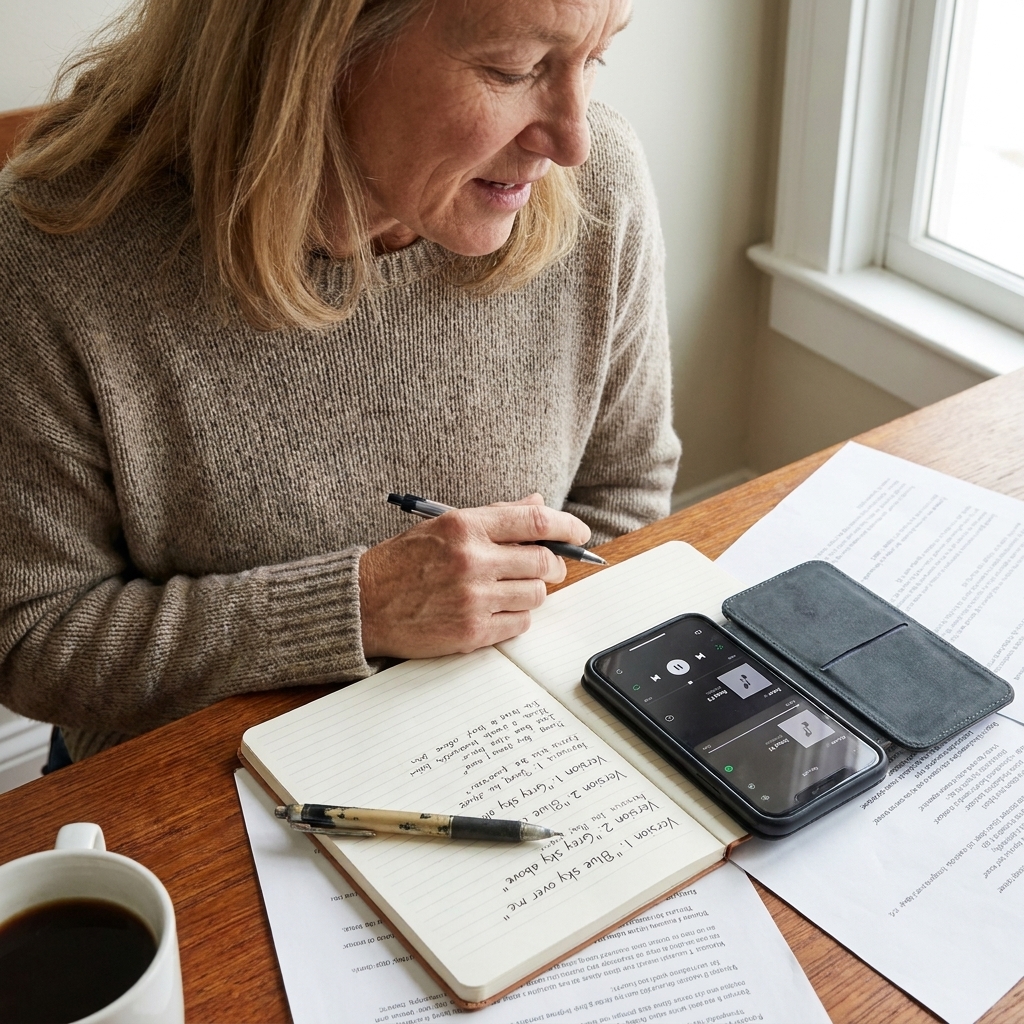
When I am comparing a demo to the final release, I keep a tiny three-column map. Nothing fancy, just enough to stop my brain from mixing verses.
- Column 1: What changed (quote the line or describe the cut section).
- Column 2: What it does (character, plot, tone, imagery, pacing, singability).
- Column 3: Why they might have changed it (clarity, rhyme, radio length, persona, theme focus).
This helps you avoid the trap of assuming “earlier” means “truer.” Earlier usually just means less finished, or finished for a different purpose.
What B-sides reveal
Demos show revision inside a single song. B-sides often show revision across an entire album world.
A B-side can answer questions like:
- What themes were almost central? Maybe the album could have leaned angrier, weirder, more political, or more tender.
- What lyrical style was competing? One track might be densely poetic, another blunt and diaristic. The final album chooses a dominant voice.
- What character did the artist not want to be? Sometimes a B-side is too vulnerable, too mean, or too revealing for the era they were building.
If you love thinking in eras, you might also enjoy tracing an artist’s evolution through lyrical eras. B-sides are like the footnotes that prove the argument.
Where to find trustworthy alternate lyrics
Because the internet loves a messy quote, treat lyrics from unofficial uploads carefully. A misheard line can turn into a whole fake “demo version” in the blink of an eye. If you are hunting down a debated lyric origin, our guide on tracking down original meanings behind debated lyrics walks through the same verification mindset.
Better sources first
- Official deluxe releases and anniversary editions
- Artist or label channels posting demo collections
- Documentaries with studio footage where you can hear words clearly
- Live recordings from reputable archives, where date and venue are documented
A gentle ethics note: if you are listening to bootlegs or unlicensed uploads, be aware they can be mislabeled, incomplete, or flat-out wrong. And sometimes they are not meant to be circulating at all. When in doubt, lean on official releases and documented sources, especially if you are quoting lyrics in public.
And if you are working with a live recording, remember the classic lyric boogeyman: the mondegreen. Our explainer on mondegreens is a nice reality check when a “new lyric” might just be an enthusiastic mishearing.
A quick example to listen for
Here is a pattern you will recognize once you start listening for it.
- Demo verse: lots of scene-setting, names, and explanation. The narrator tells you why they did what they did.
- Final verse: fewer details, stronger verbs, and one image that carries the feeling. The narrator does not explain. They confess.
That is editing. Not deleting effort, but distilling meaning.
FAQ
Are demos always earlier than the final song?
Not always. Some “demos” are recorded after the album as alternate arrangements, and some are early recordings with later punch-ins. Treat “demo” as a clue, not a guarantee.
Does a cut lyric mean it was rejected as bad?
No. It often means it was too good at the wrong job. A gorgeous line can still confuse the storyline, slow the pacing, or pull focus away from the hook.
What if I prefer the demo lyrics?
That is normal. Demo lyrics can feel closer to someone’s journal, which can hit harder. The final version is often built to survive repetition, performance, and a wider audience.
How do I keep from mixing up versions when I am memorizing?
Anchor yourself to structure. Learn the order of sections first, then fill in lines. Our tips on memorizing lyrics without mixing up verses are especially helpful when you have multiple official and unofficial versions floating around your head.
The real payoff
When you listen to B-sides and demos this way, you stop treating the final track as inevitable. You hear the crossroads: the moment they chose clarity over detail, bite over softness, mystery over explanation. It is one of the most intimate ways I know to understand an artist, not just as a performer, but as a writer making hard decisions.
If you ever want to share a favorite “changed line” moment with me, you can find my author page at Stella Conway. I am always curious what edits other listeners hear as heartbreak, and which ones they hear as growth.