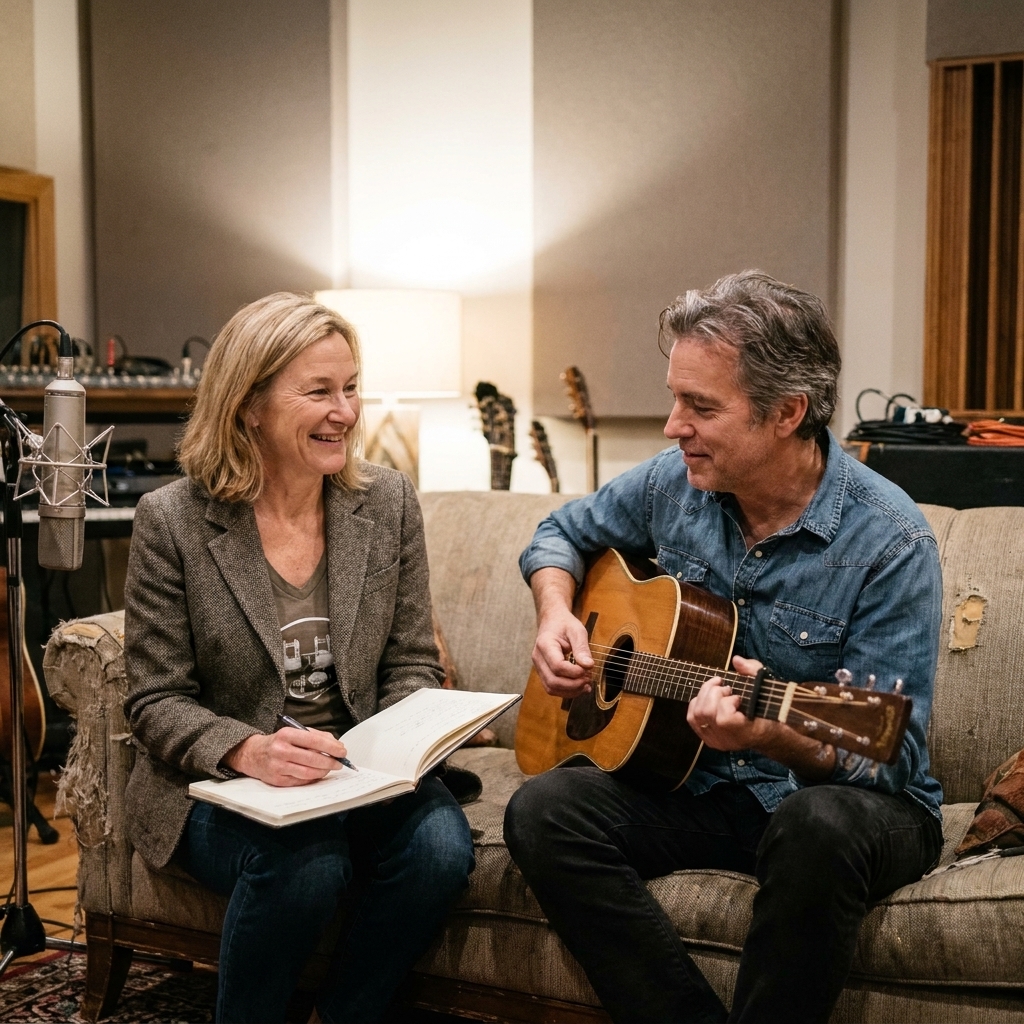
Hear the “extra pen” in the room with six simple clues: voice shifts, vocabulary spikes, rhyme changes, imagery flips, structural tells, and more conversatio...
Liner note
The Art of the Feature

Published
I still remember the first time I heard a feature that completely changed a song for me. You know the feeling: the track is already rolling, you think you understand the mood, and then a new voice steps in and suddenly the lights in the room change. A great guest verse is not just another set of bars. It is a cameo, a plot twist, sometimes even a friendly takeover.
When multiple distinct artists share the microphone, the fun is in the differences. The how of what they say, not just the what. Below is my favorite way to actively listen, compare, and contrast the lyrical choices that make collaborations feel electric (or, occasionally, awkward).

Start with the role
Before you zoom in on rhyme schemes and metaphors, ask one simple question: What job is the feature doing? Features often fall into a few repeating roles, and naming the role keeps you from judging the verse on the wrong criteria.
- The co-narrator: expands the story by adding new scenes or new facts.
- The contrast character: plays foil to the main artist, often through opposite values, tone, or emotional temperature.
- The amplifier: takes the hook’s feeling and turns it up, repeating motifs with more intensity.
- The specialist: arrives to do one thing extremely well, like rapid technical rapping, a melodic bridge, or a specific style of wordplay.
- The scene signal: points to a lineage or community, a cosign that is sometimes more cultural than narrative.
Once you identify the role, you can evaluate whether the verse fulfills it, bends it, or refuses it. That is where the interesting analysis starts.
Listen for the handoff
Collaborations can feel seamless for a reason. Pay attention to the moments right before the feature enters, because that is where the host artist and producer often clear space.
Three details to catch
- Pronoun shift: “I” becomes “we,” or “you” suddenly turns into a specific person. That can signal a widening of the story.
- Energy reset: the beat might thin out, the drums might switch pattern, or the melody might move to a new register to spotlight a different voice.
- Set up line: the main artist tees up the guest with a topic, a question, or a cliffhanger.
A quick listening trick: treat the last line before the feature like a doorway. Is it an invitation (“tell them what happened”), a provocation (“you know you can’t top this”), or a baton pass (“and that’s when you showed up”)? What you hear next usually answers that setup.
If you want to get extra nerdy (my natural habitat), treat the transition like a chapter break. What does the song want you to expect, and does the guest deliver it or sabotage it?
If you enjoy mapping where the story lives in a song, you will probably like Verse, Chorus, Bridge: Where the Story Hides.
Build a style profile
To compare and contrast, you need a common set of categories. I like to sketch a mini style profile for the main artist and the guest using the same checklist, then look for the gaps.
A checklist that travels
- Point of view: first person confession, third person storytelling, direct address, or something slippery?
- Vocabulary: plainspoken, slang-heavy, literary, technical, region-specific?
- Imagery: concrete scenes (kitchens, streets, cars) versus abstract mood (fear, pride, fate).
- Humor and irony: dead serious, wink-and-nod, self-deprecating, menacing?
- Emotional posture: pleading, bragging, numb, forgiving, confrontational?
- Rhythm choices: long breathless lines, clipped phrases, lots of pauses, lots of internal rhyme?
Even if you do not know music theory, you can still notice how an artist places syllables, where they rush, and where they leave air.
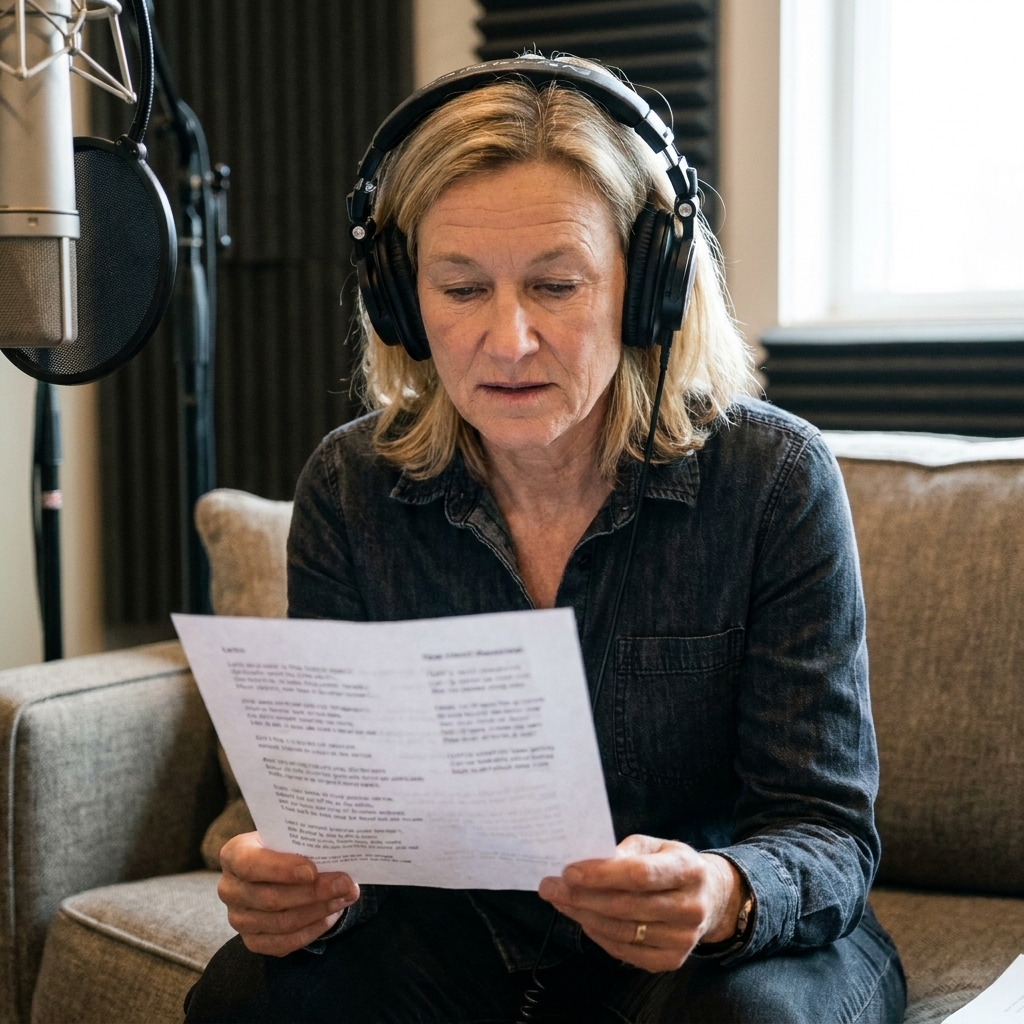
Compare technique
Guest verses often stand out because their technique is different, not necessarily better. A few craft elements are especially useful when you want to describe that difference clearly.
Rhyme density and rhyme shape
Some artists build obvious end rhymes that land like punchlines. Others use internal rhymes that create a rolling, woven sound. When you compare artists, listen for:
- End-rhyme focus: lines feel neatly sealed.
- Internal-rhyme focus: the middle of the line sparkles.
- Near rhymes: slant rhymes that feel conversational and modern.
- Rhyme run length: do they keep one rhyme sound going, or pivot constantly?
- Rhyme shape: are they writing tidy couplets, or stretching a multi-syllable rhyme across several lines with little turns inside it?
Repetition with a purpose
Repetition is not laziness. In a feature, repetition can be strategic: the guest might echo the hook’s key phrase to prove they belong in the song’s world, or repeat a word to sound obsessive, bitter, devoted, or triumphant.
Texture: the sound of the words
This is the part I used to miss when I only read lyrics on a screen. Texture is how the words feel in your mouth.
- Hard consonants: crisp, percussive, confrontational.
- Long vowels: yearning, melodic, dramatic.
- Alliteration: a tongue-twister glow that can sound playful or aggressive.
A micro-example (totally made up): compare the bite of “clip, click, cut” to the melt of “slow, low, alone.” Same idea, wildly different mouth-feel, and that mouth-feel becomes attitude when it rides a beat.
If you want language tools for naming what you hear, keep 8 Literary Devices in Pop Music and How to Spot Them nearby.
Track the story change
My favorite question in any collaboration is this: Would the song mean the same thing without the feature? Not would it be as popular, but would it carry the same emotional argument.
Ways a feature reshapes meaning
- Adds backstory: suddenly we learn why the narrator is guarded, grieving, or flexing.
- Challenges the main thesis: the guest disagrees, calls out hypocrisy, or offers a harder truth.
- Raises the stakes: consequences become concrete, names and details appear.
- Changes the moral tone: what sounded romantic becomes controlling, what sounded confident becomes fragile.
- Offers resolution: the guest delivers forgiveness, closure, or a last-scene perspective.
A quick trick: after the song ends, summarize the story in two sentences. Then ask which sentence the guest made possible.
One more layer, because this matters: sometimes the meaning changes even if the writing stays simple. A guest can dominate through delivery (the tone on one word), mix placement (suddenly the voice is right in your ear), or ad-libs that become the song’s subtext. Lyrics and performance are roommates, and features can win the room either way.
Continuity or clash
Some collaborations are designed to sound unified. Others thrive on mismatch. Neither is automatically better, but the listening approach changes.
When it aims for continuity
The guest adapts to the host’s world. You might hear mirrored themes, matching slang, similar imagery, or the guest quoting the hook in a way that feels natural.
When it aims for clash
The guest keeps their own identity loud. Instead of matching, listen for deliberate contrast like:
- a different emotional angle (tender verse inside a tough song)
- a different level of realism (hyper-specific details inside a dreamy track)
- a different moral stance (apology versus accusation)
This is where collaborations can feel like mini-theater. Two characters enter the same room and reveal how differently they see it.
And yes, this applies beyond rap features. Pop duets, indie collaborations, and EDM vocal features still do the same basic work: a new voice enters, changes the emotional math, and either blends into the palette or cuts through it.
Give it a fairness test
Sometimes people call a guest verse bad when it is actually just different. I use a simple fairness test to check my own bias.
- Does the verse serve a clear role? (Even if it is not the role you wanted.)
- Is it internally consistent? The guest can be chaotic, but it should feel intentional.
- Does it interact with the song? Referencing the hook, flipping a theme, answering a line, or deepening the mood.
- Does it respect the sonic space? Not just lyrics, but pacing and breath. Are they fighting the beat or riding it?
If it passes those tests and still feels off, that is useful information too. The mismatch might be the point, or it might reveal a collaboration that happened for reasons other than art. Both are worth noticing.
A repeatable method
When I want to really understand a collaboration, I listen three times with three different goals. It keeps me from forming an opinion too early.
- First listen: no pausing. Just feel where your attention shifts naturally.
- Second listen: focus only on the guest. What are their top three images or claims?
- Third listen: focus only on the host. What did the guest reinforce, contradict, or steal?
After that, I write a tiny thesis sentence: The feature matters because… If you can finish that sentence, you have analysis.
If you want a broader toolkit for close reading, I keep my approach here: How to Analyze Song Lyrics Like a Literary Critic.
Quick FAQ
How do I tell who won?
I try not to treat every collaboration like a boxing match. A better question is: who changed the song’s meaning the most? Technical fireworks are one kind of impact. A single clean emotional turn is another. Sometimes the win is pure performance, not complexity on the page.
What if the feature is short?
Then the analysis gets sharper. A short feature is usually there for a specific reason: a tonal shift, a key detail, a final word, or pure vocal color. Ask what only that voice can provide.
What if I cannot find official lyrics?
Be careful with misheard lines, especially in fast verses. Misheard lyrics can completely change how you judge a feature’s storytelling. If you suspect you are filling in blanks, you might enjoy Mondegreens Explained for a reality check.
It should feel like talk
The reason guest verses fascinate me is that they show artists reacting, even when the verse is sometimes recorded months apart. The best ones still feel like a conversation about the same central question: love, power, survival, pride, regret, joy.
So the next time a feature steps in, listen for what they are adding to the room. Not just another verse, but another worldview.