
Liner note
Vinyl Easter Eggs in Dead Wax and Liner Notes

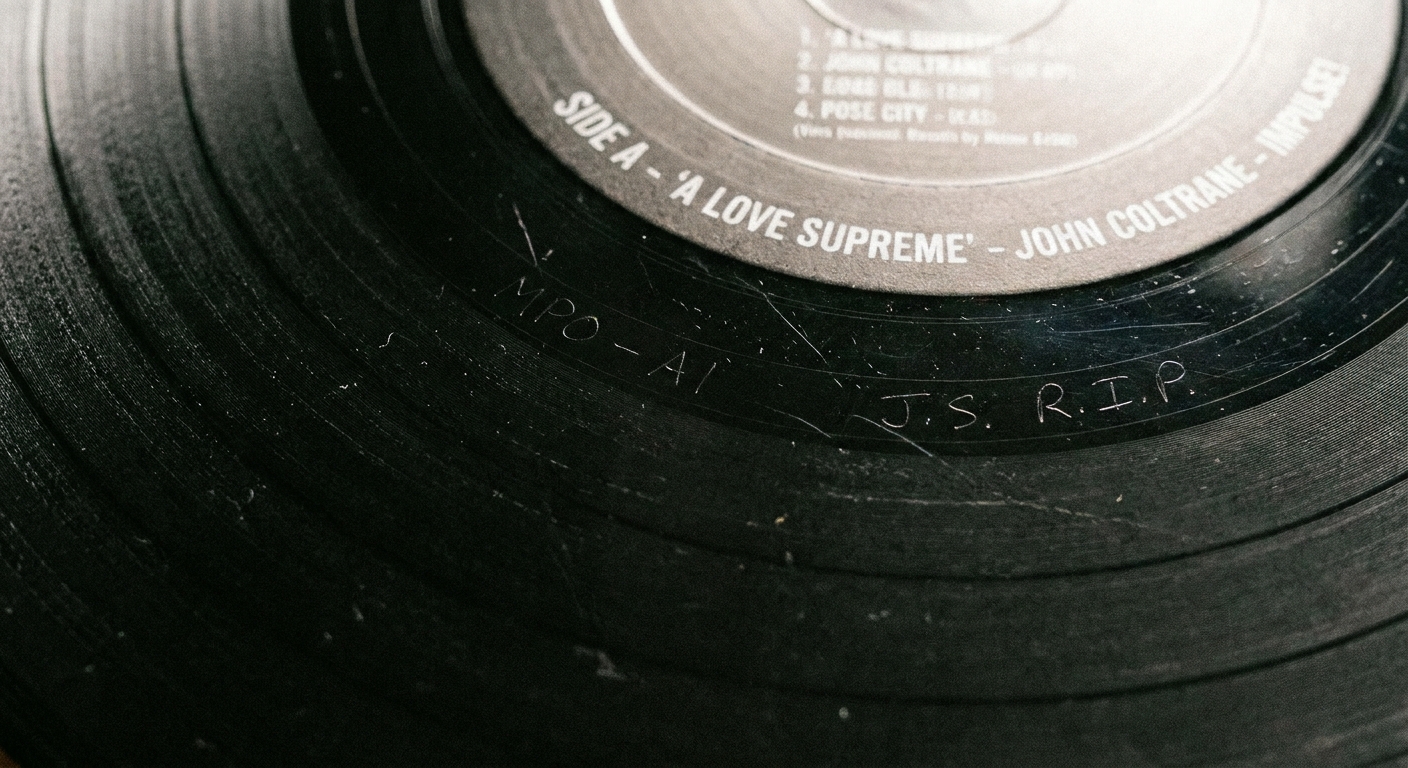
I still remember the first time I found one. I was in my childhood bedroom, holding a record like it was a fragile relic, turning it under the lamp the way I used to tilt CD liner notes to catch the fine print. There, right near the label where the grooves run out, was a tiny hand-scratched message. Not printed. Not “official.” More like a whisper left behind by whoever cut the lacquer that day.
That is the magic of vinyl Easter eggs. They are physical, private, and weirdly intimate. They live in the dead wax, on the inner sleeve, in the credits nobody reads, and sometimes in plain sight on hype stickers that feel like throwaway marketing until you notice the wink.

What counts as a vinyl Easter egg?
On physical releases, “Easter egg” can mean anything intentionally hidden or easy to miss, including:
- Dead wax inscriptions etched or stamped in the run-out area
- Matrix numbers and pressing codes that can help identify the plant, side, and cut and sometimes hint at the production run
- Jokes, mottos, and shout-outs from the cutting engineer, band, or label
- Secret credits tucked into liner notes or inner sleeves
- Artwork micro-details like tiny faces, symbols, or altered text
- Packaging clues like hidden messages on spines, gatefold seams, and obi strips
Not every unusual mark is a deliberate message. Some are purely manufacturing related. The fun is learning which is which.
Dead wax basics
The dead wax is the smooth band between the last playable groove and the label. It is also called the run-out area. This is where you will find the most classic vinyl “secret messages.”
Step 1: Find the run-out area without smudging anything
- Hold the record by the outer edge and the label, not the grooves.
- Angle it under a bright light. A desk lamp works great.
- Rotate slowly until the inscription catches the light. Some markings are almost ghostly.
Step 2: Know what you are seeing
You will usually spot one of two “handwriting styles,” but it varies by era, plant, and mastering house:
- Machine stamped: neat, uniform letters and numbers. Often catalog or matrix info, and sometimes plant or studio marks.
- Hand etched: scratchy, human-looking marks. Often matrix info too, plus the fun stuff: jokes, initials, short phrases, or engineer signatures.
Step 3: Start with the boring bits (they are secretly helpful)
Even when you are hunting jokes, the “boring” parts give context.
- Catalog number: ties the disc to a specific release.
- Side identifier: A/B/C/D, or Side 1/2, sometimes with extra suffixes.
- Matrix number: the pressing’s identity tag, sometimes including a lacquer cut indicator (like -1, -2, -A, -B).
If you have ever compared two copies of the “same” album and wondered why one sounds more open or punchy, the answer can be hiding here. Different cuts can mean different mastering moves. It is not the only factor, though. Vinyl formulation, wear, and your setup matter too.
Step 4: Look for signatures and inside jokes
This is where it gets delightfully personal. Common “Easter egg” run-out patterns include:
- Engineer initials or nicknames
- Short mottos that repeat across multiple albums
- Band in-jokes and tour references
- Call-and-response across sides, like Side A asking a question and Side B answering it
Sometimes the joke is the point. Sometimes it is a breadcrumb that helps you identify who cut your copy, which can matter to collectors and deep listeners.
A quick note on who does what
People mix these roles up (fair), but they are different pieces of the chain:
- Mastering engineer: prepares the final audio for the format.
- Cutting engineer: cuts the lacquer (or uses a lathe to create the master disc), turning the mastered audio into grooves.
- Pressing plant: makes stampers and presses the physical records.
One person or facility can handle multiple steps, which is why the run-out can look like a tiny group project.
Common markings that are not Easter eggs
A lot of run-out text is pure manufacturing information. Here are the ones that tend to confuse new crate diggers.
Matrix numbers and lacquer cut numbers
Matrix strings vary by label and era. The important idea is that they often include a version indicator. If you see something like -1 versus -2, it often points to different lacquer cuts. Earlier is not automatically better, but it is a clue.
Pressing plant marks
Many plants used internal codes, stamps, or symbols. These can help you identify whether your copy was pressed at one facility versus another, even within the same country. They do not always translate to a precise date, but they can narrow down the “where” and sometimes the “roughly when.”
Mastering and cutting stamps
You might see marks associated with mastering studios or lathe rooms. Again, these are not always “secret,” but they are part of the provenance of your copy.
If you love this kind of detail, you will probably also enjoy our broader Music Trivia guide, which is basically my favorite kind of rabbit hole.
Liner notes
Dead wax is the glamorous mystery, but liner notes are where artists and labels can hide longer, nerdier jokes. Think of liner notes like a backstage pass that got folded into the sleeve.
Where to check first
- Inner sleeves: especially lyric sleeves and photo sleeves
- Gatefold interiors: the hinge area and edges get overlooked
- Back cover fine print: around barcodes and label logos
- Booklets: first and last pages, and the credits block
- Spine text: tiny alterations, symbols, or unexpected punctuation

Credits
I love a well-written lyric, but I also love a well-hidden credit. Artists hide clues in the part of the package that feels least romantic, which is exactly why it works.
Hidden collaborators and pseudonyms
Sometimes you will see a name that looks unfamiliar, a nickname, or a playful alias. That can be:
- A real collaborator using a pseudonym
- An inside joke credit (like “tea procurement” or “moral support”)
- A nod to a friend who influenced a song but did not officially co-write it
If you are curious how to spot lyrical fingerprints when multiple writers are involved, our piece on spotting co-writer influence in songs pairs surprisingly well with physical-album sleuthing.
Thank-you lists and “special thanks”
Thank-you sections can be pure gratitude, but they are also a common place to:
- Reference a working title for a track
- Hint at where the album was written or recorded
- Nod to an uncredited sample inspiration or a scene that shaped the record
Studio notes and gear callouts
Some liner notes get specific: studios, engineers, and occasionally instruments. If you like hearing the odd little noises more clearly once you know what they are, you might enjoy identifying unconventional instruments.
Packaging Easter eggs
Not every secret is text. Some are visual.
Inner sleeve art tricks
- Tiny drawings tucked into shadows
- Reflections in mirrors or windows
- Repeated symbols that show up across multiple releases
Hype stickers and obi strips
Sometimes a sticker includes a phrase or icon that becomes meaningful only after you listen. I think of these as the album’s opening line. You do not understand it yet, but you will.
Spines, seams, and “why is this printed there?” moments
Look at the places designers assume most people will not: the bottom edge, the flap, the inside crease. If you have ever found a phrase printed sideways on a seam, you know the thrill.
When a side is an etching
One modern “surprise” that catches people off guard: some limited releases replace music on a side with a decorative etching. It is still part of the art, but if you drop the needle expecting a hidden track, you will get a very different kind of silence.
A careful checklist
Part of loving physical media is treating it kindly. Here is my low-stress routine:
- Wash and dry your hands before handling records.
- Use bright, angled light to read dead wax without rubbing it.
- Do not use sharp tools to “trace” etchings. If you cannot see it, change the light, not the record.
- Take a quick photo of the run-out area if you want to decode it later.
- Store inner sleeves properly so printed inserts do not scuff the disc.
How to confirm what you found
Some Easter eggs are obvious, but plenty are cryptic. If you want to be accurate, here are reliable ways to cross-check.
Compare both sides and all discs
Many records “speak” across sides. If Side A has a phrase, check Side B for a partner phrase, initials, or a date-like number.
Compare multiple pressings if you can
If you have access to another copy, even briefly, compare the dead wax. A different cut might have:
- A different inscription
- A different mastering signature
- A slightly different matrix suffix
Use reputable discography references
When I want to confirm that an inscription is associated with a particular pressing, I often check Discogs release notes and run-out transcriptions: https://www.discogs.com. Treat user-submitted info like a helpful lead, then verify with your own eyes.
Why hide these messages?
There is a practical reason: manufacturing needs identifiers. But the playful messages are something else. They are a reminder that music is made by people who get bored, excited, proud, anxious, and goofy while working on the thing you love.
Sometimes it is a signature or a blessing for the listener. Sometimes it is a tiny act of rebellion against the idea that art has to be tidy and fully explained.
If you enjoy tracking meaning across different versions of a song, this mindset also shows up in lyric changes between studio and stage. You might like catching spontaneous lyric changes.
Mini FAQ
Are dead wax messages always intentional?
No. Some are strictly technical. The intentional ones tend to read like a phrase rather than a code, or show a more personal hand-etched style.
Can dead wax prove I have a first pressing?
It can provide strong clues, but “first pressing” claims get complicated fast. Dead wax helps you identify the cut and sometimes the plant, but you often need to compare against known release details too.
Do modern records still have Easter eggs?
Yes. Even brand-new releases can include fun run-out inscriptions, hidden credits, or packaging jokes. The tradition never really died. It just moved with the formats.
What is the easiest Easter egg to find as a beginner?
Start with the inner sleeve and gatefold credits, then move to the dead wax once you are comfortable handling the record and using angled light to read small markings.
One last listening thought
My favorite thing about these tiny hidden notes is that they change how you listen. Once you know a record has a secret message, you listen closer, like you are in on the conversation. And that is the whole point, really. Vinyl turns music into an object you can explore, not just a file you can play.
If you find a particularly good dead wax inscription, I hope you keep it in your mental scrapbook of music trivia. Those little scratches are part of the album’s story, too.