

A focused listening guide to the “what is that sound?” moments in classic hits. Learn the telltale clues for theremin, Mellotron, sitar, clavinet, talk box, ...
Liner note
Musical Foley in Pop: Everyday Objects as Percussion

Published · Last updated
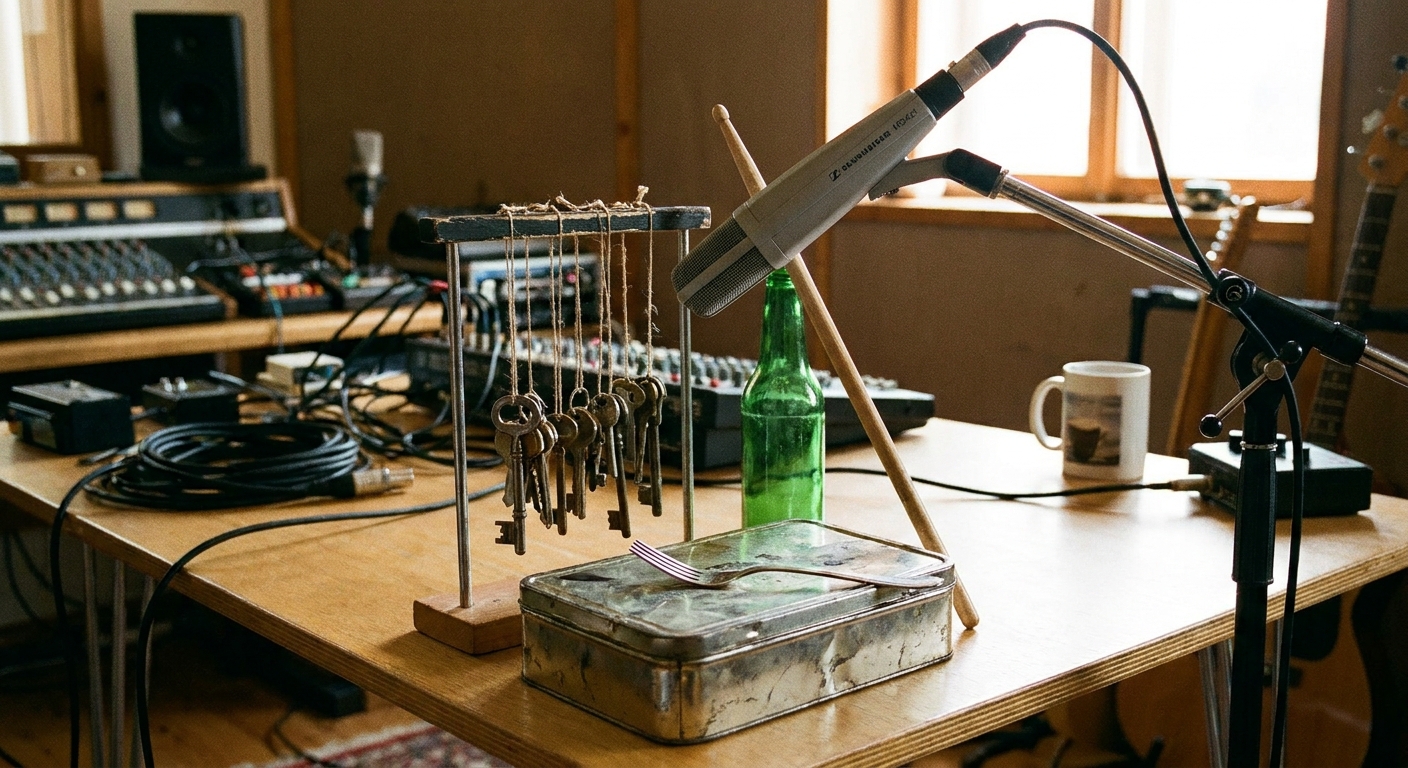
I used to think “percussion” meant drums, shakers, and whatever the drummer could reach without standing up. Then I started hanging around small studios in my local scene and realized the most reliable instrument in the room was… the room. A mic. A table. A set of keys. A boot heel. Somebody’s laugh from across the hall.
That little realization rewired how I listen to pop, hip hop, and dance music. Once you know what to listen for, you start catching it everywhere: everyday objects used as rhythm, tucked into the beat like a magic trick.
What “musical foley” actually means
In film, foley is the art of recreating everyday sounds (footsteps, fabric rustles, door latches) so the scene feels real. In music, the idea travels nicely: producers capture ordinary noises and shape them into percussion, texture, or even the main groove.
Sometimes it is literal, like a clean recording of claps. Sometimes it is disguised, like a pitched door slam that becomes a snare, or a filtered coin jingle that lands where a hi-hat usually sits.
If you already like hunting for production details, this pairs perfectly with our guide on spotting hidden samples.
Why everyday sounds work so well in hit records
- They feel human. A finger snap or a shoe squeak carries body language in a way a perfect drum machine often does not.
- They cut through. Real world transients (the sharp start of a sound) can poke through dense mixes.
- They build a setting. A subway ambience or room tone can tell you where the song lives emotionally, even with your eyes closed.
- They create a signature. One unusual percussive sound can become the track’s fingerprint.
How to train your ears in 10 minutes
Here is the listening routine I use when I want to “see the scaffolding” inside a beat without needing any fancy software.
1) Do a first pass for the loudest three
On your first play, identify the big anchors:
- Kick (the low thump)
- Snare or clap (the backbeat)
- Hat or shaker (the fast ticks)
Once you have those, you can notice the “weird” stuff because your brain is not scrambling to find the main pulse.
2) Drop the volume slightly
This sounds backward, but it works. Turning the track down a notch often reveals midrange details like taps, clicks, and mouth sounds that get masked when the low end is thrilling your whole skull.
3) Listen for transients, not tone
Everyday-object percussion usually announces itself with a sharp start, then a quick fade. Focus on the attack of each hit. Is it papery, metallic, woody, glassy, rubbery?
4) Follow the “ghost rhythm”
After the obvious drums, try to hear the secondary groove: the little ticks that make the beat feel like it is leaning forward. Those are prime real estate for foley.
5) Switch to one-ear listening for a moment
Use one earbud (or pan your attention to one side in headphones). Producers love placing small percussive objects slightly left or right. One-ear listening can make those placements jump out.
If you enjoy this kind of close listening, you will also like identifying unconventional instruments.
Common “everyday percussion” sounds and what to listen for
When you are trying to identify foley, it helps to think in materials. Here are the big categories and their tells.
Doors, drawers, and cabinets
- What they become: snares, rimshots, impact accents
- Clues: a woody “thunk,” a latch click right before or after the hit, and a little room reverb that feels like a hallway
Keys, coins, and jewelry
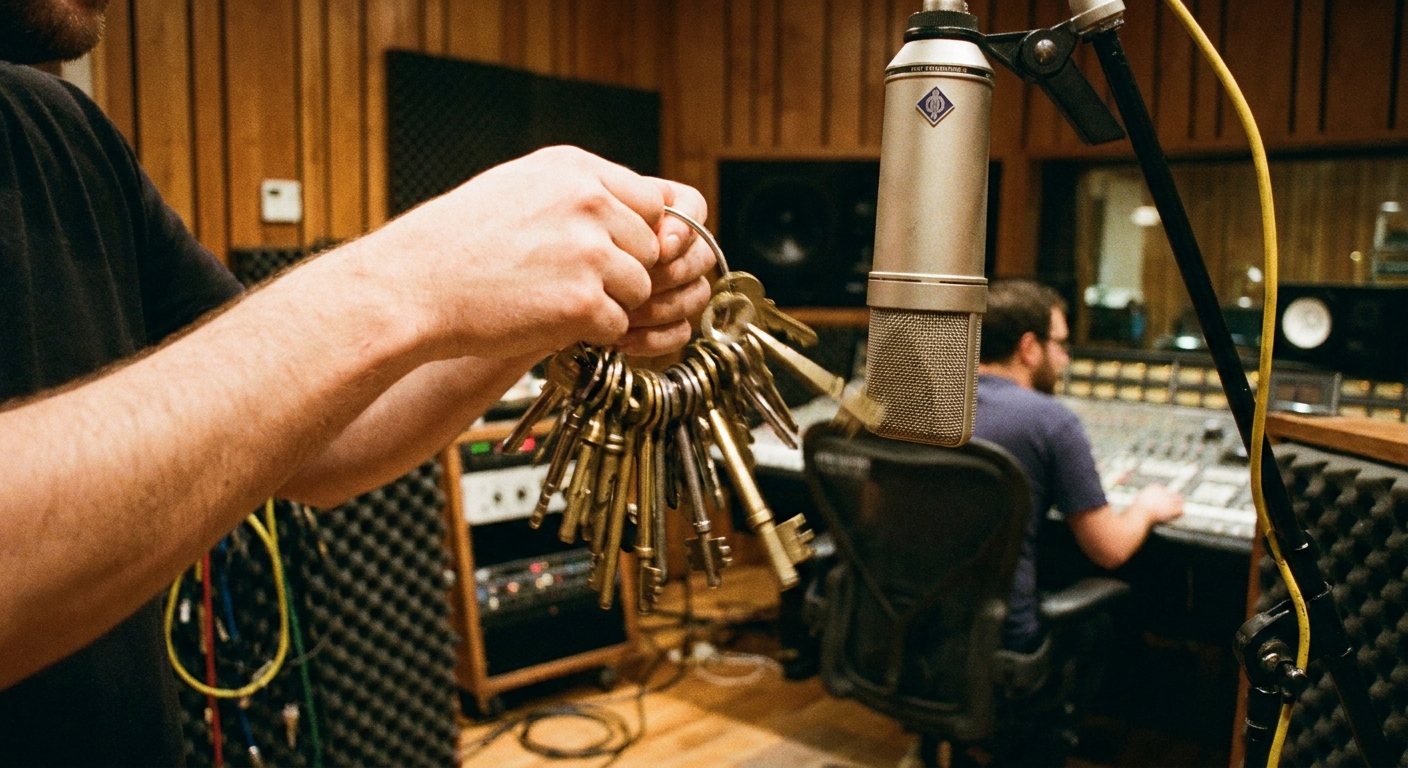
- What they become: hi-hats, shakers, sparkle layers
- Clues: irregular micro-rattles inside one hit, like multiple tiny transients instead of one clean tick
Footsteps, stomps, and body percussion
- What they become: kicks, toms, crowd energy
- Clues: a low thud plus a brief “shoe noise” top end, and sometimes slight timing differences that feel more alive than a grid
Claps, snaps, and mouth sounds
- What they become: claps, rim layers, swing textures
- Clues: breath, finger squeak, and the sense of hands in a room (even when the reverb is subtle)
Paper, plastic, and packaging
- What they become: shuffles, brushed hats, offbeat chatter
- Clues: a soft “crinkle” tail that keeps moving after the initial hit
Glass and ceramics
- What they become: bright clicks, percussion “pings,” transitions
- Clues: a clear pitched ring that is very different from cymbals, especially when it is shortened with editing
How producers disguise foley so you miss it
Part of the fun is that the best musical foley does not sound like “someone dropped a spoon.” It sounds like it belongs. A few common tricks:
EQ shaping
Producers carve out boomy lows or harsh highs so an object sits exactly where a drum would. A door slam can be trimmed into a tight “snare zone” without the roomy rumble.
Layering with classic drums
Foley is often layered with a normal snare or clap. Your brain identifies the drum, and the object becomes the secret seasoning. If a snare has an odd “wood” bite or a clap has a little metallic spit, you might be hearing a layer.
Time-stretching and tight editing
Real world sounds are messy. Tight editing makes them punch like programmed hits. Time-stretching can turn a short click into a longer, more rhythmic “tch” that behaves like a hi-hat.
Pitching
Pitch shifting is the ultimate disguise. When you pitch an impact down, it stops sounding like an object and starts sounding like a drum. Pitch it up, and it becomes a crisp tick.
Reverb and space matching
A hit record usually lives in a single “imaginary room.” Producers use reverb so the foley shares the same space as the vocal and the drums. Once everything sounds like it happened in one place, your brain stops questioning what made the sound.
Field recordings: ambience that becomes rhythm
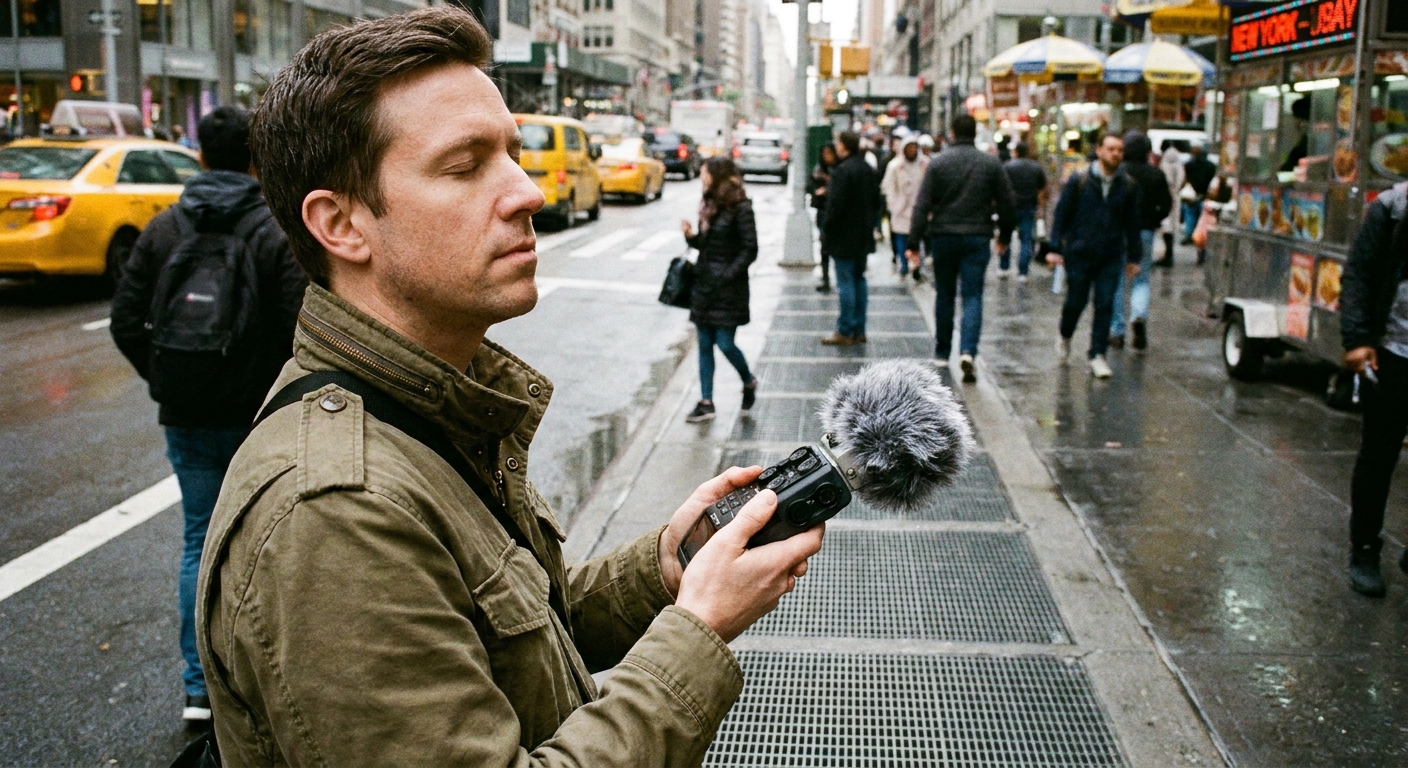
Not all musical foley is a single hit. Sometimes the producer uses field recordings, real audio captured outdoors or in public spaces, then turns it into a rhythmic bed.
- Subway or street ambience can function like a constant shaker.
- Rain and wind can be filtered into a soft hi-hat texture.
- Crowd sounds can become a pulse when chopped and gated.
The easiest tell is movement. A drum loop repeats the same way. Ambience breathes. Even when it is looped, it usually has tiny changes that feel like air shifting.
Try this: a quick “foley hunt” listening game
I do this with friends when we are cooking dinner and somebody inevitably puts on a playlist. No quiz sheets, no pressure, just better listening.
- Pick one song and decide you are only listening for non-drum percussion.
- Count three candidates you suspect are objects or body sounds.
- Rewind one section and see if your candidate stays consistent every time. If it slightly changes, it might be recorded foley rather than a static sample pack hit.
- Name the material, not the object. Say “metallic rattle” or “wood knock” instead of “keys” or “door.” This keeps you from forcing the answer.
If you want an excuse to do this with other people, our guide on hosting a listening night without a quiz is basically my personality in article form.
When foley changes how you hear the lyrics
This is A-Z Music Lyrics, so I have to say it: foley is not just a production flex. It can be storytelling.
- A cash register sound makes a line about desire, debt, or success feel physical.
- A door slam can turn a breakup lyric into a scene, not just a feeling.
- A room tone or intimate mouth click can make a confessional vocal feel closer, like the singer is right next to you.
If you love reading songs as little short stories, you might also enjoy where the story hides in verse, chorus, and bridge.
FAQ
Is musical foley the same thing as sampling?
It overlaps. Sampling is any reused audio, including instruments, vocals, or old recordings. Musical foley is more specific: everyday sounds recorded or sourced to mimic percussion or texture. Foley can be sampled, and samples can be foley.
How can I tell foley from a synth or drum machine?
Listen for imperfections: little timing variance, a non-musical tail, micro-rattles, and the sense of a real space. Synth and drum machine hits tend to be cleaner and more uniform unless they are intentionally “humanized.”
Do I need expensive headphones to hear this stuff?
No. Good headphones help, but the bigger upgrade is attention. Even basic earbuds can reveal foley once you know to listen for transients, stereo placement, and those tiny texture layers behind the main drums.
What if I keep guessing wrong?
You are still doing the real skill, which is describing sound. “Dry wood knock layered on the snare” is useful listening even if the producer actually hit a suitcase with a mallet. The point is learning what you hear and where it sits in the groove.
A parting thought from my liner-note era
As a kid, I read folded CD booklets like they were secrets. I wanted to know who played what, what room they were in, what weird instrument showed up for eight seconds and then vanished.
Musical foley is that same spirit, just updated for modern production. The next time a beat feels weirdly satisfying, zoom in. There is a good chance somebody made “percussion” out of the closest object in the room, then hid it in plain sight.