
A practical listening toolkit for catching stealth celebrity background vocals: headphone and mono tricks, looping methods, consonant cues, and a vocal finge...
Liner note
Spotting the Ghost Players

Published · Last updated
I grew up treating liner notes like sacred texts. I would unfold the little paper accordion from a CD case and scan every credit like it was a map to hidden treasure. Then, years later, streaming arrived and a lot of the “who played what” details felt harder to find at a glance, especially on older catalog releases where credits were never consistently digitized. Some services and reissues do it well now, but the overall effect for me was the same: session bands started to feel ghostly. They are everywhere in the music we love, and yet they slip right past the spotlight.
This is the good news: even when names are missing, style leaves fingerprints. If you learn to listen for a few repeatable quirks, you can start recognizing legendary studio ensembles by feel, not by folklore.
What “ghost players” means
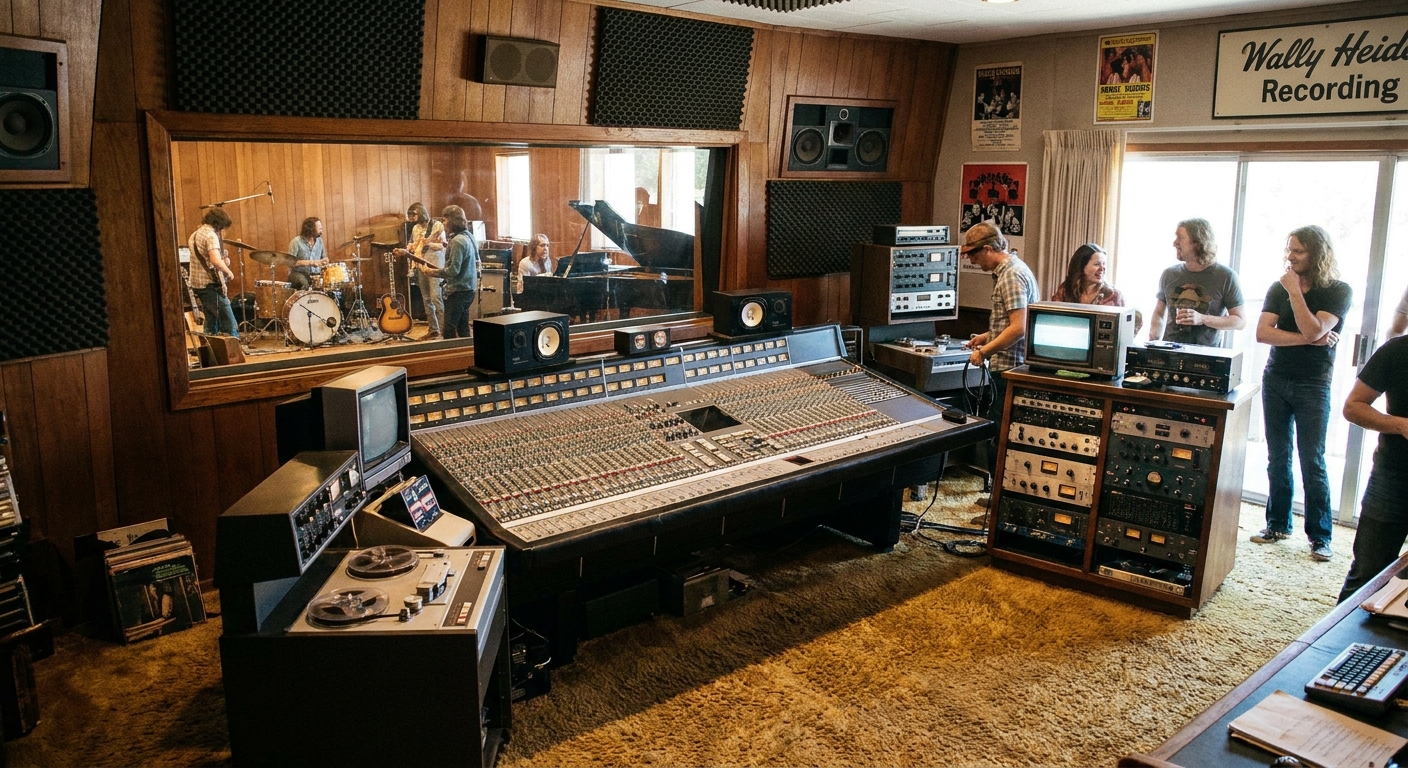
In this context, I am talking about historically uncredited or undercredited backing players who shaped records across multiple artists, labels, and genres. Sometimes they were credited inconsistently. Sometimes credits were shortened or omitted for mundane reasons like space, budget, marketing focus on the star, or plain old record-keeping chaos. And sometimes, yes, business arrangements and label politics could make crediting messy, especially when the same players moved between sessions and scenes.
Two of the most famous examples are:
- The Wrecking Crew: a loose, rotating circle of elite Los Angeles session musicians who anchored a huge slice of 1960s pop and TV scoring. The label itself is also partly retrospective, and credits and personnel lists can be debated depending on the project.
- The Funk Brothers: the core studio band behind Motown’s Detroit hits, whose groove language became a whole dialect of American pop. Even here, “core” can shift by year, room, and record.
But the listening skills in this piece work for any studio “house sound,” including later eras where you are trying to identify a producer’s go-to rhythm section, or a city’s studio ecosystem.
Start with rhythm
When I am trying to identify uncredited players, I do not begin with guitar tone or vocal production. I begin with time feel. That is where musicians reveal themselves even when the mix changes.
Listen in this order
- Drums: Where does the pocket sit, ahead of the beat or behind it? Are fills tidy and symmetrical, or chatty and improvisational?
- Bass: Is the bass outlining chords simply, or telling its own melodic story?
- Tambourine and hand percussion: On older records, these are huge identity markers.
- Guitars and keys: Voicings, muting, and rhythmic placement often repeat across different artists.
- Background vocals and horns: Arrangement habits can point to a specific studio ecosystem.
If you want a companion skill for lyrical context, I love pairing this kind of listening with a more literary lens. Our guide Analyze Song Lyrics Like a Literary Critic trains the same muscle, just pointed at words instead of groove.
Hear the Funk Brothers
Motown records have an instantly recognizable pulse that feels both polished and human. The magic trick is that the rhythm section is not simply keeping time. It is conversing.
1) The bass is melodic
On a lot of Motown hits, the bassline behaves like a hook. It walks, it leaps, it answers the vocal. A classic tell is when the bass feels like it is singing counter-melodies during the spaces between lyric lines.
- What to listen for: Runs that connect chords like stepping stones, little climbs into a chorus, and phrases that repeat like a secondary chorus.
2) The tambourine drives
Motown tambourine is not a gentle shimmer. It is often bright, insistent, and on top of the beat, especially in choruses. It adds urgency and makes the groove feel bigger without changing the drum pattern.
- What to listen for: Tambourine emphasizing backbeats, sometimes nearly as loud as the snare in the chorus lift.
3) The groove feels buoyant
This is a very non-technical description, but I stand by it. Even when the lyric hurts, the band keeps the body moving.
- What to listen for: Tight snare, crisp hi-hat timekeeping, and a sense that the drummer is shaping transitions with small, tasteful nudges rather than big rock fills.
4) The arrangement stacks
Motown arrangements love a gradual build: a new guitar figure appears, then percussion, then backing vocals, then horns. Each layer is rhythmically interlocked, not just pasted on top.
When you are following the structure, our breakdown of how sections carry story momentum in Verse, Chorus, Bridge: Where the Story Hides applies beautifully to arrangement listening too.
Hear the Wrecking Crew
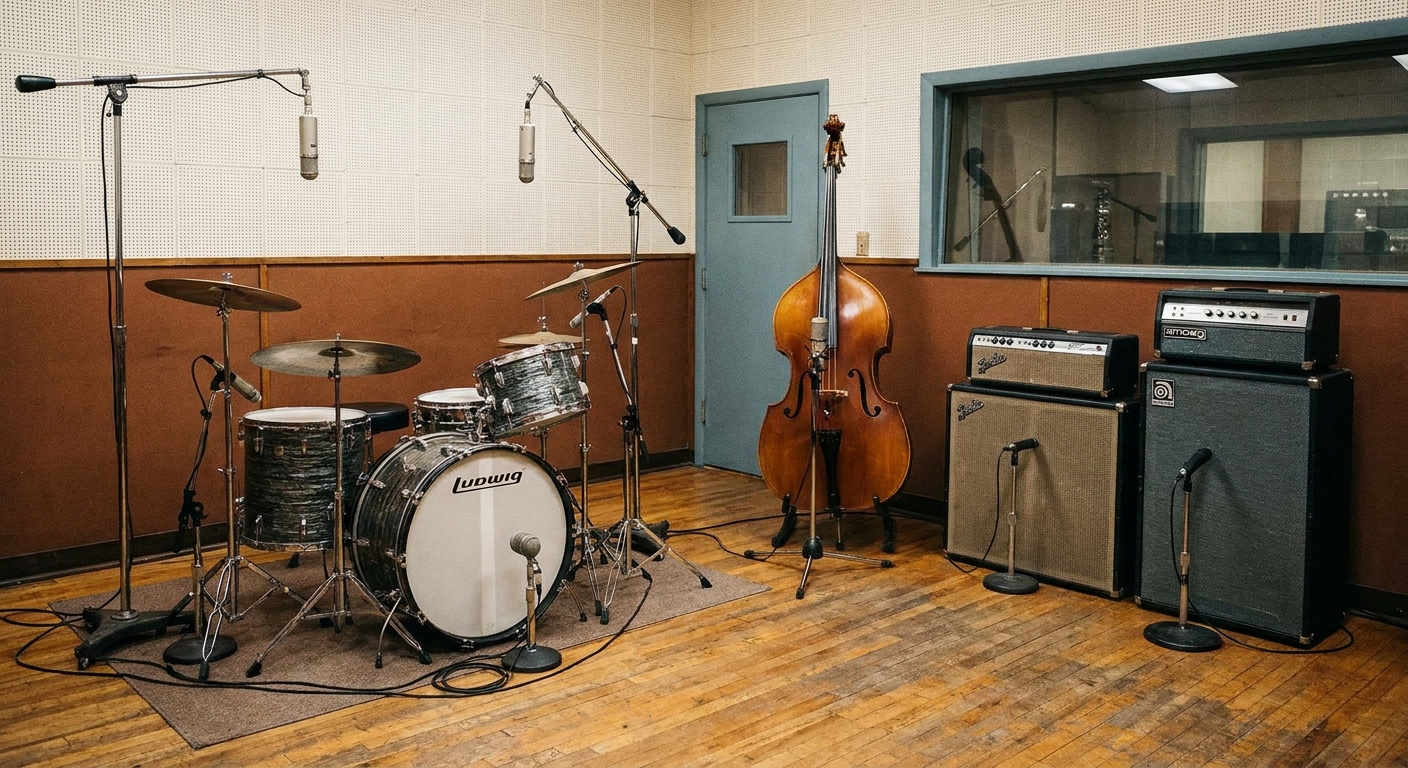
The Wrecking Crew sound is not one genre. It is a level of execution. The playing is fast, accurate, and deeply musical, with an instinct for motion and momentum.
1) Drum parts feel composed
In a lot of LA pop sessions, drum parts feel architected. Fills often land cleanly at structural seams, and transitions feel inevitable.
- What to listen for: Fills that outline the bar line clearly, tom patterns that sound intentionally voiced, and cymbal choices that change the color of a section.
2) Percussion shapes the track
Shakers, castanets, tambourine, claves, and hand percussion often appear as crisp accents that widen the track. The parts are rhythmic, but also textural.
- What to listen for: Percussion that enters for a chorus only, or a single distinctive accessory sound that becomes the record’s signature.
3) Rhythm parts interlock
LA sessions love interlocking rhythm parts: one guitar chugs muted eighth notes, a second guitar answers with a bright chord stab, and a keyboard doubles or comments in the gaps.
- What to listen for: Clean muting, very consistent strumming, and chord voicings that sound arranged rather than casual.
4) The arc is deliberate
Even in a three-minute pop single, there is often a clear arc: a dramatic intro, a mid-song lift, and a last chorus that lands with extra weight.
If you are curious about how that connects to persona and performance, you might also like Decoding Artist Alter Egos, because both topics are really about one thing: how music creates character.
Micro-clues to track players
When credits are murky, I keep a running checklist of tiny habits. One clue can be coincidence. Three clues in the same track start to feel like identity.
Drums
- Hi-hat language: Is it straight eighths, lively sixteenths, or open-hat accents that repeat in similar places?
- Fill vocabulary: Does the drummer favor short snare drags, tom runs, or sparse “no fill at all” confidence?
- Ghost notes: Quiet snare chatter between backbeats can be as personal as handwriting.
Bass
- Chord-tone preference: Does the bassist lean on roots and fifths, or weave thirds and sixths like melodic glue?
- Pickup notes: Little lead-ins to downbeats, especially into the chorus, often repeat across sessions.
- Register choices: Some bassists love living higher on the neck for clarity and punch.
Guitars and keys
- Muting style: Tight palm-mute versus open ringing chords changes the whole emotional posture of a track.
- Chord voicings: Some players consistently choose certain inversions, especially on major-to-minor shifts.
- Doubling habits: Piano and guitar doubling a rhythmic figure is a common house move in certain scenes.
Background vocals and horns
- Call-and-response placement: Do responses land after the lyric, or overlap it for a push-pull feel?
- Horn voicing flavor: Tight unison stabs versus warm, stacked harmony pads tells you a lot about arranger habits.
Triangulate credits
I am not trying to litigate credits by ear, and I do not think you have to “solve” a personnel mystery to enjoy the sound. Still, if you want to sanity-check what you are hearing, a gentle triangulation helps.
- Start with the best credits you can find: expanded credits on reissues, box sets, and official label uploads often beat quick-copy databases.
- Compare across formats: a streaming credit panel, a reissue booklet, and a reputable discography do not always agree. The overlap is usually the safest starting point.
- Use audio as a tie-breaker: if the paper trail is contradictory, go back to the pocket, the phrasing, and the arrangement habits rather than one definitive list.
If you like methodical detective work, our guide How to Track Down the Original Meanings Behind Debated Lyrics has a mindset that transfers surprisingly well to credit mysteries.
A listening exercise
Here is my favorite way to train your ear without getting overwhelmed.
The three-pass method
- Pass 1 (one instrument): Listen only to drums. Do not judge the song. Just notice: where is the pocket, and how does the drummer mark transitions?
- Pass 2 (rhythm section): Add bass. Notice if the bass and kick drum are married, or if the bass is roaming melodically around the drums.
- Pass 3 (arrangement): Listen for what enters and exits. Which instruments show up only for the chorus? Which parts announce the bridge?
Do that with three songs you strongly suspect share a session ecosystem. By the third track, the similarities start popping like boldface.
Beyond the 1960s
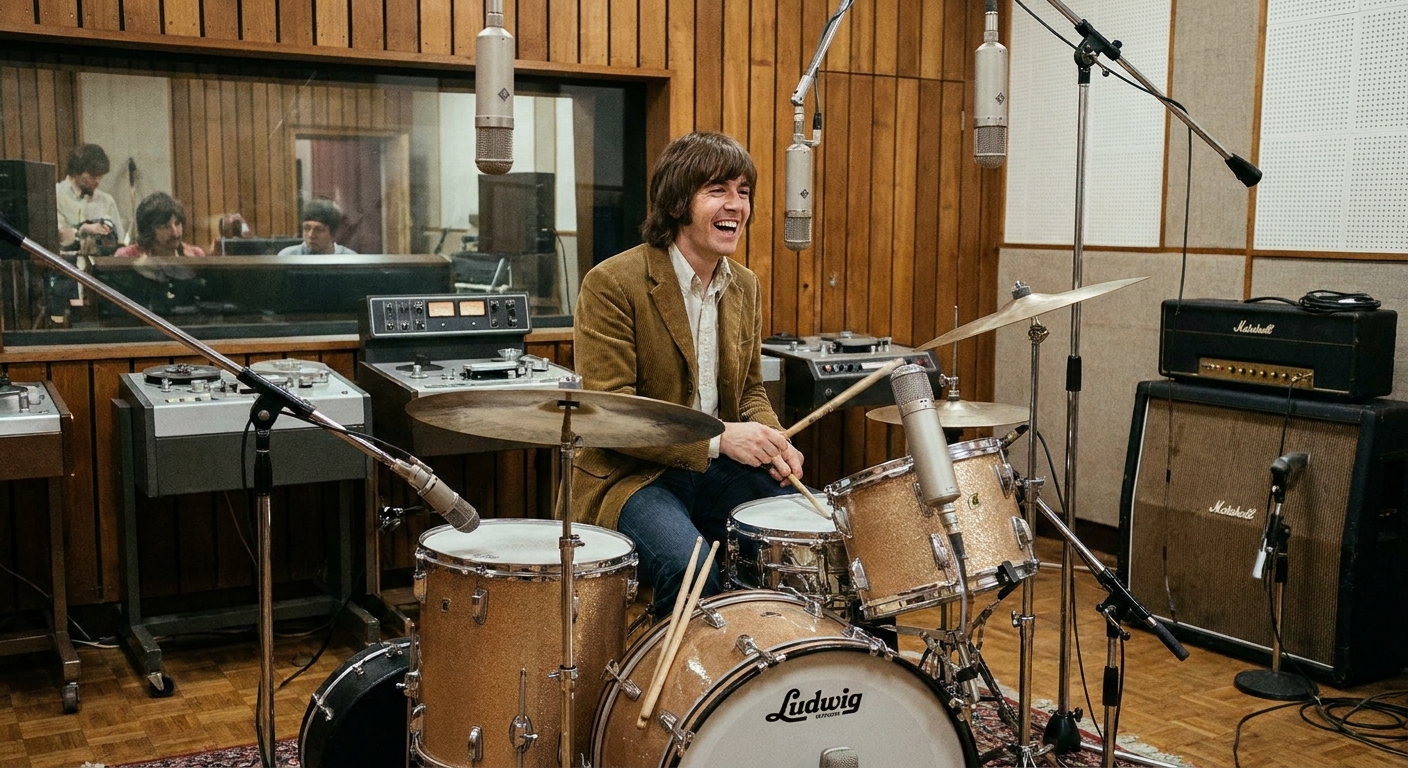
Once you learn to hear fingerprints, you start finding them everywhere. A tight Nashville-style rhythm section often signals itself through clean subdivision, controlled dynamics, and parts that leave disciplined space for the vocal. A Muscle Shoals-adjacent pocket tends to feel swampy and patient, with drums and bass leaning into a hypnotic, unhurried tug. Even in modern pop and hip-hop, you can sometimes hear a producer’s favorite players in recurring drum programming choices, bass movement, and the way guitars or keys are voiced across unrelated artists.
If you want a modern companion angle, The Producer’s Touch on Lyrical Flow is a good reminder that “who shaped this” is not only a credits question. It is also an arrangement and feel question.
False tells
Some clues are really just era conventions or production choices. A few traps I have fallen into, so you do not have to:
- Reverb and compression can make different drummers sound related. Focus on phrasing, not ambience.
- Similar drum kits were common in certain studios. Listen for sticking and dynamics instead of tone alone.
- Producer or arranger signatures can mimic band identity. If horn lines feel identical across artists, it might be one arranger more than one band.
- Genre rules create overlap. A Motown-adjacent groove does not automatically mean Motown players. Look for the cluster of clues.
If you like hunting down what is really there versus what our brains auto-fill, you will probably enjoy Mondegreens Explained. Misheard lyrics and misheard musicians have more in common than you would think.
Why it matters
Spotting session bands is not about gatekeeping knowledge. It is about widening the frame. Pop history is not only a story of stars. It is also a story of working musicians showing up in the morning, reading a chart, inventing a hook on take two, and quietly changing your life through a car speaker.
And honestly, it makes listening richer. Once you start hearing these fingerprints, the catalog stops feeling like isolated songs and starts feeling like a living network of players, studios, and cities.
Quick FAQ
Can I identify a session band without knowing personnel?
Yes. Think in terms of house style and recurring habits. Even when personnel rotates, a studio scene often shares approaches to groove, arrangement, and tone.
What if credits are disputed?
Treat online credit lists like leads, not verdicts. Use them to pick comparison tracks, then go back to the audio. If you want a method for untangling contested details, our approach in How to Track Down the Original Meanings Behind Debated Lyrics adapts nicely to credit mysteries too.
One simple Motown clue?
Start with the bass. If the bassline feels like a melodic co-lead and the tambourine is driving the backbeat in the chorus, you are in the right neighborhood.
One simple LA pop clue?
Listen for rhythm parts that sound arranged in layers, plus drum transitions that feel clean and intentional.