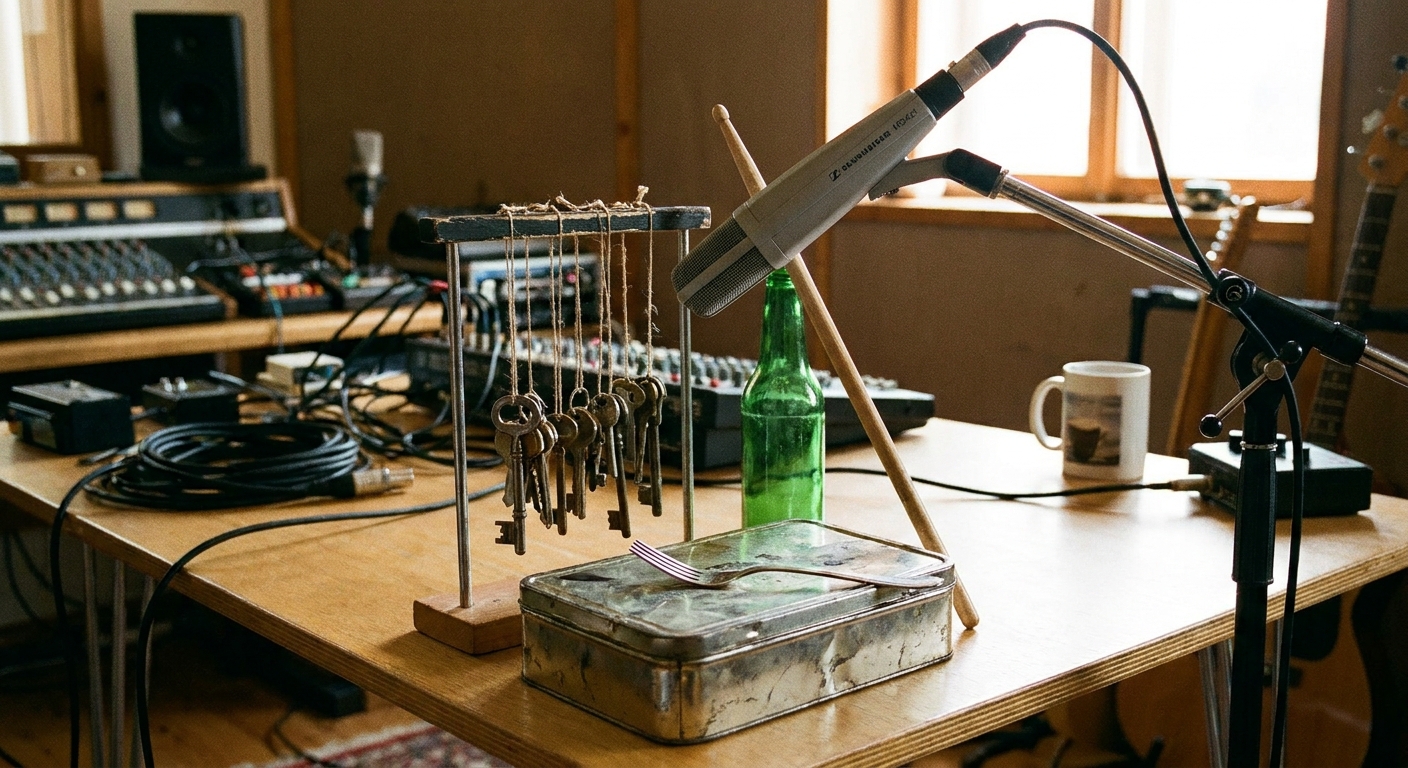
Think a “definitive” hit is the original? Learn the listening tells and a repeatable research checklist—credits, exact lyric searches, Discogs, PRO databases...
Liner note
How to Spot Hidden Samples in Modern Hip-Hop and Pop

Published
I learned to hear samples the same way I learned to memorize lyrics as a kid: by rewinding the exact same three seconds until my brain stopped hearing “a cool vibe” and started hearing parts. A breath here. A single horn hit there. A vocal “ah” that sounds too alive to be a synth preset.
Modern hip-hop and pop can hide samples in plain sight because producers are masters of disguise. A sample might be chopped into six micro-fragments, pitched up like helium, time-stretched until it turns syrupy, or filtered to a thin ribbon of texture. The good news is that once you know what to listen for and where to verify, you can turn sample-spotting into a repeatable little ritual.
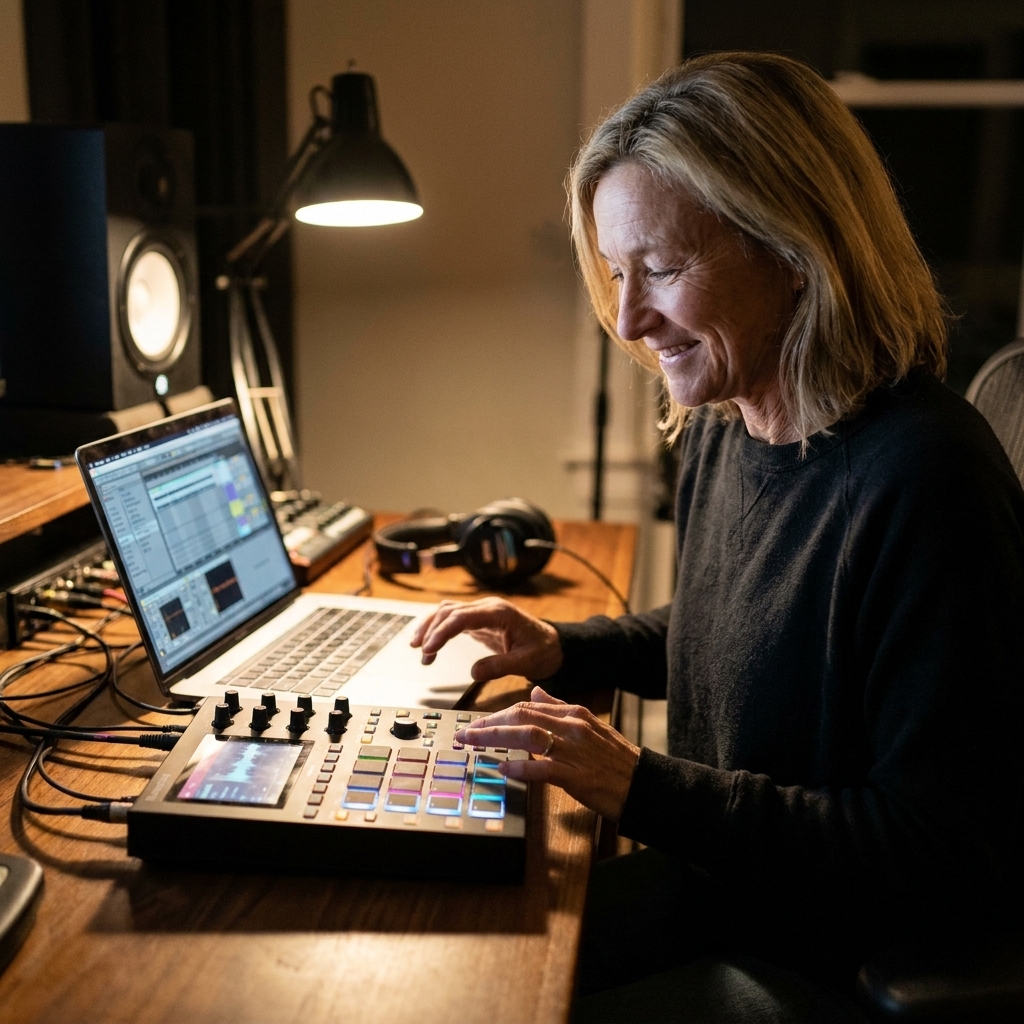
What counts as a hidden sample?
When people say “I can’t hear the sample,” they usually mean one of these situations:
- Micro-samples: Tiny fragments, sometimes under a second, used like percussion or texture.
- Heavily processed samples: Pitch-shifted, time-stretched, reversed, filtered, or layered so they feel like original sound design.
- Interpolations that mimic a sample: A re-recorded melody or replayed riff that references an older song without using the original master recording.
- Self-sampling: Artists sampling their own older work, demos, or live stems.
- Library and film or TV samples: Production music, dialogue, or field recordings that do not scream “classic song.”
That interpolation vs sample difference matters if you are digging into credits. If you love tracing how songs borrow and transform, you will also enjoy our deep dive on tracing lyrical interpolations, because the same “spot the source” muscle applies.
Train your ear: 7 tells
1) The sound has “air” that is hard to fake consistently
Modern tools can convincingly add room tone, hiss, and “vintage” glue. Still, it can be hard to fake the specific messy halo of a real capture across a whole loop: a breathy vocal tail, cymbal wash, tape hiss, chair squeak, or the faint hum around a chord. When you hear a texture that feels like it was captured, not built, flag it as a possibility.
2) A loop that feels like its own little scene
Many producers choose loops because they already carry emotion and momentum. If the background suddenly feels like it has its own story, like a tiny movie playing behind the rapper or chorus, that is often a sample doing heavy lifting. Think: a lush soul vamp tucked under trap drums, or a mournful guitar figure that seems to arrive with a past.
3) The drums sound modern but the bed sounds older
A classic trick: crisp, contemporary drums on top of a warmer, older harmonic loop. Your ears might notice the contrast as a kind of time travel.
4) Weird pitch artifacts on a vocal or instrument
Listen for warbly edges, formant shift (chipmunk or “giant” vowels), or notes that bend unnaturally. Those artifacts can come from aggressive pitch shifting or time stretching.
5) A repeated phrase that never repeats the same way
Some loops have tiny inconsistencies: a guitar finger scrape, a reverb tail that changes, a background singer who hits a consonant slightly differently. That is often a sampled performance.
6) The hook is basically one sound
If a chorus is built around one earworm element, like a two-note vocal chop or a single horn stab, ask yourself whether that sound has a life before this song.
7) The vibe is genre-specific in a way the artist rarely visits
Sudden bossa nova guitar, 70s soul strings, Bollywood-style vocal ornaments, or gospel shout textures can signal that a source track (or record) is being quoted.
If you want to level up your listening language for describing what you hear, our guide to analyzing song lyrics like a literary critic pairs surprisingly well with sample hunting. The more precisely you can describe a moment, the faster you can find it again.
From suspicion to confirmed source
Step 1: Mark the timestamp
When you catch a suspicious sound, pause and write down the exact timestamp, plus what the element is doing (for example: “0:12 vocal ‘oh’ pitched up, repeats every 2 beats”). Your future self will thank you.
Step 2: Solo it with your ears
Do a few focused replays where you intentionally ignore everything else. I like to listen in layers:
- First pass: Only the drums. Is the suspicious element “behind” them?
- Second pass: Only the low end. Does the bass follow the loop or fight it?
- Third pass: Only the high frequencies. Do you hear hiss, cymbal texture, breath, vinyl crackle, room tone?
- Fourth pass: Mentally “zoom” into the mids where guitars, keys, and a lot of vocal tone live. That is where sampled musical beds often hide.
Step 3: Change how you listen
Try one quick switch at a time:
- Headphones vs speakers: Micro-samples and room noise pop on headphones.
- Low volume: The main vocal recedes, and loops become obvious.
- One earbud: It forces a rough, almost mono-style focus, which can make repetition patterns and looping seams easier to catch.
Step 4: Check credits on the platform
Before you leave the platform, look for credits if they are available. On some streaming services, you will see songwriter and producer lists that include clues like unexpected names or publishing companies tied to older catalogs. Treat it as a hint, not a guarantee.
Step 5: Verify with archive tools
- WhoSampled for direct “A sampled B” entries, plus community notes. (External: https://www.whosampled.com/)
- Discogs for liner-note style credits, release notes, and personnel, especially on older source recordings. (External: https://www.discogs.com/)
- Genius for annotation trails and sometimes credit breadcrumbs. Treat it as a lead, not a verdict. (External: https://genius.com/)
Step 6: Do the reverse recognition test
Once you have a suspected source, jump to the original and find the sampled moment. Then come back to the modern song. The real magic is when you cannot un-hear it. If the match is right, your brain will lock the two together.
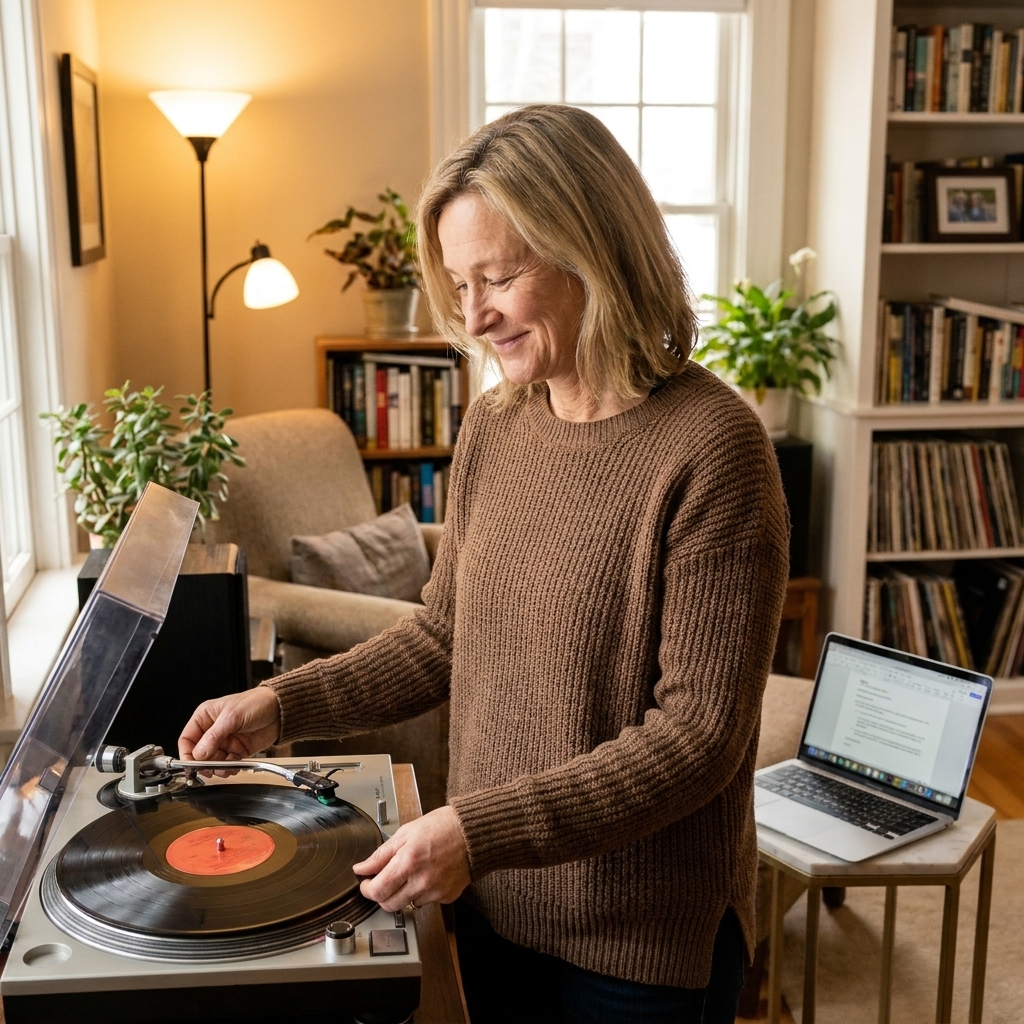
How samples get disguised
Chopping
Instead of looping a full bar, the producer slices the sample into small hits and replays them in a new order. To catch it, listen for repeated timbre rather than repeated melody. The tone stays the same even when the notes change.
Pitching and formant shifting
Pitch changes alter the note. Formant changes alter the “mouth” of the sound, which is why vocals can become squeaky or cavernous. If a vocal chop has oddly consistent vowel color across different notes, it might be a pitched sample.
Time-stretching
Time-stretch artifacts often sound like watery edges, granular flutter, or a faint robotic smear on sustained notes. If you hear that, try clapping the tempo. A stretched sample can create a push-pull feeling against modern drums.
Filtering and layering
Sometimes the sample is there, but only as a filtered midrange layer under synths. To catch it, focus on the frequency middle, where guitars, keys, and a lot of vocal tone live. If the midrange sounds organic while the rest sounds pristine, that is a clue.
Reversing
Reverse samples have that signature inhale quality: the sound swells into its transient instead of decaying away from it. Once you notice it, you will start hearing reverse cymbals and reverse vocal tails everywhere.
Sample or interpolation?
Here is the practical difference:
- Sample: Uses the actual recording (the master audio) from the original source.
- Interpolation: Recreates the part by re-recording it (or replaying it with new instruments), usually to capture the feel without using the master.
Listening clues:
- If it sounds “too clean” to be old but clearly references an older motif, it might be an interpolation.
- If it contains room noise, vintage recording quirks, or period-specific performance style, it is more likely a sample.
- If official credits explicitly say “contains an interpolation of”, that is strong confirmation. If they do not, you may only see writer or publisher splits, so use credits as part of the puzzle, not the whole answer.
This is also where lyrical borrowing enters the chat. A hook can sample sound and echo phrasing. If that is your rabbit hole, head over to the art of the feature and spotting co-writer influence for more ways to follow the trail of who shaped a song.
Build a sample radar playlist
If you want to get good fast, make a private playlist with three types of tracks:
- Obvious classics: Songs built on unmistakable loops. They teach you what clear sampling sounds like.
- Disguised flips: Tracks where the sample is heavily processed. They teach you artifacts.
- Modern pop with subtle lifts: Tracks where the sample is more like seasoning than the main course.
Then do one simple exercise: listen to a modern track, then immediately listen to its source, then go back. That back-and-forth trains your brain to recognize timbre and rhythm signatures.
One more thing that helps: keep a “false positive” bin. Not everything organic is sampled. Sometimes it is a live session player, a custom Foley recording, a vocal recorded in a hallway, or a synth patch with noise layered in. Getting good at sample-spotting also means getting comfortable with “maybe.”
When you cannot find the source
Sometimes you are not bad at hearing it. Sometimes the trail is genuinely hard. Here are the usual reasons:
- The sound comes from a sample pack or production library that is not widely indexed.
- It is a private or self-created recording made just for the session.
- The song uses an interpolation and the original recording is not present.
- Multiple sources are layered, so no single match feels perfect.
- Regional releases and alternate versions have different credits and details.
- It is uncredited or disputed, including cases where something was not cleared or was cleared quietly and never surfaced cleanly on consumer-facing credits.
If you get stuck, zoom out and ask a lyric-style question: what is the sample doing emotionally? Is it nostalgia, menace, tenderness, irony? Treat it like motif-hunting. I wrote about that exact mindset in how to spot an artist’s signature lyrical motifs, and it translates beautifully to production choices.
Mini glossary
- Chop: A sliced fragment of audio used as a playable piece.
- Flip: A producer’s transformation of a sample into something new.
- Stem: An isolated track group (vocals, drums, instruments) from a session.
- One-shot: A single hit (horn stab, drum hit, vocal exclamation) used like an instrument.
- Clearance: The legal permission process for using a sample.
- Interpolation: A re-recorded replay of a part, not the original master recording.
FAQ
Are samples still common in mainstream pop?
Yes, but they often show up as subtle texture or as a recognizable motif that has been recontextualized. Pop is especially fond of blends: part sample, part replay, part new performance.
Why do some samples never show up in credits?
Sometimes you are hearing an interpolation, a royalty-free library element, or a custom recording. Sometimes credits simply surface unevenly across platforms and regions. And sometimes the reality is messier: a sample might be uncredited, uncleared, or caught up in a dispute, so it will not appear cleanly in the places fans check.
Is it cheating if a producer samples?
I do not hear it as cheating. I hear it as conversation across time. The artistry is in the choice, the transformation, and how it supports the new song’s story.
What should I do if I think I found a sample?
Save the timestamp, look up credits, then verify with an archive tool. Identifying a sound with your ears is not the same thing as confirming licensing, but it is the start of understanding how the song was built. If you love this kind of detective work, browse the rest of our Music Trivia guides for more listening rabbit holes.
A final listening dare
The next time you hear a song and think, “That little sound is doing a lot,” do not let it pass. Rewind it. Circle it. Treat it the way you treat a great lyric that makes you stop walking for a second.
That is where the hidden samples live: in the seconds most people never bother to replay.
If you want to know who you are listening to around here, you can find me at Stella Conway’s author page.