
Liner note
Tracing Lyrical Interpolations

I still remember the first time I caught one in the wild. I was cleaning up after a little community acoustic night, half-humming along to a new track in my headphones, when a line jumped out like a familiar face in a crowd. Same rhythm, same phrasing, same little twist of vowels I had memorized years ago from a creased CD booklet. It was not a cover. It was not a straight quote either. It was a lyrical interpolation, and once you learn how to hear them, they are everywhere in the best way.
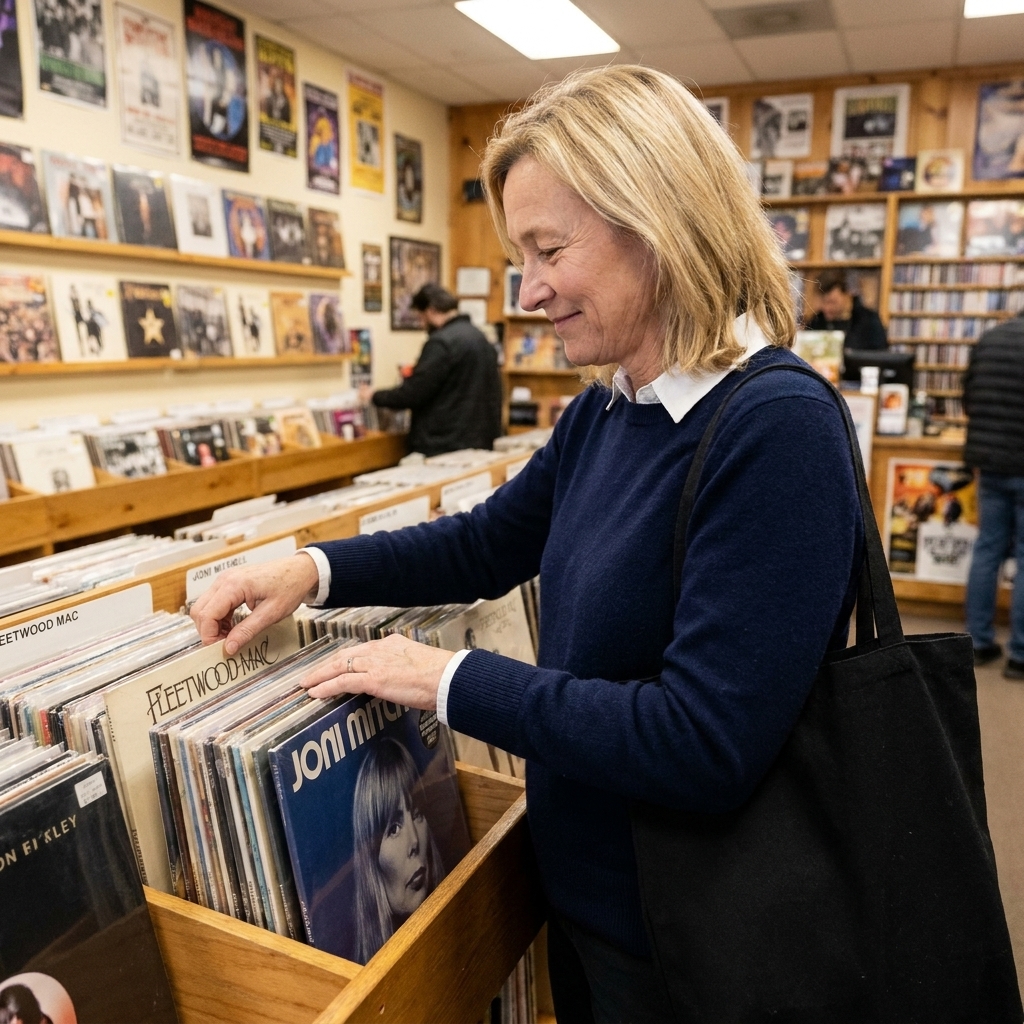
In this piece, I want to give you a practical ear for borrowed lines and a simple research routine so you can confirm what you are hearing without turning listening into homework. Think of it as learning to spot wink-and-nod songwriting across eras.
If you want a broader foundation for breaking down lyrics line by line, I keep a deeper method here: Analyze Song Lyrics Like a Literary Critic.
What interpolation means
The tricky part is that people use “sample,” “interpolation,” and “reference” like they are interchangeable. They are cousins, not twins.
- Sampling is when a recording is used. You are hearing actual audio from an older track, usually chopped, looped, pitched, or recontextualized.
- Interpolation is when the newer artist re-performs a part of an older song. That could be a lyric, a melody, a flow pattern, or a recognizable cadence. No original audio required.
- Lyrical homage or reference is a looser nod. It might echo a famous phrase or structure, but it is not necessarily close enough to require credit.
From a listening perspective, interpolations often feel like déjà vu. From a legal perspective, they often involve clearance or licensing because the underlying composition (the songwriting) is being reused, even if the old recording is not. How that plays out depends on what was borrowed, how recognizable it is, and where the song is released.
One quick calibration example (no trivia required): if an artist sings a new verse but slips into a chorus melody you can instantly hum from an older hit, that is usually an interpolation. If you hear the actual older vocal recording lifted into the new song, that is sampling.
How to hear a borrowed line
When I am trying to decide whether I just heard an interpolation or just a coincidence, I listen for a few specific clues.
1) A sudden tone shift
A borrowed line often lands like a spotlight. The phrasing may become more formal, more quotable, or more old-school for a moment. Sometimes the singer even shifts their delivery, like they are stepping into a costume for one bar.
2) Rhythm that matches too well
Even if the words are slightly updated, interpolations frequently keep the same syllable count and stress pattern as the source. That is why it clicks in your brain. Your muscle memory recognizes the shape.
3) Melody or cadence gives it away
Many lyrical interpolations are not just about the words. They borrow the melodic contour or rap cadence. If you can sing the old line over the new one without forcing it, that is a strong signal. (Cadence and “flow” references can also be the messiest to interpret, because influence and borrowing live close together.)
4) Placement in a spotlight moment
Pay attention to obvious framing moments:
- the start of a verse
- the last line before the chorus
- a bridge that feels like a mini speech
- an outro that turns into a chant
5) A line famous enough to carry baggage
Some lines are cultural shorthand. If a new song drops one, it is rarely accidental. The whole point is that you bring your memory of the original into the room.
If you are ever unsure whether you misheard something, it helps to revisit the basics of lyric mishearing. A surprising number of “interpolations” are actually mondegreens. I wrote a full explainer here: Mondegreens Explained.
A quick listening routine
You do not need perfect pitch or an encyclopedic brain. You need a repeatable habit.
- Replay the moment twice. Once for the lyric, once for the rhythm and melody.
- Speak the line out loud. It sounds silly, but it reveals the syllable pattern.
- Ask one question: “Does this sound like a quote, or does it sound like the songwriter’s normal voice?”
- Check surrounding lines. Interpolations are often set up by surrounding lyrics that point to the theme of the original song.
- Listen for production nudges. A sudden filter, a drum drop-out, or a crowd-vocal effect can act like neon signage saying “this part matters.”

That is the ear training piece. Next comes the fun detective work.
How to confirm it
When you want to move from “I swear I have heard that before” to “I can trace this line to its source,” here is the order I use.
Step 1: Read credits
If a song contains an interpolation that got cleared, the original writers are often credited. Credits are strong evidence because they are tied to publishing and payouts, but they are not perfect proof. They can be incomplete on some platforms, and sometimes they reflect settlements as much as songwriting process.
Where to look:
- Streaming credits (many services show songwriter and publisher info somewhere in the track details)
- Album liner notes (still the most satisfying option, in my biased opinion)
- Performing rights organization databases (useful when you want the publishing trail)
If you want a reliable starting point for who wrote what, the ASCAP and BMI public repertories are helpful for U.S. publishing searches:
Step 2: Search a distinctive phrase
Pick the weirdest, most unique chunk of the line and search it in quotation marks. Avoid common phrases like “hold on” or “all night.” Aim for something with a specific image, name, or unusual verb.
If multiple songs pop up, click through and compare the surrounding lines. Interpolations often pull a line that sits next to another recognizable lyric in the original.
Step 3: Look for songwriter overlap
Sometimes the connection is not a borrow so much as an artist referencing their own earlier work, or a writer reusing a signature phrase across multiple placements. If you notice the same songwriter credited on both tracks, that can explain why a lyric reappears so cleanly.
Step 4: Check a database carefully
Sites like WhoSampled can be great for leads, especially for hip-hop and pop lineages, but treat user-submitted entries like tips, not gospel. Use them to generate a hypothesis, then verify by comparing lyrics, melodies, and credits.
Step 5: Listen to the original
This is the step people skip, and it is where the meaning lives. When you listen to the older song, ask:
- What did that line mean in its original story?
- What does it mean in the new context?
- Is the newer artist honoring it, subverting it, or using it as a punchline?
That last question is how you move from trivia to interpretation, which is the whole point around here.
Why artists borrow lines
I love interpolations because they are rarely lazy. Most of the time they are doing one of these jobs.
- Signaling lineage. A newer artist places themselves in a tradition, like saying, “These are my elders.”
- Building a shortcut to emotion. A single line can summon an entire era, breakup, summer, or dance floor.
- Rewriting the narrative. Same line, different speaker, different power dynamic. That can be electric.
- Creating an inside joke for attentive listeners. A lyrical Easter egg that rewards deep listening.
- Crossing genres on purpose. A country phrase in a rap verse, a disco hook in an indie track, a gospel call-and-response inside pop.

When you spot one, you are not just identifying a borrowed line. You are catching a conversation between songs.
Common false alarms
Not every familiar-sounding line is a deliberate nod. Here are a few traps I fall into myself.
Shared idioms
Pop and folk music share a lot of standard phrases. “Back to you,” “on my own,” “set me free.” Familiar does not automatically mean borrowed.
Public domain language
Spirituals, hymns, and proverbs echo across genres. Sometimes the source is not one song but a whole tradition.
Mondegreens and memory mash-ups
Your brain loves to autocomplete. If you have ever blended two verses while trying to memorize lyrics, you know the feeling. If you want help with that side of listening, I have a guide here: Memorize Song Lyrics Fast Without Mixing Up Verses.
Parody
Parody is its own category. In some places, parody can be treated differently under fair use or fair dealing rules, but it is always fact-specific. Either way, the intention is different: parody winks at the original, interpolation often embraces it.
A mini checklist
If you want a simple way to practice, keep this little mental checklist in your back pocket.
- Recognition: Did I react instantly like I knew it?
- Match: Do the rhythm and syllables line up with something specific?
- Placement: Is it in a spotlight moment of the song?
- Context: Is the new song changing the meaning of the line?
- Proof: Can I confirm via credits or reputable databases?
Once you start listening this way, you will hear more than borrowing. You will hear influence, community, and a kind of musical memory that keeps looping forward.
If this kind of lyric detective work is your thing, wander through the Lyrics guide next. That is where I stash the deep dives and listening habits I actually use.
FAQ
Is an interpolation always credited?
Not always. If the borrowed material is recognizable and tied to the underlying composition, credit is common. But small references, shared phrases, and disputed similarities can fall into gray areas. When in doubt, look at songwriter credits and publishing info first, and remember that credits are a useful clue, not a magic stamp.
Can an interpolation be one word?
One word alone is rarely an interpolation. It can happen if the word is delivered with a very specific melody or cadence that clearly echoes the original. Most of the time, interpolations rely on a longer phrase or a melodic fragment that makes the connection unmistakable.
Does interpolation mean stealing?
No. It can be a licensed reuse, a respectful homage, or a deliberate artistic conversation with the past. The ethical feel often comes down to transparency, credit, and whether the new song is adding something meaningful.
What is the easiest way to verify one?
Check credits, then listen to the original song and compare the specific line’s rhythm and melody. If you want a shortcut for leads, WhoSampled can point you in a direction, but I always confirm with credits and a direct listen.