Read lyrics like a critic with a simple 10-step framework: identify the speaker, map structure, track repetition and imagery, translate metaphors, name theme...
Liner note
Using Song Lyrics as Journaling Prompts

Published · Last updated
I used to sit on my bedroom floor with a CD case cracked open like a tiny book, tracing my finger down the liner notes as if the words might change if I looked away. Back then I thought memorizing lyrics was the whole point. Now I think the real magic is what lyrics unlock in us, especially when we let them nudge us onto the page.
Using song lyrics as journaling prompts is one of the easiest ways I know to start writing consistently. You do not have to be a poet. You do not have to understand the artist’s “true meaning.” You just need a line that catches in your throat and a few minutes of honest attention.

Why lyrics work as prompts
Lyrics are already emotionally edited. A good line has rhythm, tension, image, and implication. That’s a shortcut past the blank-page dread.
- They give you language when you are wordless. Sometimes you borrow the lyric’s shape until your own words show up.
- They keep you specific. A lyric is a small frame, which helps your writing stay grounded in moments instead of spiraling into vague “life is hard” territory.
- They bring in the body. Music lives in breath, pulse, and memory. Journaling from lyrics tends to be more sensory and honest.
If you want to go deeper into reading lyrics closely, my favorite starting point is our guide: Analyze Song Lyrics Like a Literary Critic. It pairs perfectly with journaling because the same skills apply, noticing images, tone shifts, and repeated phrases.
How to pick the right line
The best journaling lyric is not necessarily the most “beautiful.” It is the one that feels personal, even if you cannot explain why yet.
Four hooks to look for
- A line that names a feeling you keep circling. Regret, relief, jealousy, tenderness, numbness.
- An image you can see. Streets, rooms, weather, clothing, hands, car rides, kitchens at night.
- A contradiction. “I am fine” with a crack in it. Love plus resentment. Hope plus dread.
- A repeated phrase. Choruses make strong prompts because repetition is one of the ways we tell the truth to ourselves, over and over, until we believe it.
Do a quick body check
When a lyric hits, your body usually reacts first. Try this:
- Play the song and notice the exact moment you get chills, swallow hard, or exhale.
- Pause and write down the line that arrived with the sensation.
- If you cannot pick one, choose the smallest slice. Even four words can work.
Where to pull lyrics from
If accuracy matters to you, go as close to the source as you can. Album booklets and official lyric listings tend to be the cleanest. That said, for private journaling, your heard version counts too. Sometimes the line you thought you heard is the one your life needed.
A note on quoting lyrics
In your private journal, write the lyric however you want. If you share your writing publicly, know that song lyrics are copyrighted, and quoting them can raise copyright issues. Consider paraphrasing, limiting excerpts, or describing the idea of a line instead of reproducing it. This is general information, not legal advice.
A simple 10 minute routine
I like journaling routines that feel more like lighting a candle than starting a project. Here is a structure you can repeat daily without draining yourself.
1) Choose one line (30 seconds)
Write it at the top of the page. That is your doorway.
2) Copy it slowly (1 minute)
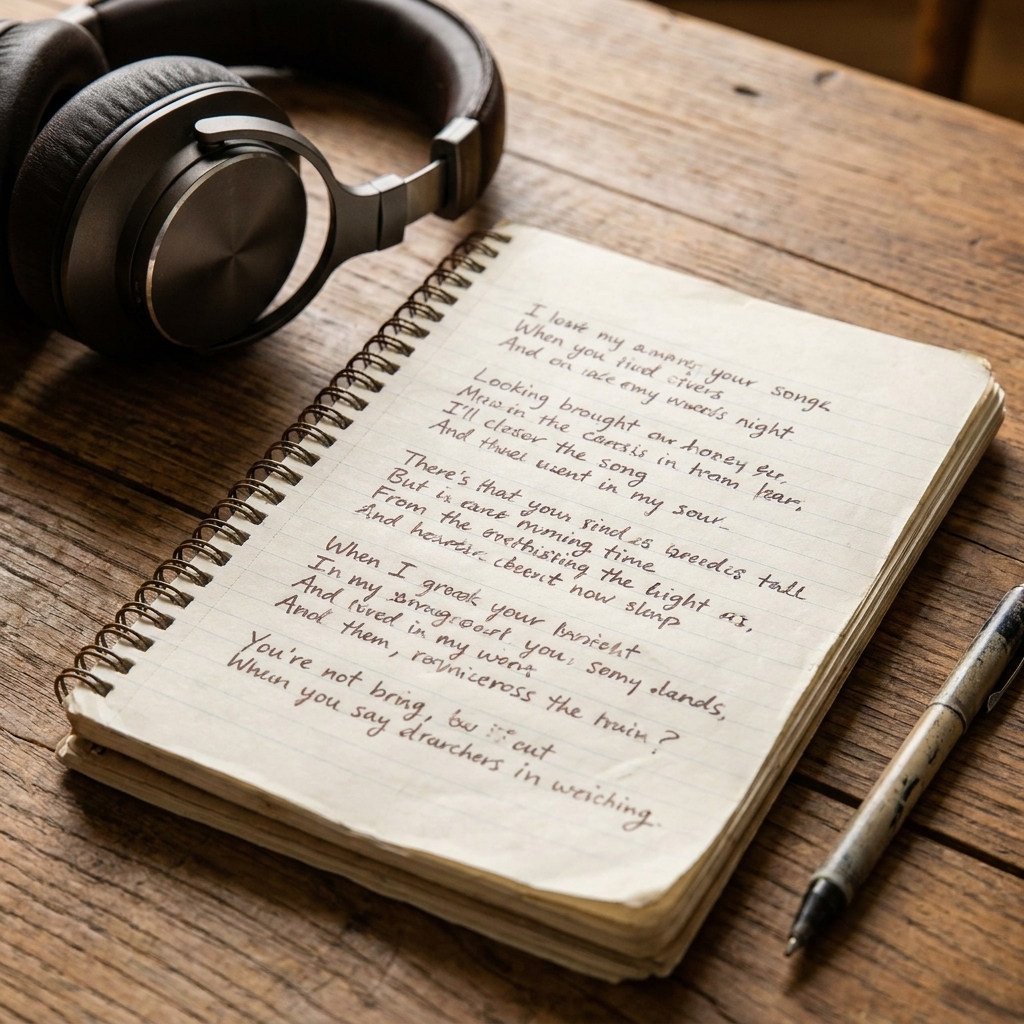
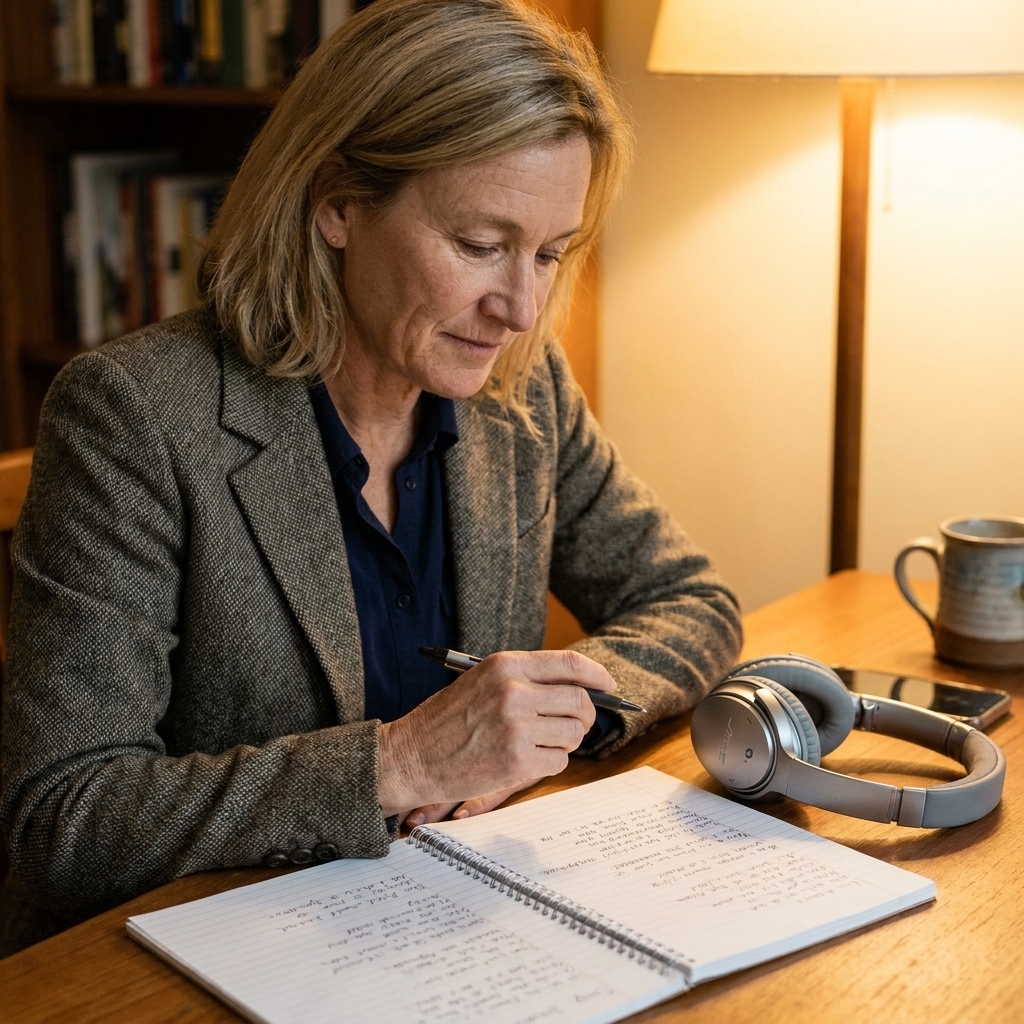
Yes, copy it. The slow hand-to-page pace helps many of us settle and pay attention. Treat it like a tiny meditation.
3) Freewrite without correction (6 minutes)
Start with: “This line reminds me of…” and do not lift your pen. If you get stuck, write “I do not know what to say” until something else shows up.
4) Name what you are feeling (1 minute)
One sentence: “Right now I feel…” If you can, add a second sentence: “I think I feel this because…”
5) Close with one small kindness (90 seconds)
Finish with a gentle action you can take today. Keep it human-sized. Drink water. Text a friend. Take a walk. Put your phone in another room for ten minutes.
A worked example
Sample line (made up): “I keep the porch light on for what never comes.”
Freewrite (a few sentences): This line reminds me of how I wait for apologies that do not arrive. I tell myself I am over it, but I still check my phone like it owes me something. The porch light is my hope, but it is also my habit. I think part of me is scared that if I turn it off, I am admitting the story is over.
Name the feeling: Right now I feel tender and a little foolish. I think I feel this because I want closure, but I also want to stay loyal to the version of me who kept believing.
One small kindness: Tonight, I can put my phone on the charger in the other room for an hour and let quiet be quiet.
Prompt styles to rotate
Different days call for different kinds of writing. Here are a few styles you can rotate.
Memory prompt
- What is the first time you heard this song?
- Who were you trying to be back then?
- What do you miss, and what are you glad is over?
Mirror prompt
- Where does this lyric show up in my life right now?
- What am I avoiding naming?
- If this line is true, what else is true?
Rewrite prompt
- Rewrite the lyric as a text message you never sent.
- Rewrite it as advice to your younger self.
- Rewrite it from the other person’s point of view.
Character prompt
- Who is the “I” in the song, and what do they want?
- What are they afraid to admit?
- What scene does this lyric belong in, and what happens right after?
Mindfulness prompt
- What sensations show up when I hear this line?
- Where do I feel it in my body?
- What does my body want me to know that my brain keeps arguing with?

Build a prompt bank
This is my favorite trick for days when I cannot choose. Make a small list of lyrics in your notes app or the inside cover of a notebook.
My three column method
- Column 1: The lyric. Keep it short.
- Column 2: The mood. One word: restless, soft, furious, nostalgic, brave.
- Column 3: The question it asks. Example: “What am I still holding?” or “What would I do if I believed I deserved ease?”
When you sit down to journal, pick a mood first, then grab the lyric attached to it.
If you love lyric rabbit holes as much as I do, you will probably enjoy our general hubs: Lyrics guide and Artists guide. I use them like a bookshelf, wander until something catches.
Gentle self-reflection
Lyrics can open a door fast. That is beautiful, and it can also be a lot. A few guardrails help keep the practice grounding.
Use a window rule
Choose lyrics that let you look at your feelings, not fall into them. If a song reliably sends you into a spiral, save it for a day when you have more support and time.
End on purpose
Even two minutes of closure matters. End your entry with one of these:
- One thing you know for sure today
- One thing you can let be unfinished
- One thing you are grateful for that is concrete
Ground with the music
After you write, listen to the song again and focus on one instrument. Drums, bass line, a backing vocal you never noticed. It brings you back into the present.
Daily themes
- Monday: A lyric about beginnings. “What am I starting, really?”
- Tuesday: A lyric that contains a place. “What happened there?”
- Wednesday: A lyric you always sing loudly. “What am I claiming?”
- Thursday: A lyric you do not fully understand. “What might it mean for me?”
- Friday: A lyric about desire. “What do I want, without apologizing?”
- Saturday: A lyric about friendship or community. “Who helps me feel like myself?”
- Sunday: A lyric about rest. “What would ‘enough’ look like this week?”
If you want to bring this kind of reflection into a group setting, my listening night approach is built for conversation and comfort, not trivia pressure: Host a Listening Night Without a Quiz.
Pitfalls and fixes
You pick impressive lines
Fix: Choose the line you would be slightly embarrassed to show someone. That is usually the real one.
You analyze the artist
Fix: Write one paragraph about what you think the artist means, then pivot to: “In my life, this shows up as…”
You mix up verses
Fix: Write from a single line, not the whole song. Also, our memory trick guide helps a lot: Memorize Song Lyrics Fast Without Mixing Up Verses.
You mishear the lyric
Honestly, misheard lyrics can be brilliant prompts because they reveal what your brain expected to hear. If you want the fun version of that rabbit hole: Mondegreens Explained.
Prompts to use today
- “If I believed this line, what would I do differently this week?”
- “What part of me is speaking when I sing this?”
- “What am I trying to protect myself from?”
- “Where have I outgrown my old story?”
- “What do I want to forgive, and what do I want to remember?”
- “What is the kindest possible interpretation of my situation?”
- “What would it look like to take up more space, gently?”

One last thought
When I was a kid, I chased perfect recall. Now I chase resonance. If a lyric follows you around for days, it is not asking you to memorize it. It is asking you to answer it.
If you try this practice, start small. One line. Ten minutes. No pressure to be profound. Just show up, let the music hand you a thread, and see what you tug loose.
Want to read more from me? You can find my author page here: Stella Conway. And if you ever have a lyric you cannot stop thinking about, I love hearing what it pulls up for you. You can reach our team through Contact.