
Liner note
How to Spot a Stealth Cover

I still remember the first time I realized one of my “definitive” songs was not, in fact, the original. I was hunched over a little pile of CD booklets on my bedroom floor, tracing writing credits with my finger like they were a secret map. That tiny discovery cracked something open for me: pop history is full of stealth covers, and once you learn how to spot them, you start hearing the whole timeline inside a three-minute track.
A stealth cover is a remake that does not announce itself as one. No “(Cover)” tag. No wink in the press cycle. Just a version that gets so big it overwrites the older recording in the public imagination. This guide will help you catch those songs in the act, using both listening clues and research habits that actually hold up.
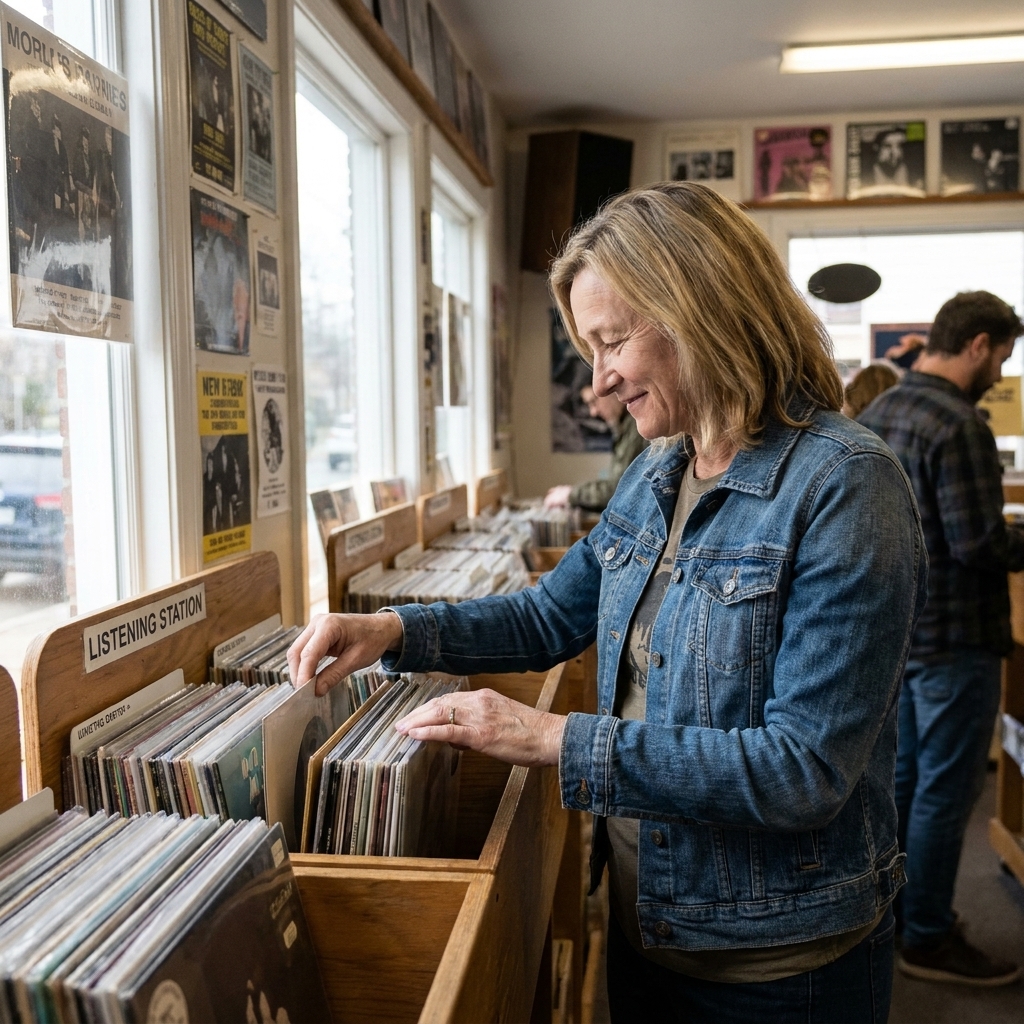
What makes a cover stealth
Not every cover hides. Some are loudly presented as tributes, live session staples, or album bonus tracks. A stealth cover is different. It tends to have three features:
- The new version becomes the default. Radio, playlists, and karaoke all point to the remake.
- The credit trail is quiet. The artist may mention influences, but not “this is a cover.”
- The arrangement feels like an “original era” recording. The production is so confident that listeners assume authorship.
And because we are A-Z Music Lyrics, I will add a lyric-focused tell: stealth covers often preserve older phrasing that feels slightly out of place for the newer artist’s typical voice. If you love tracking lyrical fingerprints, you will probably also enjoy how to spot an artist’s signature lyrical motifs.
Listening clues
1) Lyrics from a different world
Pay attention to vocabulary, idioms, and references that do not match the era or persona of the performer. A modern pop vocal over lyrics that mention long-gone technology, regional slang, or older relationship scripts can be a clue that the words were born earlier.
- Time markers: payphones, telegrams, particular cars, old club names, discontinued brands.
- Perspective mismatch: a younger artist singing as a weary middle-aged narrator without any framing.
- Regional language: turns of phrase that strongly suggest another scene or country.
If the possible mismatch hinges on meaning, not just vibe, I like to cross-check with context tools discussed in how to track down the original meanings behind debated lyrics.
2) A chorus that sounds like a standard
Some hooks have that “everybody knows this already” gravity, even when you are hearing them for the first time. That can happen with brand-new songs too, but if the melody resolves in a way that feels unusually classic, it may be because it already survived one era and is now getting a second life.
One caveat I keep in mind: some choruses sound “traditional” because they actually are. Folk standards and public-domain compositions can have no single, clean “original,” which is why credits and release trails matter as much as your gut.
3) Arrangement choices that feel inherited
Covers often keep one or two arrangement tells even when everything else is updated. Listen for:
- A signature stop-start right before the hook.
- A distinctive backing vocal response that sounds like an older stage tradition.
- A key choice that feels strange for the new singer but perfect for the original’s range.
4) Live performances that reveal seams
When an artist plays a song live, they sometimes introduce it differently, credit it in a casual aside, or perform it closer to the older arrangement they grew up with. That is one reason I always compare studio and live recordings when I am suspicious. If you want to listen like a lyric detective, studio vs live: catching spontaneous lyric changes is a good companion.
The research checklist
Here is my practical, repeatable process. You can do it in ten minutes for a basic answer, or you can spend an hour and end up with a mini music history lesson.
Step 1: Check songwriting credits first
Streaming services are inconsistent about labeling covers, and “written by” lines can be incomplete in some interfaces. Still, your first clue is whether the performer is credited as the sole writer.
- If the artist is not listed as a writer, that does not automatically mean it is a cover (lots of songs are written by teams), but it should push you to dig.
- If you see unfamiliar names and especially older publishing entities, your cover radar should turn on.
Also: do not let a shared song title convince you either way. Titles get recycled constantly, and plenty of unrelated songs share common phrases. When in doubt, trust credits and exact lyric matches over vibes.
Step 2: Search the title plus one lyric line
Song titles are reused constantly. Lyrics are harder to fake. Take a distinctive line from the verse or pre-chorus, put it in quotes, and search it with the title. If a much earlier recording shows up, you are on the right track.
This technique is also handy when you are dealing with misheard lines. If you routinely run into lyric confusion, mondegreens explained will make you a sharper searcher.
Step 3: Use Discogs to follow the release trail
Discogs is one of my favorite tools for stealth-cover hunting because it is obsessed with formats, editions, and credits. Look up the hit version, then click through writer and publisher credits. Often you will find earlier singles, regional releases, or album cuts that predate the “famous” recording.
Step 4: Confirm via rights databases
For the cleanest confirmation, check a performing rights organization database. These listings focus on composition ownership, which is exactly what you want for determining origins. Depending on territory, you can use databases from organizations like ASCAP or others. You are looking for:
- Writers and publishers (the most useful part)
- Alternate titles (stealth covers sometimes change punctuation, spelling, or a parenthetical phrase)
- Registration details that can help you connect versions
A small caveat: registration dates do not always reflect when a song was first written or first released, and entries can be updated or merged later. I use PRO data to confirm authorship and relationships, then corroborate “earliest release” through discographies, liner notes, and documented releases.
Step 5: Use MusicBrainz when metadata is messy
MusicBrainz can be a lifesaver when you have multiple recordings with similar names, international releases, or confusing reissues. It is especially useful for identifying which recording is a cover of which, and for tracing relationships between works and recordings.
Step 6: Read liner notes when you can
I am biased here because liner notes raised me, but physical credits (or official digital booklets) often say what streaming pages do not. Look for phrases like “written by,” “published by,” “adapted from,” or “based on a song by.” When a cover is truly stealth, the truth is often still sitting quietly in the credit block.

Cover vs sample vs remake
Sometimes what looks like a stealth cover is actually something adjacent. Here is a quick, lyric-friendly cheat sheet.
- Cover: the composition (melody and lyrics) is performed again, often with a new arrangement. The words largely match.
- Remake or re-record: a new recording that is meant to replace or strongly resemble an earlier recording. Sometimes that means the same artist re-recording their own song. Sometimes it means a soundalike approach where the arrangement is kept unusually close. A remake can overlap with “cover” when a different artist performs it, but the idea here is closeness of the recording and intent, not just performing the composition.
- Sample: a piece of an existing sound recording is used inside a new track. The lyrics may be new, but a recognizable audio fragment appears.
- Interpolation: the melody or lyrics are re-performed or re-written into a new track, without lifting the original audio.
If you love this kind of musical family tree work, you will have fun with tracing lyrical interpolations, because it teaches your ear to follow the breadcrumb trail even when the production is completely different.
Common scenarios
The international flip
A song is a hit in one country, then gets re-recorded in another market with a new voice and new production, sometimes with translated or slightly adapted lyrics. In those cases, translation can blur the cover line. If you are comparing versions across languages, accurate lyric translations: where to find and understand them can help you avoid false conclusions based on a bad translation.
The genre makeover
A folk, country, reggae, or soul song gets re-cut as pop, dance, punk, or indie. The new version may change the tempo, harmony, or even pronouns, but the core composition stays.
The party-learned cover
These are my favorite: songs that artists picked up organically from local scenes, family records, or tour mates. The cover is not a marketing idea. It is a lived-in song that finally gets a big microphone.
The catalog rescue
A label or publisher pushes a strong older composition back into the world by pairing it with a current artist. When this happens, you will often see the older writers prominently credited, but the audience still assumes the singer wrote it.
Write it down
Once you find out a beloved “original” is a cover, it is tempting to stop at the trivia. I like to go one step further and jot down what changed, because the differences tell you why the remake connected.
- Point of view: Did the cover change pronouns, address, or the narrator’s tone?
- Key and tempo: Did the emotion shift from pleading to confident, or from playful to heavy?
- Lyric substitutions: One swapped word can reveal the era’s values.
- Structure: Did the cover add a bridge, shorten verses, or repeat the hook more?
If you want a more formal way to do this, my step-by-step approach in analyze song lyrics like a literary critic works beautifully for comparing originals and covers without turning the experience into homework.
A quick gut-check
When you are in the middle of a listening session and you just need a fast answer, ask yourself:
- Does this lyric vocabulary feel older than the production?
- Do the writing credits look disconnected from the performer?
- Does searching one exact lyric line surface an earlier recording?
- Do Discogs or a rights database list earlier releases under the same writers?
If you get two yeses, it is time to investigate.
FAQ
Why do some artists not label a song as a cover?
Sometimes it is marketing and sometimes it is simply how songs travel. In many scenes, performing other people’s songs is normal, and the difference between “a song I love” and “a cover” is not emotionally meaningful to the performer. Also, platform labeling is not always a priority in the rollout.
Can a cover still feel definitive?
Absolutely. A definitive version is the one that lands hardest for listeners, not necessarily the first. Covers can reveal new subtext, update the narrator’s character, or bring a hidden composition into the spotlight it always deserved.
What if two versions came out around the same time?
Then you are in the fun zone: competing releases, regional singles, and fast-moving publishing. Use credits and registration data rather than release-date snippets on streaming apps. When dates conflict, prioritize composition ownership info and physical release documentation over playlist metadata.
Is a translated version automatically a cover?
Not always, but often. If the melody and structure remain and the new lyrics track the same narrative closely, it behaves like a cover. If the new lyrics are a fresh story set to a borrowed melody, it may be closer to an adaptation. Credits usually clarify the relationship.
Keep your curiosity up
My favorite part of uncovering stealth covers is that it makes listening feel three-dimensional. Suddenly you are not just hearing one singer’s performance, you are hearing a song’s whole life, where it started, who carried it, who reshaped it, and why it still works.
If you want more lyric-first rabbit holes, the Music Trivia guide is where I keep all my favorite “wait, what?” threads in one place.