
Liner note
Decoding Studio Chatter: 10 Classic Left-In Moments

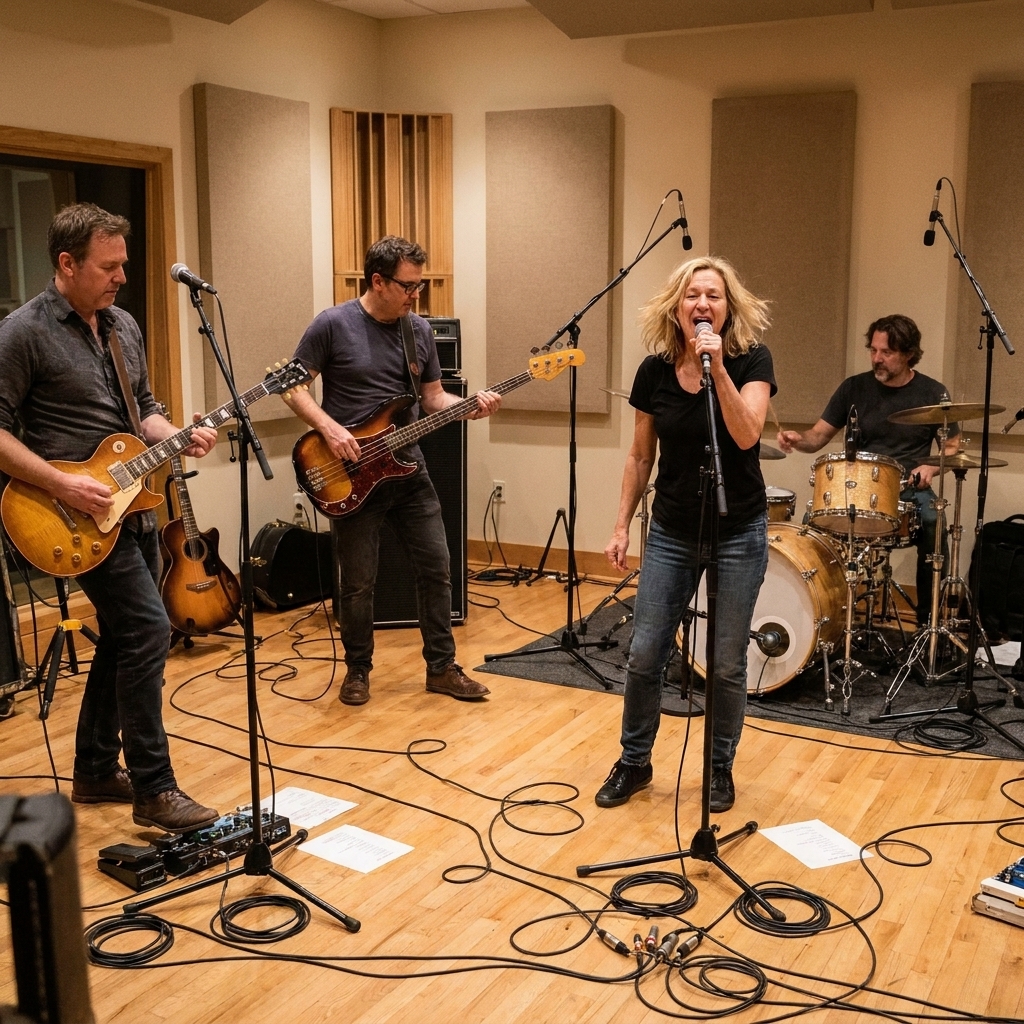
I used to rewind songs just to hear the “human” parts again. Not the chorus, not the guitar solo, but that half-second where a singer laughs, a drummer clicks sticks, or somebody says “take two” like we’re sitting cross-legged on the studio floor with them. Those little scraps of studio chatter are a strange kind of lyric. They tell you how the performance was built.
Sometimes the moment is truly accidental. More often, it’s a choice. A producer hears that count-in and thinks: that’s the doorway. It pulls you into the room before the song even starts.

Why keep mistakes?
In a world where everything can be edited into perfect symmetry, leaving in a false start is like leaving in a fingerprint. It signals a few things at once.
- Momentum: A count-in sets tempo and tension faster than any fade-in.
- Trust: A little mess tells your brain this is real people making real sound.
- Character: A single offhand line can define an entire recording’s vibe.
- Story: These fragments create a miniature prologue or epilogue around the lyrics.
If you love listening for these choices, you’d probably also enjoy hearing how lyrics morph across versions in B-sides and demos: watching lyrics get edited and how tiny changes show up on stage in studio vs live: catching spontaneous lyric changes.
10 classic left-in moments
Below are ten famous moments where the studio door is left cracked open on purpose. Some are crisp count-ins, some are full-on bloopers, and a few are deliberately staged “we’re in the room” effects. All of them became part of the song’s identity.
1) The Beatles, “Taxman” (1966): cough and count
It starts with a cough, then a slow, almost weary count: “One, two, three, four… one, two…” It’s not flashy, which is why it works. You can hear the room settle into place before the groove snaps in. It feels like the band choosing to let you witness the moment right before the satire hits.
2) The Beatles, “I Saw Her Standing There” (1963): “One, two, three, FAH!”
This is the gold standard for a count-in that’s more than metronomic. The little vocal burst on “four” is pure adrenaline. It makes the track feel like a club performance that just happened to be captured on tape.
3) Led Zeppelin, “Black Dog” (1971): the a cappella drop
There’s no spoken count-in, no pickup, no warm-up. It opens with Plant’s vocal by itself, and the band doesn’t hit until after that first phrase. That clean, exposed start is its own kind of left-in choice: it makes the later entrances feel heavier, like the song snaps into focus mid-thought.
4) Green Day, “Good Riddance (Time of Your Life)” (1997): the reset
This is one of my favorite examples of a mistake becoming an invitation. The song starts, stumbles, and you hear Billie Joe Armstrong mutter a frustrated swear before resetting. It instantly lowers the glass wall between listener and recording. You’re not hearing a “perfect” acoustic ballad. You’re hearing a human being trying again.
5) Pink Floyd, “Wish You Were Here” (1975): staged doorway
It’s not candid chatter, and it’s not trying to be. The radio-tuning intro is a deliberately constructed studio illusion, a little scene-setting that acts like you just walked in on someone playing. Then the room comes into focus, and the lyric’s longing hits harder because you’ve already stepped into a quiet space.
6) Lynyrd Skynyrd, “Sweet Home Alabama” (1974): a faint cue
On some widely heard mixes, you can catch a faint spoken cue right at the top, just before the riff fully locks in. It’s quick and easy to miss, but when you hear it, it changes the temperature of the track. Suddenly it feels like a band revving itself up, not a song materializing out of nowhere.
7) James Brown, “Get Up (I Feel Like Being a) Sex Machine” (1970): cues as part of the song
With James Brown, the direction is part of the record. Listen right from the opening call and the band’s responses. The cues and shouts aren’t extra noise, they’re the engine. You don’t just hear a groove, you hear a group being conducted into one.
8) The Beatles, “Helter Skelter” (1968): the aftermath
It’s an end-of-take line that became legend, partly because it sounds so unfiltered: “I’ve got blisters on my fingers!” After the chaos, that shout is proof of cost. It frames what you just heard as effort and endurance, not just distortion and attitude. The track ends with a human body still in it.
9) Queen, “We Will Rock You” (1977): designed to feel physical
Not spoken, but unmistakably communal. The stomp-stomp-clap pattern is basically a count-in you can feel, built to sound bodily and crowd-ready. It’s a timekeeper, a hook, and a statement of intent all at once. Before a single lyric lands, you already know where the downbeat lives.
10) Nirvana, “Smells Like Teen Spirit” (1991): the breath before the first line
Right before “Load up on guns, bring your friends…”, there’s often an audible breath on many masters, a tiny threshold sound that reminds you a person has to step into that first line. It’s subtle, but once you notice it, the entrance feels less like a slogan and more like a decision being made in real time.
How to spot it
If you want to go crate-digging for these moments, here are a few listening habits that help.
- Use good headphones once: You’ll hear breaths, chair squeaks, stick clicks, and talkback bleed that speakers can hide.
- Check the edges: Listen to the first five seconds and the last five seconds. Producers love to hide the magic right where most people stop paying attention.
- Compare studio and live: If a cue becomes a ritual onstage, it’s probably part of the track’s identity. My favorite rabbit hole is catching spontaneous lyric changes, because the same instinct applies.
- Listen for “almost” timing: A perfectly snapped intro is often edited. A slightly human wobble can mean you’re hearing the real entry, not a cleaned-up copy of it.
Is it on purpose?
Very often, yes. A producer might keep a false start because:
- it improves the feel of the downbeat
- it creates intimacy and disarms the listener
- it functions like a scene before the lyric’s story begins
- it becomes iconic after being heard a few million times
And sometimes the decision is simpler than any theory. The messy take had the best magic, so you build the mix around it and let the room stay audible.
A listening night game
I host community listening nights now and then, and one of my favorite low-pressure games is “what did we just overhear?” Play a track, rewind the intro, and ask:
- Is that a count-in or a cue?
- Does it change how you interpret the first lyric?
- If you removed it, would the song feel colder or cleaner?
If you want a whole evening built around close listening without turning it into a stressful pop quiz, I have a guide here: Host a listening night without a quiz.
What I notice last
The best studio chatter doesn’t feel like trivia once you notice it. It feels like a thesis statement.
A count-in can tell you this song is about band chemistry. A laugh can tell you the heartbreak in the lyric is survivable. A muttered “take it again” can remind you that the version you love is the result of choices, not fate.
If you have a favorite “they left that in!” moment I didn’t include, I’m always collecting them. They’re the closest thing we get to folded liner notes in a streaming world.
For more deep listening rabbit holes, you can browse our Music Trivia hub.