
Liner note
The Truth About Backmasking

I still remember the first time someone handed me a burned CD at a high school hang and said, with total confidence, “Track 7 says something different backward.” We sat on the floor by a tiny stereo, rewinding and squinting at each other like we were cracking a code. What I did not know yet was that backmasking is not one thing. Sometimes it is a real studio trick. Sometimes it is a rumor that took off because our brains love patterns. And sometimes it is just plain funny.
This is the grounded truth about backmasking: what it is, what it is not, and how to listen like a curious music nerd without tumbling into conspiracy quicksand.

What backmasking means
Backmasking is the deliberate placement of sounds or speech that were recorded or arranged to be heard when the audio is played in reverse. That is the key word: deliberate.
One quick nuance before we go further: some people use “backmasking” as a catch-all for any reverse-audio effect. In this piece, I am using the stricter, production-intent meaning: something put there on purpose to be discovered backward (even if it is just a prank or texture).
There are two common flavors:
- Intentional reverse audio you can hear forward. Think reversed cymbals, reversed reverb swells, backwards guitar lines. These are used for texture and atmosphere and you can hear the “sucking” sound even in normal playback.
- Intentional messages that only become clear when reversed. Someone records a phrase, flips it backward, and tucks it into the mix. Played forward, it often sounds like mushy syllables or a spooky smear.
Then there is the third thing people lump in with backmasking even though it is not the same:
- “I hear words in that garble” (pareidolia). This is where listeners interpret random phonemes, breaths, reverb tails, or layered vocals as a hidden sentence.
Why we hear messages
Before we touch any software, it helps to name the big illusion that fuels most backmasking lore: our brains are meaning-making machines. Give us ambiguous sound, and we will turn it into language, especially if someone suggests what we should hear.
Three reasons secret phrases pop out
- Expectation does the heavy lifting. If a friend says, “It says ‘do it tonight,’” your brain starts fitting the blobs of sound into that shape.
- Compressed, reverby mixes are word-like. Backwards audio smears consonants and exaggerates vowel shapes. That is basically the recipe for accidental syllables.
- Confirmation bias keeps the legend alive. People share the cleanest sounding clip, not the ten other sections that sound like nonsense.
This is the same kind of phenomenon that produces mondegreens, the classic “wrong lyric” we all sing with our whole chest. If that topic is your comfort zone, you will enjoy our deep dive at Mondegreens Explained.
Reverse audio cleanly
You do not need fancy gear. You need a clean source, a reliable reversing tool, and a little listening discipline.
Step 1: Start with the best audio
- Prefer: a purchased high-quality download, a CD rip (WAV/AIFF), or another lawful copy you are allowed to use for personal listening and analysis.
- Avoid when possible: low-bitrate uploads and re-uploads. Compression artifacts can create extra “syllables” that were never in the original.
- A quick terms-of-use note: follow the platform’s rules. In particular, avoid ripping streams if it violates the service’s terms or local law.
Step 2: Reverse the audio
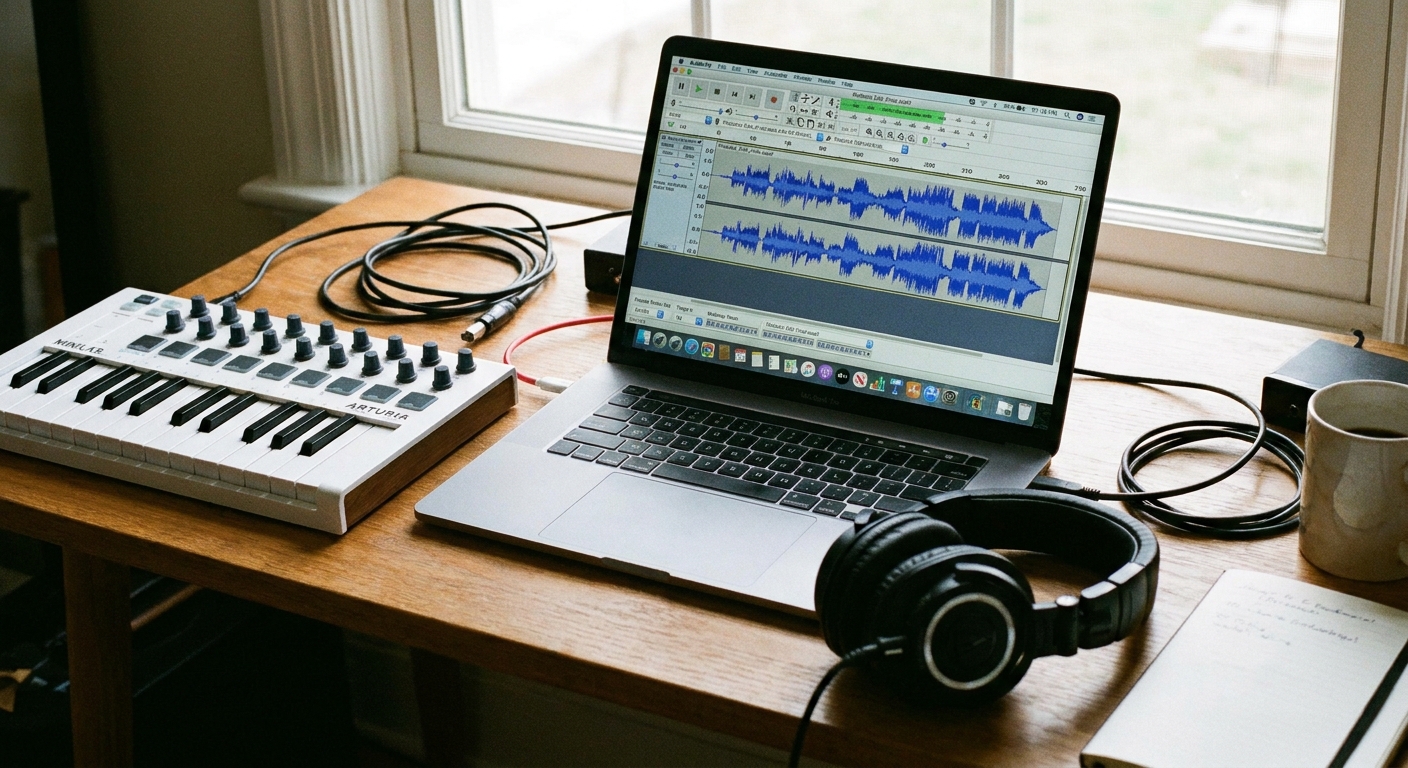
Option A: Audacity (free, Windows/Mac/Linux)
- Import the audio file.
- Select the section you want to test (or the whole track).
- Use the built-in reverse effect.
- Export a new file so you can replay it easily.
Audacity is popular because it is simple, and you can slow down, loop, and isolate sections without changing pitch too drastically.
Option B: A phone app
Search your app store for an audio editor that includes a reverse function. The key is to choose one that lets you trim and loop so you can focus on a few seconds at a time. If an app only reverses the entire track with no controls, it is harder to do careful listening.
Option C: A DAW you already use
If you have GarageBand, Ableton, Logic, FL Studio, Reaper, Pro Tools, or similar, you can reverse a region or bounce the track and reverse it. DAWs also make it easy to EQ out harsh highs and isolate midrange where “speech” tends to sit.
Step 3: Control the variables
- Loop a short segment (1 to 5 seconds). Your ear remembers patterns better in a tight loop.
- Listen at normal speed first, then try 75% or 50% speed. If the “message” only seems to exist at one odd speed, treat it skeptically.
- Use headphones, but also check on speakers. Some cues change with playback (stereo separation, phase), so double-check in more than one setup.
- Do a blind pass. Listen before reading any claims about what it “says.”
Intent or coincidence
I use a quick checklist that keeps me honest. None of these are perfect alone, but together they paint a reliable picture.
Intentional backmasking signs
- It is repeatable. Multiple listeners, without coaching, can agree on roughly the same phrase.
- It sounds like recorded speech. You hear consonants and syllable boundaries that resemble natural language, not just wispy vowels.
- It sits in a plausible spot. Producers tend to tuck it in intros, breakdowns, outros, or transitions, not randomly under a dense chorus.
- There is a why. A joke, an Easter egg, a theme, a concept-album breadcrumb. (If you love story breadcrumbs, see How to Follow a Concept Album Story From Track One to the Finale.)
Coincidence signs
- The phrase changes depending on what you read first.
- You only hear it once someone tells you what to hear.
- It requires extreme EQ or time-stretching. Those tools can invent “edges” that feel like consonants.
- The claim is wildly specific. Long sentences with clean grammar are rare in genuine backmasking because reversed speech naturally smears.
If you want to go full literary-critic mode on what you find, it helps to separate “sound evidence” from “interpretation.” Our guide at Analyze Song Lyrics Like a Literary Critic uses a similar discipline, just applied to words on the page.
Famous cases
Backmasking panics tend to flare when a culture is already nervous about youth music. The pattern repeats across decades: a rumor spreads, someone makes a dramatic clip, and suddenly a whole genre is “full of messages.”
Intentional: studio experiments
The Beatles are a go-to reference point because they made tape reversal part of the mainstream sonic vocabulary of psychedelia. Tracks like “Rain” and “Tomorrow Never Knows” are packed with reversed textures and tape tricks that trained a generation of listeners to suspect there might be something hidden in the swirl.
Whether you treat those reversals as art, prank, or atmosphere, the point is simple: sometimes the backwards thing is there because the band and engineers thought it sounded cool, or because they liked messing with the idea of a secret layer.
Moral panic: the 1980s metal scare
If you lived through the 1980s (or inherited its VHS energy), you have probably heard the broad claim that heavy metal records were packed with backward commands. One flashpoint was Judas Priest, who faced a lawsuit alleging subliminal messages. The larger wave was not built on careful audio analysis so much as coached listening plus anxiety. Reverse almost any dense mix and you can coax word-like shapes out of it. That does not automatically mean intent.
The subliminal control claim
The myth: Hidden backward messages can reliably control your behavior without you noticing.
The reality: Research on subliminal perception and priming generally finds effects, when they show up, are small, context-dependent, and often not reliably replicable outside lab conditions. Backward audio that is not consciously understood is not a magic remote control for human choice-making.
If you want a sober overview of what research says about subliminal perception, the American Psychological Association has a helpful explainer: https://www.apa.org/topics/cognition/subliminal.
A listening routine
Here is the exact routine I use when someone sends me a clip with a confident “You have to hear this.”
- Pick a timestamp. Do not reverse the whole track yet. Start with the exact 2 to 6 seconds where the “message” allegedly lives.
- Reverse only that segment. Less audio means fewer random syllables to misinterpret.
- Do three blind listens. Write down what you hear without prompts. Even a messy note helps.
- Then read the claim. Compare it to what you wrote. If your brain suddenly “hears” the exact sentence after reading it, that is a clue.
- Test for repeatability. Play it for a friend without telling them what to listen for. Ask them to describe what they hear in their own words.
- Check the forward version. Sometimes the forward audio includes a noticeable reversed reverb swell, a backwards cymbal, or a vocal fragment that makes the reverse trick plausible.
What it teaches you
Even when the “hidden words” turn out to be nothing, reversing audio is still a great way to understand production. You start hearing:
- How reverbs decay and how much space a producer is building around a vocal.
- Where edits live in a vocal comp, especially in pop and hip-hop.
- Transitions and ear candy like reverse cymbals, risers, and pre-echo effects that make a chorus feel like it arrives with gravity.
If you love nerdy production sleuthing, our piece on How to Spot Hidden Samples in Modern Hip-Hop and Pop scratches a similar itch.
FAQ
Is backmasking illegal?
In many jurisdictions, there is no law specifically about backmasking itself. The bigger legal and ethical issues are usually copyright and distribution: use a lawful source, follow the platform’s terms, and keep your reversals for personal analysis rather than re-uploading copyrighted audio.
Can you make forward audio that becomes a message backward?
Yes, but it is hard. People sometimes call this a phonetic reverse or an engineered reverse message (and you will also see it discussed under “reverse speech” claims). It tends to sound awkward going forward because you are shaping speech for the reverse direction, not for normal listening.
Why do some reversed clips sound demonic?
Because reversing speech flips natural attack and decay. Consonants lose their punch, vowels smear, and reverb blooms in strange places. Our brains file that under “uncanny.” It is audio psychology, not proof of anything supernatural.
How do I avoid fooling myself?
Blind listening, short loops, and a second listener who has not been told the expected phrase. Treat it like a tiny experiment, not a trial.
Where I land
I am not here to ruin anyone’s fun. I love a good studio prank and I love when artists hide little rewards for obsessive listeners. But I also love when we give music the kind of curiosity it deserves, not the kind that turns every blurry sound into a headline.
If you find a legit reverse Easter egg, enjoy it like you would enjoy a clever internal rhyme or a perfectly timed bridge. Listen closely, keep your skepticism handy, and let the song be mysterious in the way it actually is.
For more listening-first rabbit holes, browse the Music Trivia guide or swing by Reading Lyrics as Poetry when you want to zoom back out from the waveform and into the words.