Hear the “extra pen” in the room with six simple clues: voice shifts, vocabulary spikes, rhyme changes, imagery flips, structural tells, and more conversatio...
Liner note
Fact-Checking Biopic Songwriting Scenes

Published
I love a musical biopic the way I love a good hook: I want to feel swept up. But whenever a movie shows a songwriter staring into the middle distance, then suddenly scribbling the exact final lyric that will change pop history forever, my inner liner-notes kid sits up straight. Because sure, it can happen like that. It just usually does not.
This is not a “gotcha” guide. Movies are allowed to be movies. But if you want to know when a film is compressing, combining, or flat-out inventing a songwriting moment, there are tells. And once you learn them, you can enjoy the drama while still respecting how the work really gets done.
Why biopics exaggerate songwriting
Real songwriting is often brilliant, emotional, and completely uncinematic. It involves waiting, revising, trying a different key, forgetting the second verse, re-recording the second verse, then arguing (politely or not) about one word.
Biopics exaggerate songwriting scenes for a few predictable reasons:
- Time compression: A song that took months has to fit in a two-hour movie.
- Character clarity: A single “breakthrough” scene communicates talent, obsession, or heartbreak fast.
- Mythmaking: Pop culture loves the lightning bolt genius narrative.
- Rights and legal limits: Sometimes they cannot depict the real process or real people directly, so the scene becomes a composite.
The trick is spotting what kind of exaggeration you are watching.
Hollywood tells in “instant” lyrics
1) The lyric arrives fully formed
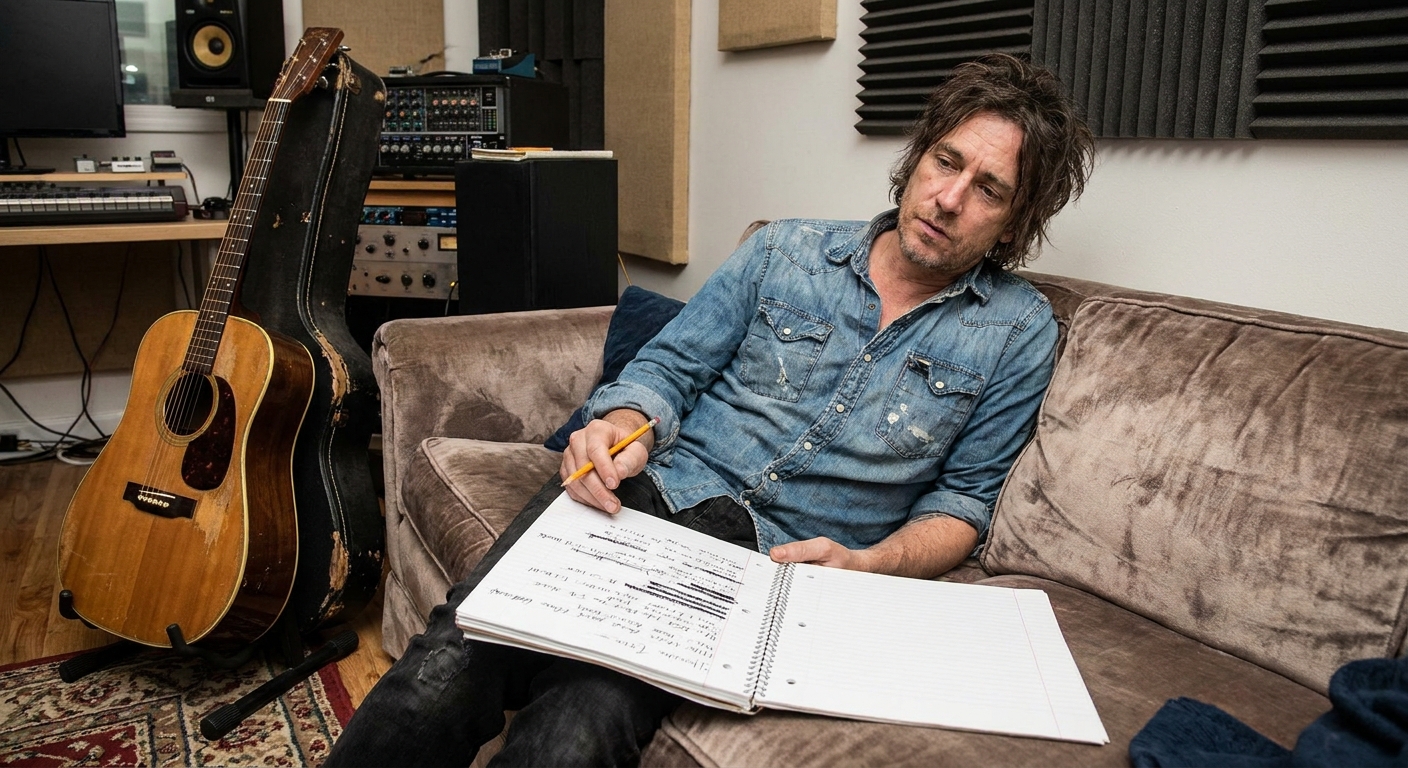
If a character blurts out a line that is already final, rhyming, and thematically central, that is often a screenwriter’s shortcut. Real sessions generate mess first: placeholders, nonsense syllables, near-rhymes, and “we will fix that later.”
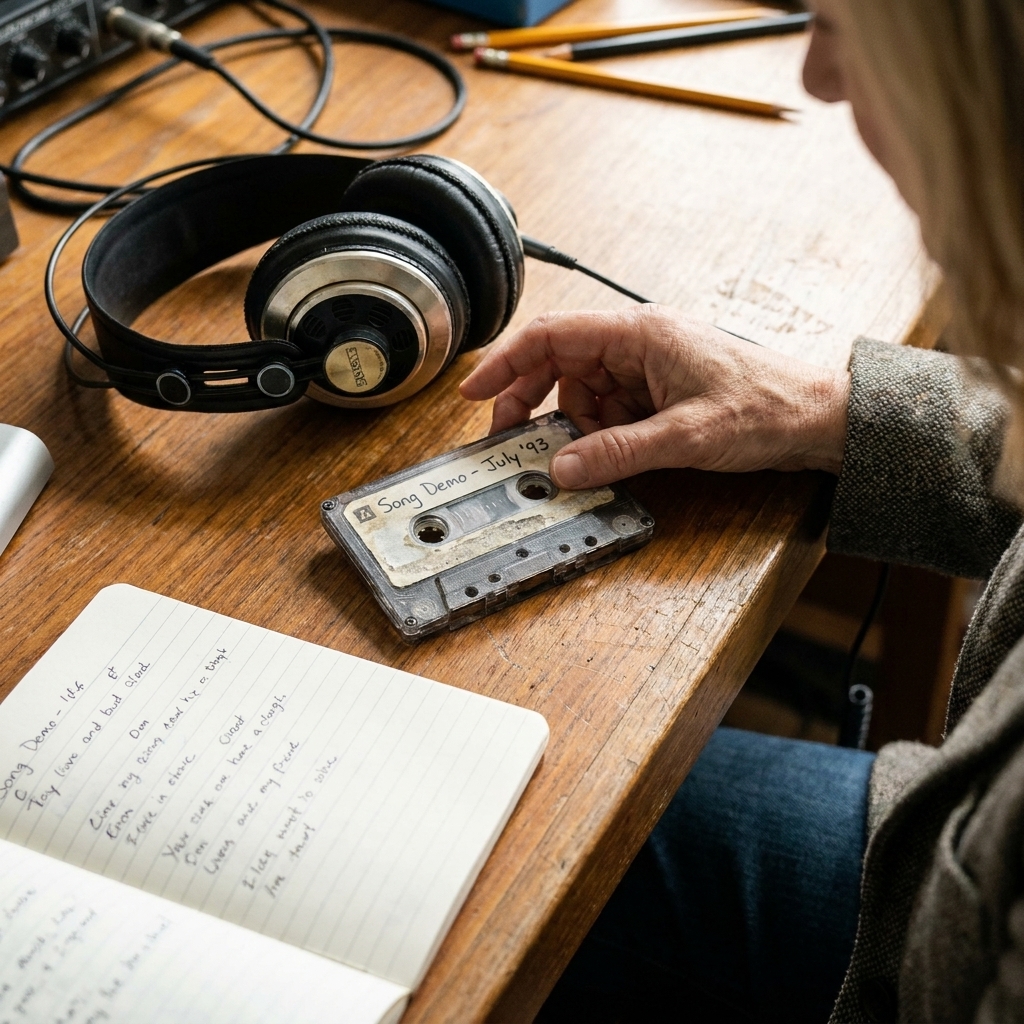
Clue on screen: a notebook page that looks like a final draft, with no crossings-out, no alternative lines, no scribbles in the margins.
2) One person “writes the song” while everyone watches
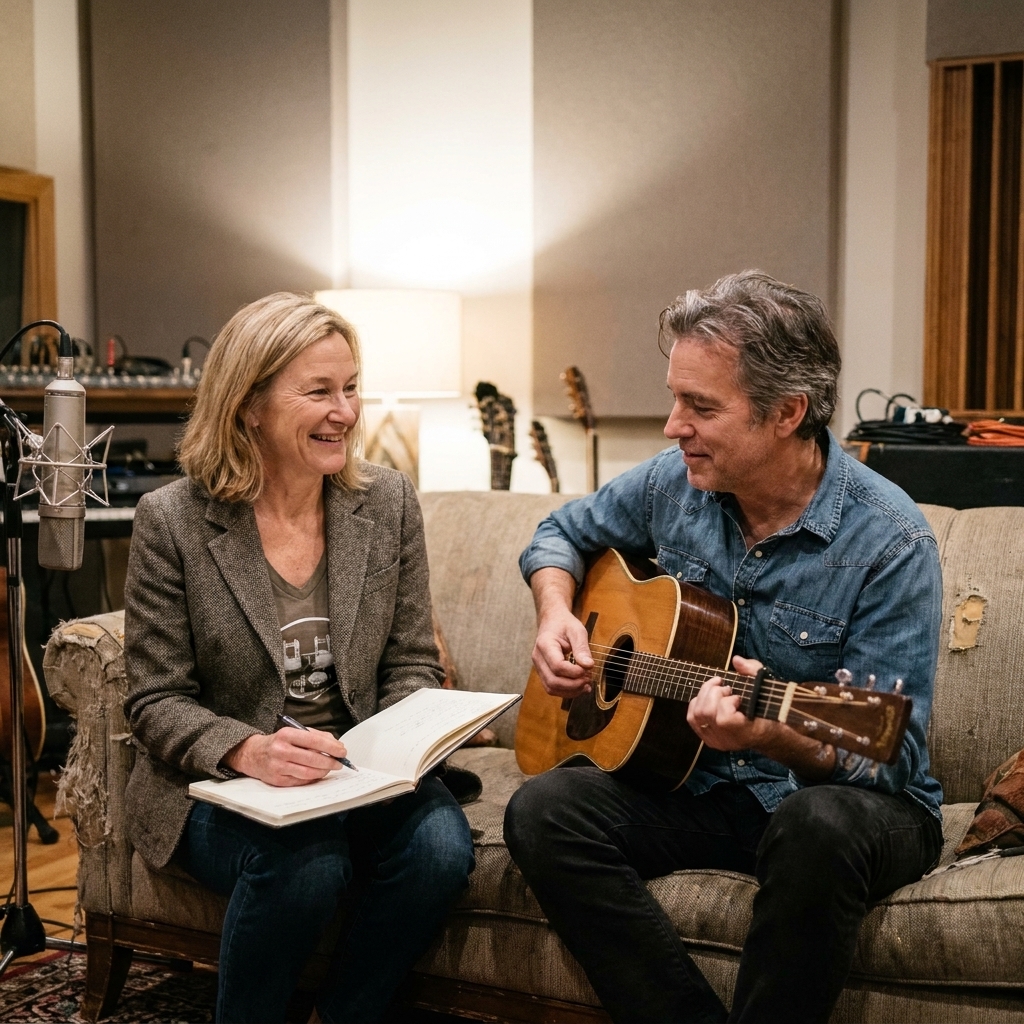
Even when a song has a primary writer, famous recordings are very often shaped by more than one set of hands: producers, co-writers, bandmates, engineers, and occasionally label or management voices. Biopics tend to turn that into a lone-genius monologue because it reads clearly on screen.
Reality check: credits are your friend. If a “solo” scene depicts a song that has multiple credited writers, odds are the movie is simplifying. If you want to get better at hearing collaboration, see Spotting Co-Writer Influence in Songs.
3) The studio looks like a cathedral
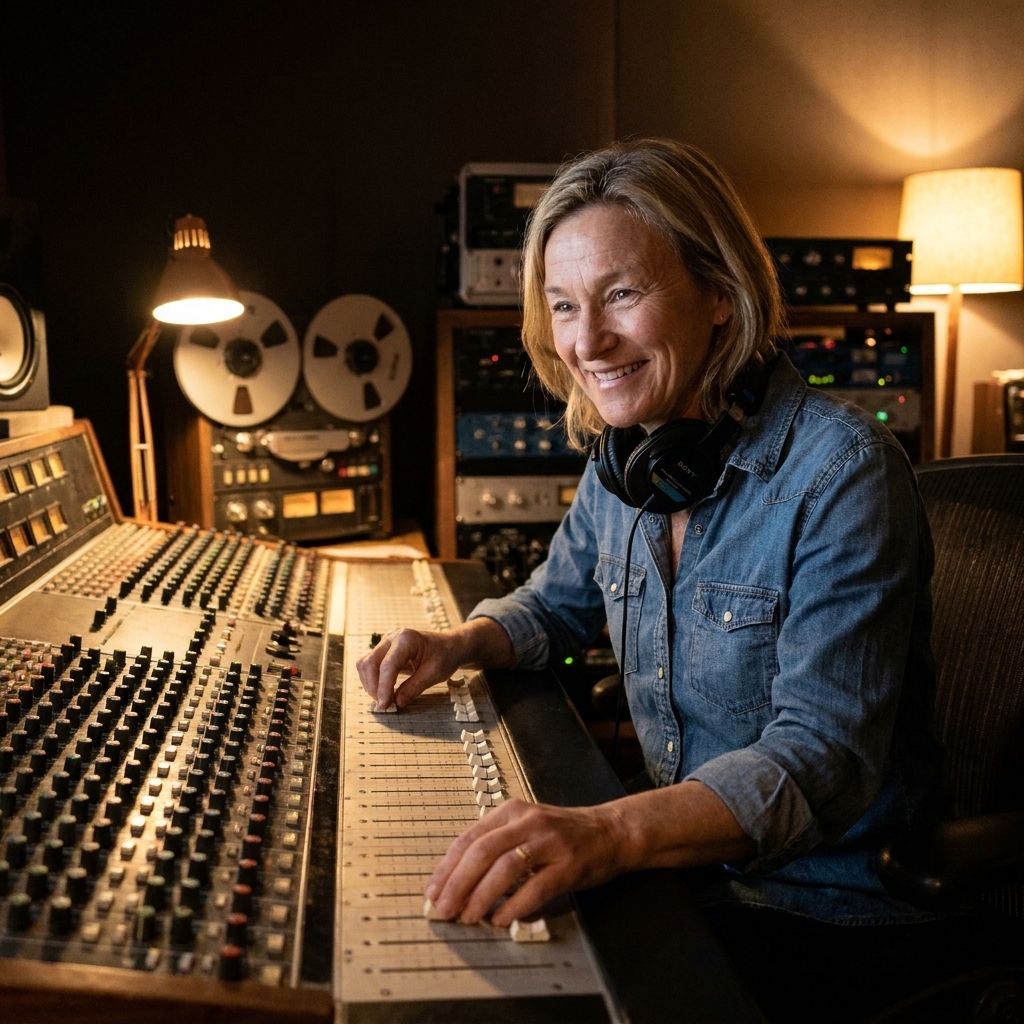
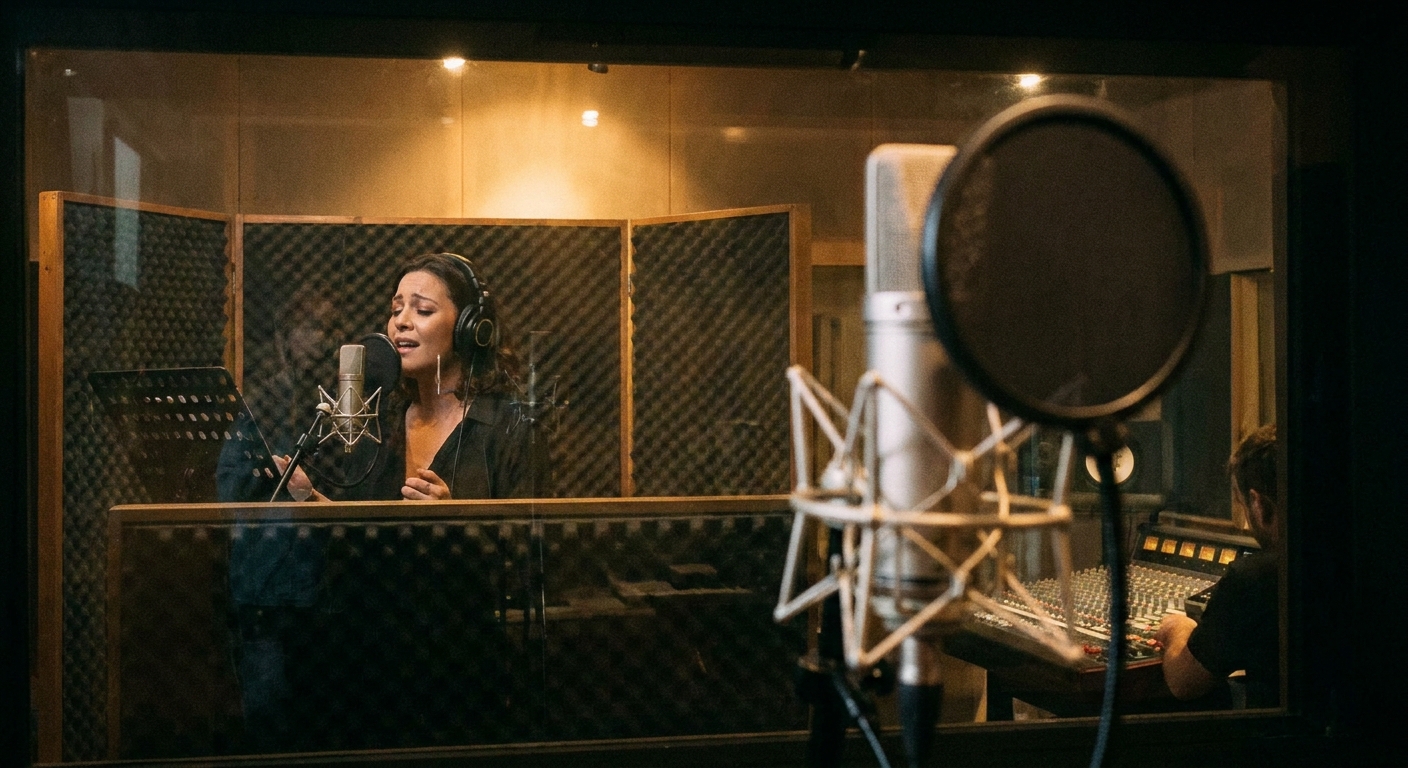
Studios can be gorgeous, yes. But the vibe is usually part office, part sleepover, part laboratory. A biopic set that is all candlelight, single spotlight, and hushed reverence is signaling “genius moment,” not “Tuesday at work.”
Real-life details you rarely see in movies: lyric sheets taped to a wall, a talkback button crackling, coffee cups and snack wrappers near the console, and someone asking for “one more take” like it is the most normal sentence on earth.
4) The first take becomes the master take
In real life, the “first take” is often where you discover what the song wants to be. Then you do it again, and again, and again. Films love a single tearful run-through that becomes the record.
If you enjoy listening for what actually gets left in, and why, I have a soft spot for this rabbit hole: Decoding Studio Chatter: 10 Classic Left-In Moments.
5) One neat trigger explains everything
“He saw her across the room and wrote the chorus.” “She read one letter and the bridge appeared.” Sometimes a specific moment genuinely sparks a song. But biopics often reverse-engineer inspiration to make the origin story feel inevitable.
Real songwriting is frequently more awkward and human: two half-songs fused together, an older idea pulled from a voice memo, a melody that existed before the story did.
What lyric writing looks like
Here is the unglamorous truth I have heard again and again from working musicians: good songs are usually built through iteration. The “magic” is not absent, it is just spread out.
Common songwriting patterns
- Title first: A strong phrase anchors the concept, then you build verses around it. (If you love title weirdness, visit Hits That Never Say Their Own Title.)
- Melody first: You mumble phonetics over chords, then translate that emotional shape into actual words.
- Hook-first collaboration: A room crafts the chorus, then someone goes off to write verses later.
- Patchwork writing: A verse from one year meets a chorus from another, glued together by production choices.
- Demo-to-master evolution: Lyrics change between versions, sometimes dramatically.
That last one is one of the least “Hollywood” and one of the most common. If you want to hear how lyrics get edited in the wild, B-Sides and Demos: Watching Lyrics Get Edited is exactly the kind of nerdy joy I live for.
Reality check toolkit
Step 1: Identify what the scene is showing
Biopics blur these phases constantly.
- Writing: lyrics, melody, chords, structure.
- Arranging: tempo, key, groove, where the chorus hits, what instruments play what.
- Recording: performance choices, vocal phrasing, ad-libs, edits, comping.
A scene might show someone “writing lyrics” when they are really finding a vocal delivery. That is still creative, but it is a different kind of creative.
Step 2: Use credits as a compass
If a movie implies sole credit through storytelling, but the official song has multiple credited writers, you have found a likely simplification. Credits do not tell the whole story, and they can reflect business realities too (splits, samples, interpolations, and the occasional settlement), but they are still one of the quickest public clues you can check.
Look for:
- extra writers (often a sign of collaboration or later interpolation)
- producer names that show up as writers (common in modern pop)
- older songwriters credited (a clue that a melody or lyric nod was licensed)
If interpolation is part of the picture, this guide helps you listen for it: Tracing Lyrical Interpolations.
Step 3: Remember “lyrics” are not the whole writing job
A lot of viewers use “songwriting” to mean “lyric writing,” but modern pop often splits tasks in a way biopics rarely explain. One person might write the lyrics, another might topline (melody and phrasing over a track), and a producer might reshape chords and structure until the emotional punch lands. When a movie frames all of that as one person writing one notebook page, it is usually translating a team process into a single image.
Step 4: Compare the movie lyric to documented versions
Many famous songs have earlier lyric variants floating around: early live performances, alternate takes, or officially released demos. If the film shows a lyric arriving exactly as released, but earlier versions show something different, the film is compressing time.
Where to look, without getting messy:
- official deluxe reissues (often include demos)
- archival interviews with the writers or producers
- documentaries or “making of” footage released by the artist’s team
Step 5: Watch for merged timelines
Biopics often combine multiple real people into one character, or move one important conversation to a more dramatic location. If a manager, producer, or bandmate feels like they exist mainly to deliver exposition, they might be standing in for several real influences.
Step 6: Listen for the red flag line
If a character says some version of “I just wrote it” and the song is a generational anthem, take it with a grain of studio salt. A lyric can be drafted quickly. Getting the song to land in the world is usually the long part.
Common biopic patterns
If you have seen one music biopic, you have probably seen these moves, even if the artist and genre change:
- The “one-night song”: the film uses a single evening to represent weeks of writing, revising, and testing.
- The clean origin story: a messy, multi-step process becomes a single spark, because it is easier to dramatize.
- The simplified room: one collaborator stands in for many, or the full credit list becomes one face we can follow.
I do not mind these when the movie is honest about what it is doing: building emotional truth out of logistical chaos.
Exaggerations I forgive
Some biopic choices are less “wrong” and more “symbolic.” I actually think they can deepen your appreciation if you read them as metaphors:
- The magical object: the guitar, diary, or piano that “unlocks” the song. Often represents years of practice and private writing.
- The perfectly timed interruption: someone walks in mid-chorus and changes everything. Sometimes it stands in for feedback loops that took weeks.
- The one-room miracle: the whole song is created in a single night. Often a shorthand for an era of obsession rather than literal hours.
If you want a fun exercise, try watching the scene twice: once as literal history, and once as an emotional summary. The second viewing is usually where the craft of filmmaking pops.
Quick checklist
- Do you see drafts, mistakes, or placeholders, or only polished lines?
- Are other contributors present in the room, or erased for simplicity?
- Does the scene confuse writing with arranging or recording?
- Is the timeline suspiciously neat, tied to a single dramatic event?
- Do the official credits match the story the film tells?
- Does the movie show revision, or only revelation?
FAQ
Do hit songs ever get written in one sitting?
Yes. But “written” can mean “a strong core idea drafted.” The version you know is often the result of revisions, production decisions, and performance choices that happen later.
Are biopics required to be accurate?
Not in the way viewers often assume. Many are “based on” true stories and use composite characters, altered timelines, and dramatized scenes to tell a cohesive narrative. They are also created with legal risk in mind, so portrayals can be shaped by things like rights agreements, defamation concerns, and jurisdiction-specific rules, not just artistic preference.
What is the easiest way to fact-check a biopic songwriting moment?
Start with the song’s writing and production credits, then look for interviews from the credited writers and producers. If multiple people describe a collaborative process, a lone-genius scene is likely a storytelling choice.
What if the artist says the movie is accurate?
Artists can be sincere and still approve simplifications that serve the story. Think of a biopic as one version of an origin myth. Great for emotion and theme, not always great for process.
One last listening tip
When you finish a biopic, pick one “miracle lyric” scene and replay the actual recording. Listen for the human fingerprints that movies rarely show: the breath before the chorus, the tiny timing push, the ad-lib that sounds like a mistake but became a signature. That is the kind of truth Hollywood cannot always dramatize, but your ears can still catch.
If you want to take that deeper, my favorite next step is reading lyrics the way you would read a poem, line by line: Reading Lyrics as Poetry.