
Liner note
Don’t Skip the Intro: Theme Lyrics That Spoil the Plot

I used to treat TV intros like speed bumps. Remote in hand, thumb hovering over “Skip Intro,” already impatient for the first scene. But the older I get, the more that button feels like fast-forwarding through the first paragraph of a novel.
Because a great TV theme song is not just branding. It is a tiny thesis statement. And when it has lyrics, those words often do something sneaky: they tell you the whole show before you have earned it.
Not always as a literal spoiler, like naming the killer. More like a soft warning. A promise. A prophecy you only understand once the credits roll for the last time.

Why theme lyrics foreshadow
A theme song has a different job than a regular track. It is trying to compress a series into a small, repeatable ritual, sometimes in 15 seconds, sometimes in 90, sometimes longer. And in a lot of shows, it is designed to hold up across episodes without wearing out its welcome, even as the story changes shape.
When a theme uses lyrics, words can be the quickest shortcut to meaning. That is why a lot of theme lyrics lean on big-picture ideas instead of episode-to-episode specifics.
In practice, that means theme lyrics often contain:
- The show’s moral argument (what the series ultimately believes about people)
- The protagonist’s wound (what they cannot stop repeating)
- The likely cost (what may be lost even if someone “wins”)
- A destination (freedom, home, power, forgiveness, oblivion)
If you like approaching lyrics the way you would approach a short story, you will have fun with this. I lean on the same tools I use when I analyze song lyrics like a literary critic: premise, imagery, point of view, and which words keep returning like they are trying to get your attention.
Five spoiler moves
1) They tell you the ending emotion
Some themes do not reveal plot points. They reveal the final feeling. That is still a spoiler, in its own gentle way.
Listen for lyrics that lock the show into a mood: regret, nostalgia, dread, acceptance. When a theme keeps circling words like “remember,” “back,” “used to,” or “never,” it can be forecasting that the series will end looking over its shoulder, not charging into the future.
What to notice: Are the verbs forward-facing (build, go, become) or backward-facing (miss, lost, used to be)? The grammar can hint at whether this show believes in change.
2) They name the protagonist’s loop
Many long-running series are built on a loop: a pattern the main character repeats until they finally break it, or until it breaks them. Themes like to spell out that loop early because repetition is literally what opening credits do.
Lyrics that describe the hero as trapped, restless, tempted, or “always” doing something are handing you the spine of the character arc.
Lyric clue words: “again,” “same,” “always,” “can’t,” “never,” “still.”
3) They hide the premise inside metaphor
Instead of saying, “This is a show about corruption,” a theme might sing about rust, rot, wolves, hunger, or fire. Metaphor keeps the intro flexible. It can fit multiple storylines while still pointing to the core.
If you want to get sharp at this, it helps to recognize common devices. I keep a little mental list from literary devices in pop music and watch for how TV themes use the same tricks: symbolism, irony, foreshadowing, and motif.
4) They reveal the show’s point of view
Who is “speaking” in the theme? A narrator? The main character? A whole community? A theme that uses “we” instead of “I” is often telling you the show’s real protagonist is the group, the city, the family, the workplace, the crew.
And when an intro sounds like a warning, a confession, or a prayer, that tone can end up matching the finale more than the pilot.
Quick test: If you changed the “I” to “you,” would it become an accusation? If yes, it may signal a show with conflict and power struggle baked in.
5) They plant keywords that later become plot
Some shows use a theme like a mantra. They repeat a phrase until it becomes a dare. Later, the series turns that phrase into an actual decision a character has to make.
This is where intros feel the most spoilery on rewatch. That line you sang absentmindedly becomes a map.
What to do: Pick one repeated word and follow it across seasons. Does it shift meaning? Does it get darker? More specific? That evolution is often the show’s evolution.
Case studies
Let’s do the fun part. A few themes that practically wink at you from the opening credits.
The Fresh Prince of Bel-Air
This one is famously literal, almost a rap recap of how Will ends up in Bel-Air. But the spoiler is not just the origin story.
The theme frames the whole series as a balancing act between two worlds, with humor as the survival tool. Even when episodes get serious, the intro keeps reminding you: this show is about class and belonging, disguised as a fish-out-of-water comedy.
Foreshadowing move: A tidy origin story that sets up a long identity negotiation.
The Nanny
The lyrics lay out a fairy-tale setup, then quietly lock the characters into roles: she is the unexpected outsider, he is the guarded widower-boss, the household is a contained world with rules.
That is the spoiler: the show’s main tension will keep returning to whether those roles can change without the whole premise collapsing. Sitcom themes especially love this, because sitcom engines do not rush toward permanent resolution.
Foreshadowing move: “Here is how the chessboard is arranged.”
The Wire
The opening theme is “Way Down in the Hole,” and the core image of the “hole” does not work like plot. It works like worldview. Biblical language about temptation and salvation hangs over the whole thing, like a warning that choices have weight and systems keep score.
And because the show uses different performances of the same song across seasons, the meaning stays steady while the moral temperature shifts. The lyric becomes a series-long spoiler about what the show believes will happen when individuals collide with institutions.
Foreshadowing move: A moral law stated as a folk-style warning.
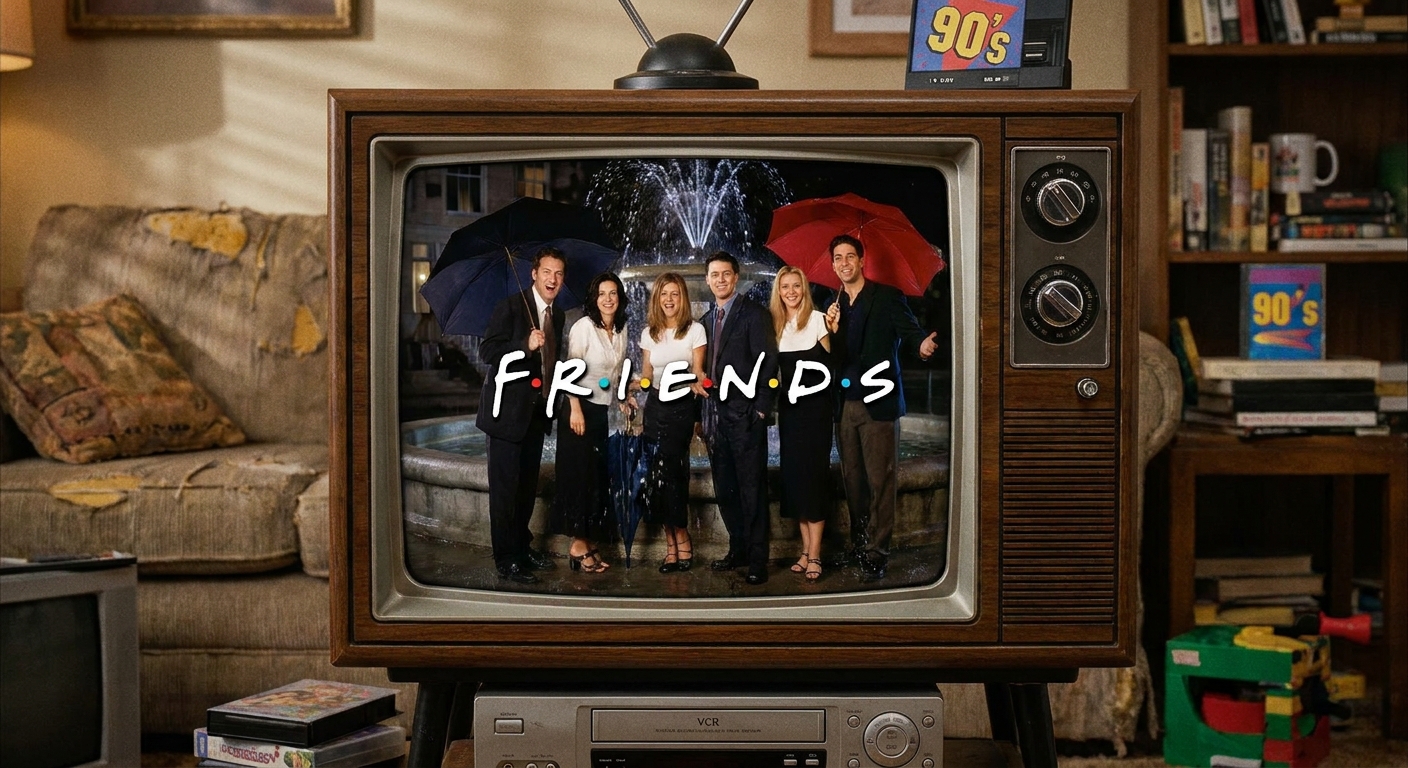
Friends
“I’ll be there for you” feels like comfort food, and it is. But it is also a little dangerous as a thesis statement because it sets an expectation the characters will be tested against.
Over time, the show’s biggest moments are about the limits of that promise: how people support each other imperfectly, how life changes the shape of a friend group, how “being there” sometimes means letting someone go.
Foreshadowing move: A vow that becomes the series’ central stress test.
Crazy Ex-Girlfriend
This is the rare theme that argues with itself in real time. The lyric insists it is not a story about romance, then keeps circling the same desires, rationalizations, and self-made narratives.
That push-pull is the spoiler. Before you know the plot, you already know the engine: a character who can explain anything, sing anything, and still not be able to outrun the part of herself she is avoiding.
Foreshadowing move: A premise disguised as a denial.
Read themes without ruining shows
If you want to catch the foreshadowing without wrecking your own first watch, you can listen in layers.
Layer 1: the surface logline
- Who is the song about?
- Where are we?
- What is the basic setup?
Layer 2: the emotional contract
- What emotion does the song keep returning to?
- Does it sound like celebration, warning, grief, nostalgia?
Layer 3: the cost words
- Look for words that imply sacrifice or loss, depending on genre: “pay,” “lose,” “fall,” “gone,” “alone,” “leave,” “goodbye,” “end.”
- Those often point at what the show may take away over time.
Layer 4: pronouns and power
- Is it “I,” “you,” “we,” or “they”?
- Who has agency in the lyrics? Who is being acted upon?
Layer 5: the one line that feels too big
There is often a single lyric that feels oddly universal compared to the rest. That may be your spoiler capsule. Put a pin in it. When the finale lands, that line often blooms into meaning.
For more on finding “the line that carries the story,” I have a whole soft spot for how structure hides narrative. Verse, chorus, bridge thinking can make a theme song feel like a miniature episode.
Why we still skip them
Streaming has trained a lot of us to treat intros as optional, or at least skippable. But historically, TV themes did a job CDs and liner notes used to do for me as a kid: they set the mood, teach you the vocabulary, and tell you what kind of attention to bring.
When you skip, you still understand the plot. You just miss the show talking to you in advance, like a friend who has read the book already and keeps raising their eyebrows at the right moments.
And honestly, sometimes the intro is where the show is most honest. A series can spend seasons pretending it is one kind of story, but the theme song does not always keep up the lie. It repeats too often. It becomes a confession.
A simple rewatch ritual
- Watch the pilot and do not overthink the intro yet. Just notice one phrase.
- Mid-season, revisit the lyrics. Ask: what did I misunderstand?
- Finale night, play the theme once before you start. It is eerie how often it fits like a key.
- After the finale, replay the pilot intro. That is when the spoiler reveals itself.
If you end up going down a theme-song rabbit hole, you might also enjoy our Pop Culture guide for more ways to listen to the stuff we all thought we already knew by heart.
FAQ
Do theme songs get written before the whole show is mapped out?
Sometimes yes, sometimes no. But even when the long-term plot is not finalized, showrunners usually know the core premise and the emotional destination. Theme lyrics can be built around those big pillars, which is why they can feel prophetic later.
What if the theme changes over seasons?
That can be its own kind of foreshadowing. A new version can signal a shift in point of view, genre, or moral temperature. If the lyrics stay the same but the performance changes, listen for what the arrangement is now admitting.
What are common spoiler words in themes?
My repeat offenders are: “time,” “change,” “home,” “alone,” “never,” “again,” “truth,” “fall,” and “stay.” They are vague enough to dodge plot specifics, but pointed enough to tell you what the show is really about.