Game music isn’t just mood. Learn to hear narrative lyrics in modern video games—vocal entrances at key moments, recurring word motifs, diegetic songs, POV s...
Liner note
The Art of the Needle Drop

Published · Last updated
My first “needle drop” obsession happened the way a lot of my music obsessions do: alone in my room, rewinding a scene until the tape started to look a little tired. I was trying to figure out why a familiar song suddenly felt like a different species when it landed in a movie. Same recording. Same lyrics. Completely new meaning.
That is the magic trick directors and music supervisors pull off all the time. A needle drop is not just a cool track on top of a scene. It is a story decision. It can foreshadow, misdirect, underline a character’s private thoughts, or turn the room temperature in a single chorus.

Let’s break down how to analyze song choices in iconic movie moments, with a lyric-first lens and a few practical listening habits you can steal for your next rewatch.
What a needle drop does
In simple terms, a needle drop is a pre-existing song placed in a film or TV scene. But the job it is doing can vary wildly. When you analyze a needle drop, start by naming its primary function in that moment. Most fall into one or more of these buckets:
- Point of view: Whose inner world are we hearing, even if nobody is speaking?
- Subtext: What does the song say that the characters cannot?
- Time and place: Does it anchor us in a decade, a scene, or a specific cultural memory?
- Irony: Is it intentionally “wrong” in a way that becomes right?
- Rhythm control: Does it speed the edit up, slow it down, or give it a pulse?
- Mythmaking: Is the movie borrowing the song’s existing reputation to give a character instant lore?
A lot of iconic needle drops work because they do two jobs at once. They move the scene forward and they argue with the scene at the same time.
Step one: Where music lives
Before you even touch lyrics, figure out whether the song is diegetic (the characters could hear it, like it is coming from a car radio or a club speaker) or non-diegetic (it is for us, the audience, like a score cue).
Why it matters
- If it is diegetic, the song becomes a prop. Someone chose it, tolerated it, turned it up, or turned it off. That is character information.
- If it is non-diegetic, it often functions like a guiding hand. Sometimes it reads as authorial commentary, sometimes it is pure tone-setting, and sometimes it slips into a character’s subjectivity even when nobody in the scene is “playing” it.
Sometimes a scene slides between the two, and that shift is the point. When a song starts “in the room” and then expands into the soundtrack, the film is often telling you the character has mentally left the room.
Step two: Find the lyric
Needle drops are often less about the whole song and more about one line, one image, or one title phrase that lands like a stamp on the scene. Other times, the power is in the texture and the slow build, especially in montage sequences. Either way, it helps to know what the film is asking the track to do.
How to spot the bullseye
- The first intelligible line: Often the thesis statement for the moment.
- The line that coincides with a reveal: A door opens, a face appears, a decision is made, and the lyric says the quiet part out loud.
- The chorus entry: Choruses are built to be memorable. If the film waits to hit play until the chorus, it is aiming for instant clarity.
- A strategically censored or cut line: If a lyric is edited out, that absence can be as meaningful as inclusion.
If you want a clean lyric analysis habit, borrow the approach from literary reading: underline the repeated words, the pronouns, and the verbs. Who is “you”? Who is “I”? What action is promised or regretted?
If you enjoy doing this outside of film contexts too, my walkthrough on how to analyze song lyrics like a literary critic dovetails nicely with needle drop listening.
Step three: Tempo tells story
Tempo is emotional physics. A director can change how fast your heart feels like it should beat just by choosing a track with a certain BPM and groove.
Three tempo tricks
- Acceleration: Fast tempo pushes momentum, even if the characters are standing still. Great for chase energy, panic, or giddy inevitability.
- Deceleration: A slower track can make an action scene feel heavier, more fated, or more intimate.
- Steady pulse against chaos: A consistent beat under messy visuals can feel like denial, numbness, or control.
Also listen for microtempo, meaning the subtle push-and-pull in how the drums and instruments sit against the beat. A laid-back groove can feel like confidence. A forward-leaning groove can feel like urgency.
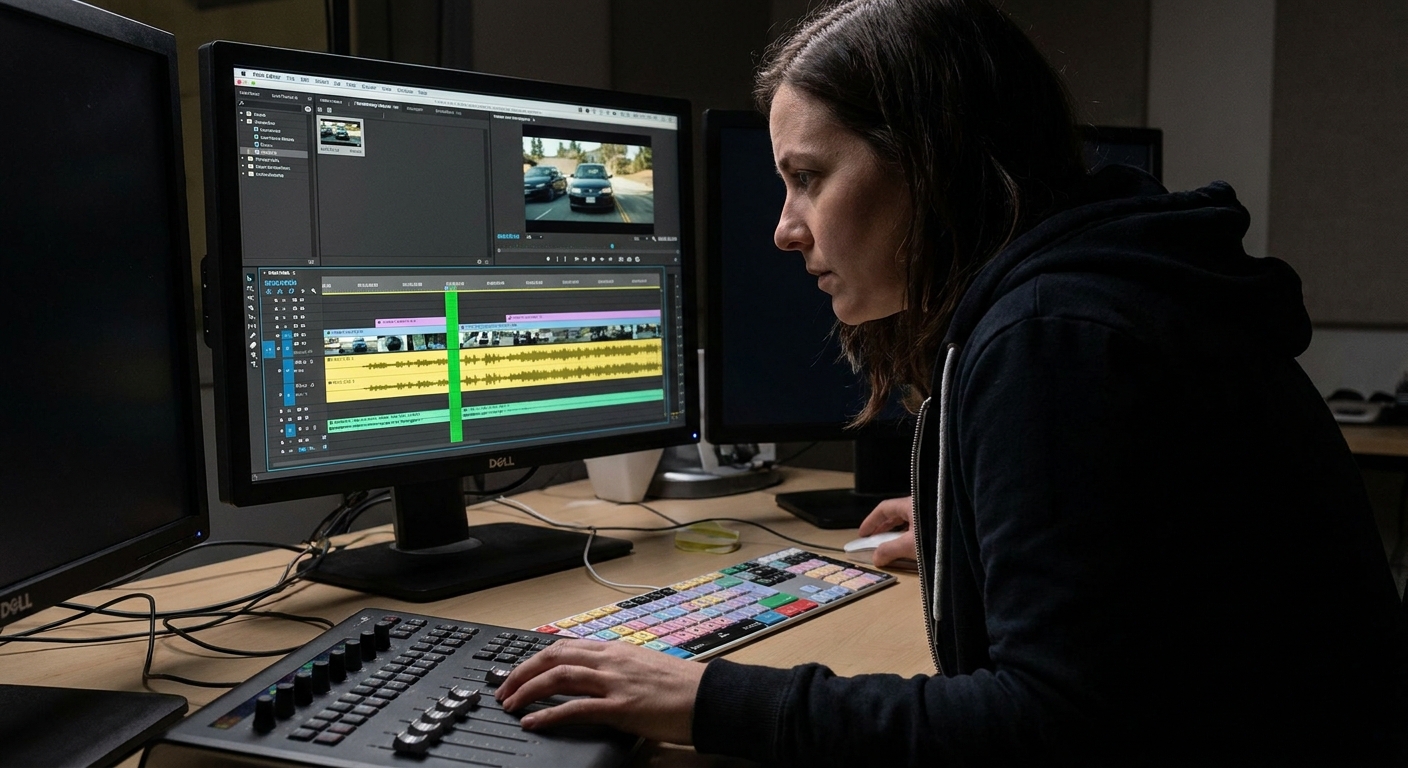
Step four: Watch the cuts
Needle drops are edited as much as they are chosen. The scene is often built around musical landmarks: the downbeat, the snare hit, the pre-chorus lift, the moment the bass enters.
What to look for
- Downbeat sync: A cut on the one can feel like a door slam. It is decisive.
- Pre-chorus lift: Editors love that rising energy for montages and dawning realizations.
- Chorus hit: The camera may widen, the stakes may expand, or the character may cross a threshold.
- Dropouts: When the music suddenly ducks under dialogue or cuts to silence, it tells you what matters most right now.
Silence is part of needle-drop craft. A song that cuts out one second early can land harder than a song that plays to the end.
Step five: Contrast and irony
Many iconic needle drops are powered by contrast. Think bright, joyful music under violence. Or a romantic classic under an emotional breakup that is anything but romantic. This is not just shock value. It is often the film’s way of saying: the character’s surface story and inner story do not match.
A quick checklist
- Lyrics vs visuals: Are the words describing the opposite of what we see?
- Genre vs setting: Does the track feel out of place on purpose to make the setting feel surreal?
- Vocal tone vs character tone: A sweet vocal can make a cold character feel more frightening, not less.
If you want to put a name to some of these techniques, you will have fun with literary devices in pop music. Movies borrow those same tools, just with editing and camera instead of line breaks.
Step six: Mask or mirror
One of my favorite questions when I am watching with friends is: is this needle drop telling the truth, or performing a lie?
Mirror needle drops
The song reflects what the character cannot articulate. These are often devastating because they feel like a diary entry the film found.
Mask needle drops
The song is what the character wants to project. The needle drop becomes a costume: confidence music, revenge music, main-character music. If the scene undercuts it, the film is exposing the costume.
This connects nicely to the way artists create personas too. If that angle fascinates you, decoding artist alter egos will feel like the same conversation in a different room.
When it builds a world
Sometimes the song choice is less about the lyrics and more about the cultural baggage the track carries. A director can cast a song the way they cast an actor.
- Era signals: A single synth tone can lock you into the 1980s faster than a costume change.
- Scene grammar: Certain styles of music tell you what kind of movie you are in. A classic soul needle drop reads differently in a heist film than in a coming-of-age story.
- Shared memory: If a song is already tied to weddings, funerals, graduation parties, or viral clips, the movie can borrow those feelings instantly.
That is why two movies can use the same famous track and get completely different emotional results. The song walks in wearing a history, and the scene either agrees with it or wrestles it to the floor.
How to ID the song
If the track is nagging at you and you want to confirm what you are hearing, keep it simple. Check the end credits for music listings, look up the official soundtrack release if there is one, or search the scene description with the artist name you suspect. For TV, episode soundtrack lists can be useful, but credits are still the cleanest answer when you can get them.
A three-pass rewatch
If you want to train your ear without turning movie night into homework, try this:
- First pass: Watch normally. Just notice when you feel something sharply.
- Second pass: Focus on lyrics. What are the clearest lines, and when do they land?
- Third pass: Focus on structure. Where does the verse start, where does the chorus hit, where does the song cut away, and what does the camera do at those points?
After three passes, most mystery-magic needle drops start to look like very intentional craft.
FAQ
What makes a needle drop iconic?
Iconic needle drops feel inevitable after the fact. Like the scene was waiting for that exact song all along. Usually that comes from a tight marriage of timing, a lyrical bullseye, and emotional contrast.
Do lyrics always matter?
No, but they matter more often than we admit. Even when the lyrics are not front and center, the human brain grabs familiar phrases. If the mix buries the words, the vocal tone still communicates emotion.
Why do some needle drops feel on the nose?
Usually because the lyric is describing the scene in a way that leaves no space for interpretation. Subtle needle drops let the song add a second layer rather than restating the plot.
How do covers change meaning?
A cover can keep the same words but change the moral temperature. Tempo, instrumentation, and vocal delivery can turn romantic into creepy, or hopeful into resigned. If you like hunting these down, you will enjoy how to spot a stealth cover.
The takeaway
A great needle drop is not a soundtrack flex. It is a storytelling sentence written in drum hits and vowel sounds. Next time a movie scene punches you in the chest with a familiar song, do not just ask what track is that. Ask: what is this song saying for the characters, and what is it saying to us?
That is the art of the needle drop, and once you start listening for it, you will hear directors thinking in lyrics.